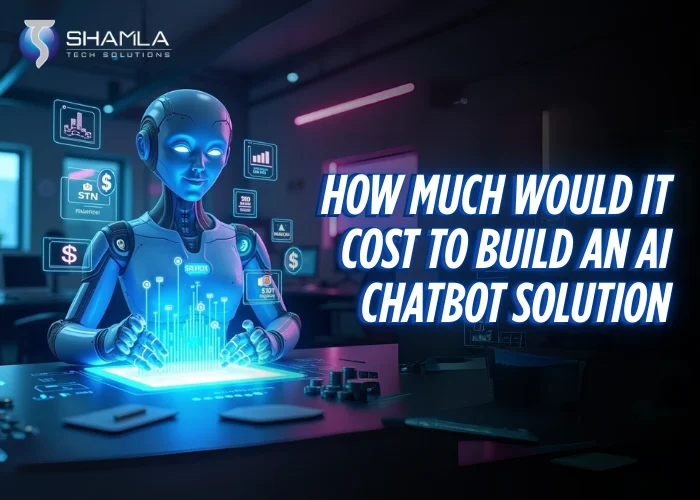

Businesses now utilize AI chatbots to improve customer service, operations, and user experiences. Businesses seeking to use AI chatbot development are increasingly asking “how much does an AI chatbot cost?” as 2026 approaches. For educated digital transformation decisions, you must know the cost of building an AI chatbot solution.
Based on complexity, features, integration needs, and development approach, AI chatbot creation costs vary greatly. Simple rule-based bots cost a few thousand dollars, while advanced generative AI chatbots cost six figures. This tutorial covers all aspects of chatbot development services and provides accurate pricing estimates for your AI chatbot solution.
Understanding AI Chatbot Types and Their Cost Implications
Rule-Based Chatbots
AI-Powered Chatbots
Generative AI Chatbots
Factors Affecting AI Chatbot Development Cost
1. Complexity and Functionality
AI chatbot development expenses depend on complexity. Complex systems with various integrations and advanced AI cost far more than simple informational bots.
Basic Functionality ($3,000 – $15,000):
- FAQ responses
- Basic customer support
- Simple lead generation
- Limited conversation flows
Intermediate Functionality ($15,000 - $50,000):
- Natural language understanding
- Multi-platform deployment
- CRM integration
- Advanced analytics
Advanced Functionality ($50,000 - $200,000+):
- Generative AI capabilities
- Complex business logic
- Multiple system integrations
- Custom AI model training
2. Platform and Integration Requirements
AI chatbot development costs depend on platform and integration complexity. Chatbot integration services for many platforms raise development costs.
- Single-platform integration: $2,000–$10,000
- Multi-Platform Integration: $10,000–$30,000
- Enterprise System Integration: $20,000–$75,000
3. Design and User Experience
Designing an intuitive and compelling user interface for your AI chatbot solution involves specific design skills, increasing development costs.
- Simple UI/UX Design: $2,000–$8,000
- Custom Design: $8,000–$20,000
- Advanced Voice-Integrated UX: $15,000–$40,000
4. Data Training and Machine Learning
Your AI chatbot needs relevant data to work well. The Cost to Build an AI Chatbot Solution depends on data volume, quality, and training complexity.
- Basic Training: $5,000–$15,000
- Advanced Training: $15,000–$50,000
- Custom Model Development: $50,000–$150,000
Development Approaches and Their Cost to Build an AI Chatbot Solution
DIY Chatbot Platforms
Popular Platforms and Costs:
- Chatfuel: $15 – $300/month
- ManyChat: $15 – $145/month
- Dialogflow: $0.002 – $0.006 per request
- Microsoft Bot Framework: Variable pricing
Total Initial Investment: $500 – $5,000 Monthly Operational Costs: $50 – $500
Custom Development
Development Team Cost to Build an AI Chatbot Solution:
- AI/ML Engineer: $80 – $150/hour
- Backend Developer: $60 – $120/hour
- Frontend Developer: $50 – $100/hour
- UX/UI Designer: $40 – $90/hour
- Project Manager: $60 – $110/hour
Total Project Cost to Build an AI Chatbot Solution: $25,000 – $200,000+
Hybrid Approach
Estimated Cost to Build an AI Chatbot Solution:
- Platform licensing: $100 – $1,000/month
- Custom development: $10,000 – $50,000
- Integration services: $5,000 – $25,000
Chatbot Cost by Industry
E-commerce Chatbots
E-commerce AI chatbots require specific features like product recommendations, order tracking, and payment processing integration.
Cost to Build an AI Chatbot Solution: $20,000 – $80,000 Key Features:
- Product catalog integration
- Order management
- Payment gateway integration
- Inventory tracking
Healthcare Chatbots
- HIPAA compliance
- Medical database integration
- Appointment scheduling
- Symptom checking capabilities
Financial Services Chatbots
Financial AI chatbots need robust security measures and regulatory compliance features.
Cost to Build an AI Chatbot Solution Range: $50,000 – $200,000 Key Features:
- Advanced security protocols
- Regulatory compliance
- Account integration
- Transaction processing
Customer Service Chatbots
General customer service AI chatbots focus on support ticket management and knowledge base integration.
Cost Range: $15,000 – $75,000 Key Features:
- Ticket management integration
- Knowledge base access
- Multi-channel support
- Analytics and reporting
Chatbot Pricing Models in 2026
Monthly Subscription Pricing
A monthly subscription is the most common chatbot pricing model. Businesses pay a fixed recurring fee for access to the chatbot platform, usually based on the number of users, features, or conversation limits.
This model is ideal for businesses with predictable customer interaction volumes because costs remain consistent regardless of seasonal fluctuations.
Best suited for:
- Small and medium-sized businesses
- SaaS companies
- E-commerce stores
- Organizations seeking predictable monthly expenses
Advantages
- Predictable budgeting
- Access to premium features and analytics
- Easier long-term cost planning
- Often includes maintenance and support
Potential drawbacks
- May include usage caps
- Higher-tier plans may be required as conversation volume grows
Usage-Based and Per-Resolution Pricing
Many AI chatbot providers now charge based on actual usage rather than a fixed subscription. This can include pricing based on API requests, AI tokens consumed, conversations processed, or successful customer issue resolutions.
With the rapid adoption of large language models, LLM token costs have become a significant factor. Every prompt and response consumes tokens, meaning businesses pay according to the amount of AI processing required. More advanced models typically have higher token costs but also deliver better reasoning and response quality.
Per-resolution pricing takes a different approach by charging only when the chatbot successfully resolves a customer’s issue without human intervention. This directly aligns costs with measurable business outcomes.
Best suited for:
- Businesses with seasonal demand
- Enterprises handling variable support volumes
- Organizations focused on automation ROI
Advantages
- Pay only for actual usage or successful outcomes
- Lower upfront investment
- Easier to scale during peak periods
- Clear connection between cost and value delivered
Potential drawbacks
- Monthly costs can fluctuate
- High conversation volumes may increase expenses
- LLM token usage should be monitored carefully to optimize costs
Hybrid Pricing Models
Hybrid pricing combines multiple pricing strategies into a single plan. For example, a provider may charge a fixed monthly platform fee while billing additional AI usage based on token consumption, conversation volume, or premium features.
This model offers flexibility for businesses that require predictable infrastructure costs while still allowing the chatbot to scale with demand.
A typical hybrid plan may include:
- Fixed monthly platform subscription
- Included conversation or token allowance
- Additional charges for excess usage
- Optional enterprise integrations and custom AI models
Best suited for:
- Growing enterprises
- High-volume customer support teams
- Organizations deploying advanced generative AI chatbots
Hidden Costs and Ongoing Expenses
Infrastructure and Hosting
Cloud Hosting Costs
- Basic hosting: $50–$200/month
- Scalable cloud solutions: $200–$1,000/month
- Enterprise infrastructure: $1,000–$5,000+/month
Maintenance and Updates
Annual Maintenance Costs
- Basic maintenance: 15–20% of the initial cost to build an AI chatbot solution
- Advanced maintenance: 20–30% of the initial development cost
- Major feature enhancements and upgrades: Additional 10–25%
Third-Party Integrations
Common Integration Costs
- NLP services: $0.001–$0.02 per request
- Analytics platforms: $50–$500/month
- CRM integration: $100–$1,000/month
- Payment processing: 2.9% + $0.30 per transaction
Training and Support
Training and Support Costs
- Initial staff training: $2,000–$10,000
- Ongoing support: $500–$2,000/month
- Advanced training programs: $5,000–$20,000
Cost-Saving Strategies for AI Chatbot Development
Adopt a Phased Development Approach
Instead of building every feature at once, develop your AI chatbot in phases. This approach allows you to launch a minimum viable product (MVP), gather user feedback, and gradually introduce advanced capabilities as your business grows.
A typical phased roadmap includes:
- Phase 1 – Core Functionality ($5,000–$20,000): Basic conversational flows, FAQs, lead generation, and simple integrations.
- Phase 2 – Enhanced Features ($10,000–$30,000): CRM integration, multilingual support, analytics dashboards, and workflow automation.
- Phase 3 – Advanced AI Capabilities ($15,000–$50,000): Generative AI, voice assistants, predictive analytics, personalization, and autonomous AI agents.
This incremental strategy reduces upfront investment, shortens time-to-market, and enables continuous improvement based on real customer interactions.
Leverage Open-Source AI Chatbot Frameworks
Open-source chatbot platforms can significantly reduce development costs by eliminating expensive licensing fees while offering flexibility for customization.
Popular open-source frameworks include:
- Rasa – Enterprise-grade conversational AI framework with no licensing fees, requiring only infrastructure and maintenance costs.
- Botpress – An open-source platform with visual development tools and optional premium enterprise features.
- Wit.ai – A free natural language processing platform suitable for smaller AI chatbot projects.
- ChatterBot – A lightweight Python library for building rule-based and simple conversational chatbots.
While open-source solutions lower software costs, businesses should also consider implementation, hosting, security, maintenance, and ongoing model updates when calculating the total cost of ownership.
Partner with an Experienced AI Chatbot Development Company
Working with an experienced AI chatbot development partner can reduce project risks, accelerate deployment, and optimize long-term costs.
An experienced development partner can provide:
- Proven AI and NLP expertise
- Faster development and deployment timelines
- Optimized architecture that reduces future maintenance costs
- Seamless integration with existing business systems
- Ongoing monitoring, updates, and technical support
Rather than building everything from scratch, partnering with specialists helps businesses avoid costly implementation mistakes while delivering a scalable chatbot solution that evolves alongside changing business needs.
ROI and Business Value of AI Chatbot Development
Cost Savings Through Automation
One of the biggest drivers of chatbot ROI is automation. AI chatbots can handle repetitive customer queries, qualify leads, automate workflows, and provide instant support around the clock, allowing human teams to focus on higher-value tasks.
Businesses commonly experience benefits such as:
- 30–50% reduction in customer service costs through automated support.
- 40–60% improvement in lead qualification efficiency by filtering and routing prospects automatically.
- 20–40% decrease in support ticket volumes by resolving common issues without agent intervention.
- Up to 90% faster response times, resulting in improved customer satisfaction and reduced wait times.
These operational efficiencies often translate into substantial long-term cost savings, especially for businesses with high customer interaction volumes.
Revenue Generation Opportunities
Beyond reducing costs, AI chatbots also create new revenue opportunities by improving customer engagement throughout the buying journey.
Businesses frequently report outcomes such as:
- 10–30% higher conversion rates through personalized product recommendations and instant customer assistance.
- 15–25% increase in upselling and cross-selling by recommending relevant products or services during conversations.
- 20–35% improvement in customer retention through proactive engagement and faster issue resolution.
- 15–20% additional revenue potential by offering 24/7 customer support that captures sales outside regular business hours.
As generative AI becomes more capable, chatbots are increasingly acting as virtual sales assistants rather than simply customer support tools.
How to Calculate Chatbot ROI
Calculating chatbot ROI helps businesses understand whether their AI chatbot investment delivers measurable financial value.
A commonly used formula is:
ROI = (Total Benefits – Total Costs) ÷ Total Costs × 100
For example:
- Initial AI chatbot development cost: $50,000
- Annual operating and maintenance costs: $15,000
- Annual business benefits (cost savings + additional revenue): $85,000
Using these figures:
ROI = ($85,000 – $65,000) ÷ $65,000 × 100 = 30.7%
While this example illustrates the calculation, actual ROI varies depending on factors such as deployment scale, automation rates, industry, customer volume, and business objectives. Organizations that continuously optimize their chatbot with analytics, AI model improvements, and workflow enhancements typically achieve stronger returns over time.
Chatbot Pricing Comparison: Build Cost vs. Monthly Cost
The chatbot pricing model varies significantly depending on whether you choose a no-code platform, a custom AI chatbot, or an enterprise-grade solution. While no-code platforms offer a lower upfront investment, custom AI chatbots provide greater flexibility, scalability, and long-term business value.
Chatbot Type | Best For | Estimated Build Cost | Estimated Monthly Cost |
Rule-Based Chatbot | FAQs, basic customer support | $2,000–$10,000 | $20–$300 |
No-Code Chatbot Platform | Small businesses and startups | $500–$5,000 | $30–$500 |
AI Customer Support Chatbot | Customer service automation | $10,000–$40,000 | $200–$2,000 |
AI Sales & Lead Generation Chatbot | Sales, marketing, lead qualification | $15,000–$50,000 | $300–$3,000 |
Generative AI Chatbot (LLM-Powered) | Personalized conversations and enterprise automation | $30,000–$100,000+ | $500–$10,000+ (depending on LLM token usage) |
Enterprise AI Chatbot | Large organizations with custom workflows and integrations | $75,000–$300,000+ | $2,000–$20,000+ |
Choosing the Right AI Chatbot Development Company
Evaluate the AI Chatbot Development Company
Before signing a contract, assess the company’s technical capabilities, industry expertise, and track record. A reputable AI chatbot development company should demonstrate experience in building conversational AI solutions across multiple industries while offering expertise in modern technologies such as large language models (LLMs), natural language processing (NLP), machine learning, and enterprise integrations.
When evaluating providers, consider factors such as:
- A strong portfolio of AI chatbot projects and real-world case studies
- Experience with your industry and business requirements
- Expertise in AI, NLP, LLMs, and automation technologies
- Positive client reviews, testimonials, and long-term partnerships
- Ability to integrate with CRMs, ERP systems, APIs, and third-party platforms
- Ongoing maintenance, optimization, and post-launch support services
Choosing a partner with proven technical expertise reduces implementation risks and ensures your chatbot remains scalable as your business grows.
Questions to Ask Before You Hire Chatbot Developers
Before deciding to hire chatbot developers, ask questions that help you understand their development process, technical capabilities, and long-term support model.
Some important questions include:
- Have you developed AI chatbots for businesses similar to ours?
- Which AI models, frameworks, and technologies do you recommend, and why?
- How do you ensure data privacy, security, and regulatory compliance?
- Can you provide a detailed breakdown of development and maintenance costs?
- What is your typical project timeline from planning to deployment?
- What level of post-launch support, monitoring, and optimization do you provide?
- How will the chatbot scale as our business and customer interactions grow?
Clear answers to these questions help establish expectations and reduce the likelihood of unexpected costs during development.
Red Flags to Watch Out For
Not every chatbot vendor delivers the same level of expertise. Identifying warning signs early can help you avoid costly mistakes and project delays.
Common red flags include:
- Unrealistically low development quotes that exclude future costs
- Limited experience with AI, LLMs, or conversational AI technologies
- No clear strategy for maintenance, updates, or model improvements
- Poor communication or unclear project planning
- A weak portfolio with few verifiable client success stories
- Lack of transparency around pricing, timelines, or deliverables
A reliable AI chatbot development company should be transparent about costs, timelines, technical limitations, and ongoing support, helping you build a solution that delivers measurable business value over the long term.
Future Trends Shaping AI Chatbot Development Costs
Emerging AI Technologies
Advancements in artificial intelligence are expanding what chatbots can accomplish while also influencing development costs. Businesses increasingly expect AI chatbots to deliver human-like conversations, understand multiple forms of input, and provide highly personalized experiences.
Key technologies driving this transformation include:
- Large Language Models (LLMs) that enable more natural, context-aware conversations.
- Multimodal AI capable of processing text, images, audio, and documents within a single interaction.
- Edge AI and on-device processing, reducing latency and improving privacy for certain applications.
- Advanced personalization engines that tailor responses based on customer behavior, preferences, and historical interactions.
Although these technologies can increase initial development costs, they often deliver greater automation, higher customer satisfaction, and stronger long-term ROI.
Market Evolution and Development Efficiency
The AI chatbot industry is becoming increasingly competitive, making development more accessible for businesses of all sizes. Modern development frameworks, cloud services, and pre-built AI components have significantly reduced the time required to launch intelligent chatbot solutions.
Several market trends are contributing to more cost-efficient development:
- Greater competition among AI platform providers, leading to more affordable pricing.
- Mature no-code and low-code chatbot platforms that accelerate deployment.
- Improved developer tools, SDKs, and AI frameworks that reduce engineering effort.
- Easier integration with CRMs, ERP systems, customer support platforms, and business applications.
As AI technology matures, businesses can expect faster implementation timelines and lower development costs for many common chatbot use cases.
Regulatory and Compliance Requirements
As governments introduce new AI and data privacy regulations, compliance is becoming an increasingly important factor in AI chatbot development cost. Businesses must ensure their chatbot solutions handle customer data responsibly while meeting applicable legal and industry requirements.
Important compliance considerations include:
- GDPR and other global data privacy regulations governing data collection and user consent.
- AI transparency requirements that may require businesses to disclose when customers are interacting with AI.
- Data residency and localization laws that determine where customer data can be stored and processed.
- Industry-specific compliance standards for sectors such as healthcare, finance, insurance, and government.
Frequently Asked Questions (FAQs)
How Much Does It Cost to Build an AI Chatbot?
How Much Does a Custom AI Chatbot Cost?
What Are the Monthly or Ongoing Costs of an AI Chatbot?
Do Chatbot Costs Include AI Language Model (LLM) Fees?
What Is the Most Cost-Effective Chatbot Pricing Model?
What Hidden Costs Should I Budget For?
How Much Does an AI Chatbot Cost by Industry?
How Much Can a Chatbot Reduce Customer Service Costs?
How Can I Reduce AI Chatbot Development Costs?
How Do I Get an Accurate AI Chatbot Cost Estimate?
Get a Custom AI Chatbot Cost Estimate from Shamlatech
AI chatbot development Cost to Build an AI Chatbot Solution varies greatly depending on your needs, methodology, and functionality. Understanding your needs and budget is crucial when choosing a rule-based bot from $3,000 to a generative AI chatbot over $200,000.
AI chatbot development cost should include initial investment, operational expenses, maintenance Cost to Build an AI Chatbot Solution, and ROI. Experienced AI chatbot solution providers can help you maximize your investment and avoid frequent problems and hidden Cost to build an AI Chatbot Solution.
To develop an AI chatbot successfully, you must balance feature needs with budget limits and commercial goals. A successful AI chatbot project requires careful planning and realistic funding, whether you choose custom programming, platform-based solutions, or hybrid techniques.