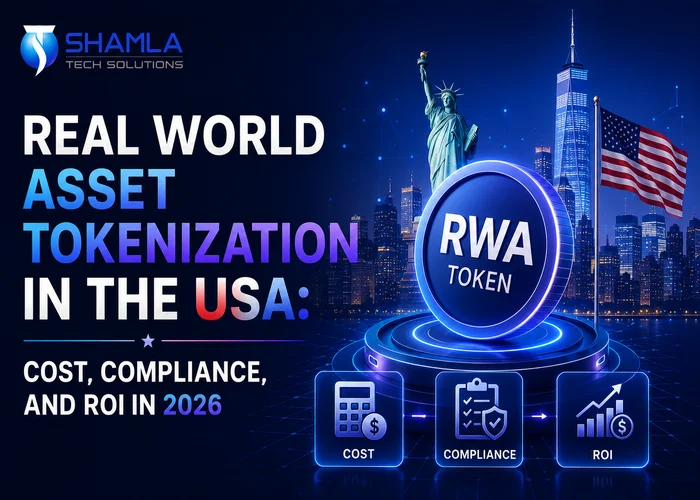

Businesses are now using blockchain to bring real-world assets into digital investment markets. Real estate, gold, mining assets, commodities, bonds, funds, and other physical or financial assets can be converted into blockchain-based tokens and offered to investors with better transparency, fractional access, and faster settlement. A successful launch of your RWA tokenization project plan needs more than token creation. With real-world asset tokenization development services, businesses build a complete asset-backed digital investment ecosystem that unlocks multiple consistent revenue streams.
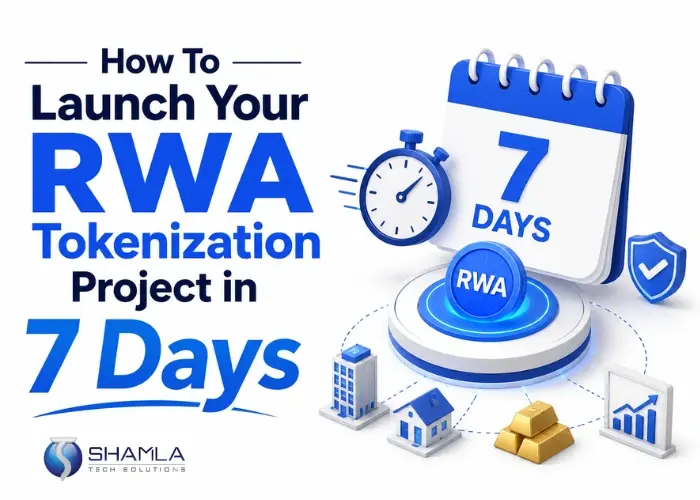
Whether you want Real estate tokenization, Gold tokenization, Gold mining tokenization, or a broader RWA tokenization platform development model, the project must be planned with the right business structure and technology stack. This guide will help you launch the RWA tokenization project in 7 days.
Move from idea to launch with a reliable and revenue-ready RWA tokenization platform
7 Steps To Launch RWA Tokenization Project
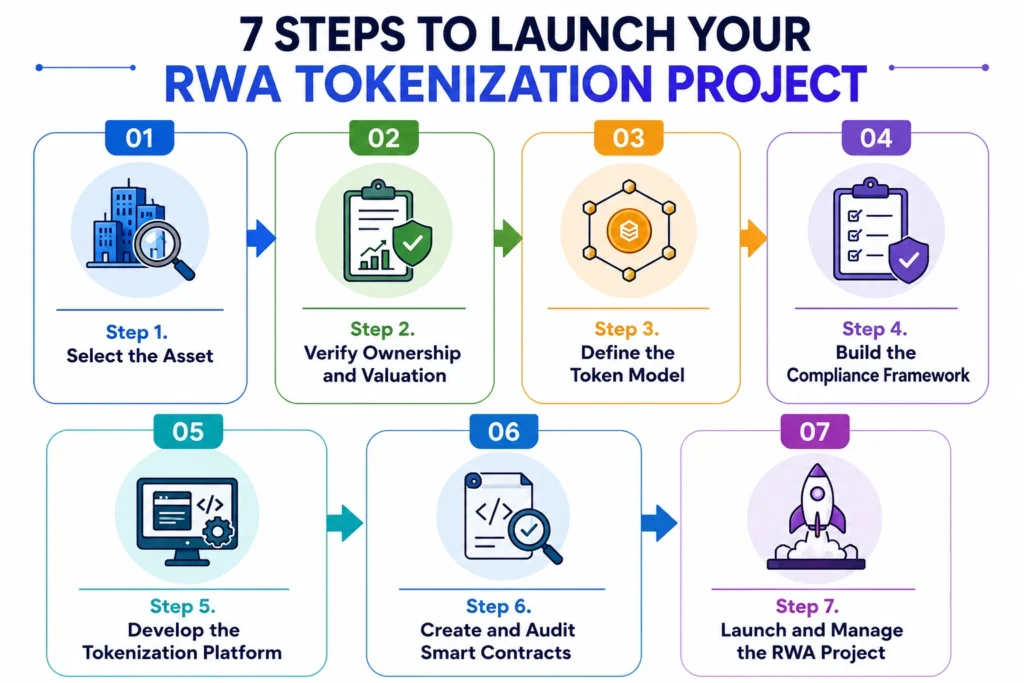
If you are searching for how to tokenize real-world assets, the process starts with asset selection and ends with platform launch, investor onboarding, and ongoing asset management.
Step 1. Select the Asset
Choose the asset you want to tokenize. It can be real estate, gold, mining assets, commodities, invoices, bonds, carbon credits, private funds, or luxury assets.
The asset must have clear ownership, legal documents, valuation, and investor demand. Weak asset documentation can create trust and compliance problems.
Step 2. Verify Ownership and Valuation
Asset verification is one of the most important steps in RWA tokenization. For real estate, verify property title, valuation, rental income, lease terms, and legal ownership. For gold, verify purity, vault storage, custody documents, insurance, and audit reports. For mining assets, verify licenses, reserves, production reports, financial model, and ownership rights.
Step 3. Define the Token Model
Decide what the token represents. It can represent fractional ownership, debt, equity, revenue share, asset claim, royalty right, or participation right.
The token model should clearly define token supply, price, investor rights, distribution rules, redemption options, transfer limits, lock-in period, and secondary trading access.
Step 4. Build the Compliance Framework
Since RWA tokens are linked to real assets and investor money, compliance must be planned from the start. The platform may need KYC, KYB, AML checks, sanctions screening, investor eligibility, transaction monitoring, wallet risk checks, and legal disclosures.
Compliance requirements depend on the jurisdiction, asset type, token structure, and target investors.
Step 5. Develop the Tokenization Platform
The platform should manage the complete tokenization lifecycle. This includes issuer onboarding, asset listing, document verification, token creation, investor onboarding, wallet connection, payments, revenue distribution, reporting, and secondary trading.
A custom platform gives full flexibility. A white-label tokenization solution helps businesses launch faster with ready-made modules, branding, and configurable features.
Step 6. Create and Audit Smart Contracts
Smart contracts automate token minting, transfers, revenue distribution, investor restrictions, redemption, and compliance rules. Before launch, every smart contract must be tested and audited to reduce technical and security risks.
Step 7. Launch and Manage the RWA Project
After development and testing, the project can go live. Post-launch management includes investor support, asset reporting, transaction monitoring, liquidity management, compliance updates, and platform upgrades.
Deciphering RWA Tokenization
RWA tokenization is the process of converting ownership rights, revenue rights, or asset-backed claims of real-world assets into digital tokens on a blockchain. These tokens can represent a share in a property, a claim on physical gold, participation in a mining project, ownership of a commodity, or rights linked to financial assets. RWA Tokenization Development helps asset owners unlock liquidity and gives investors access to assets that were traditionally difficult to enter.
For example,
- A commercial property can be divided into multiple tokens. Investors can buy a smaller share instead of purchasing the full asset.
- In gold-backed tokenization, each token can represent a fixed quantity of physical gold held under custody.
- In mining tokenization, tokens can be structured around project funding, revenue sharing, or production-linked rights based on the legal model.
Why Launch an RWA Tokenization Project Now?
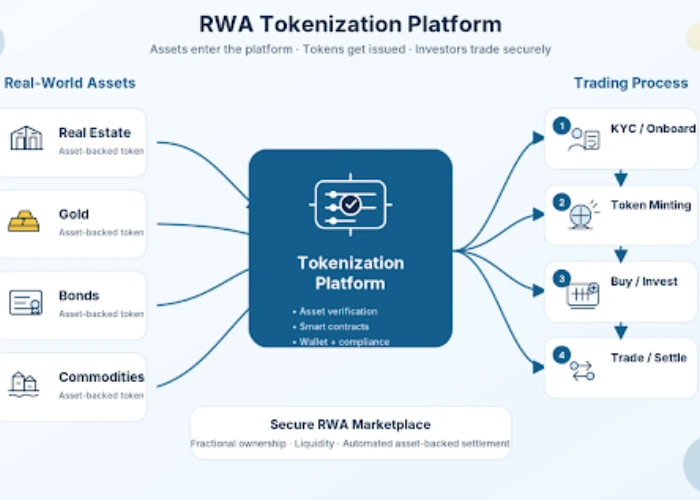
Businesses are showing strong interest in asset-backed blockchain products because they connect digital investment with real economic value. A real-world asset token launch allows companies to create new investment models and open access to high-value assets.
RWA tokenization is useful for asset owners who want to raise capital, improve liquidity, reduce manual administration, and reach global investors. It is also useful for fintech platforms, real estate businesses, commodity companies, and investment firms that want to offer asset-backed digital products.
For investors, RWA tokens provide fractional access, digital ownership records, transparent transactions, and easier portfolio diversification.
What Can Be Tokenized?
Many asset classes can be tokenized if they have clear ownership, valuation, and legal rights.
Asset Type | Tokenization Use Case | Business Opportunity |
Real Estate | Fractional property ownership, rental income rights, and property-backed investment tokens | Raise capital, improve liquidity, attract global investors |
Gold | Gold-backed tokens linked to physical gold reserves | Digital gold investment, redemption-based models |
Gold Mining | Mining project funding, production-linked tokens, revenue participation | Fund mining operations and offer asset-backed participation |
Commodities | Oil, silver, agriculture, energy credits, industrial metals | Commodity-backed trading and investment |
Bonds and Debt | Tokenized bonds, private debt, treasury products | Digital fixed-income products |
Private Funds | Fund units and private market assets | Easier investor access and fund administration |
Carbon Credits | Verified carbon credit tokens | ESG marketplaces and climate finance |
Luxury Assets | Art, jewelry, watches, collectibles | Fractional luxury investment |
Intellectual Property | Royalties, copyrights, patents, licenses | Automated royalty distribution |
RWA Tokenization Platform Stack: Tools and Tech
A strong platform stack is required for a secure RWA blockchain project launch and long-term scalability.
Platform Layer | Tools and Tech | Purpose |
Frontend | React.js, Next.js, Angular, Vue.js | Investor dashboard, issuer portal, admin panel |
Backend | Node.js, Python, Java, Go, Rust | Business logic, APIs, user accounts, asset workflows |
Blockchain | Ethereum, Polygon, BNB Chain, Avalanche, Solana, Hyperledger | Token issuance, ownership tracking, settlement |
Token Standards | ERC-20, ERC-721, ERC-1400, ERC-3643, SPL | Asset-backed token creation and transfer control |
Smart Contracts | Solidity, Rust, audited contract libraries | Minting, burning, revenue distribution, and compliance rules |
Wallets | Custodial, non-custodial, MPC, multi-signature wallets | Secure token storage and transactions |
Compliance | KYC, KYB, AML, KYT, sanctions screening | Investor verification and risk control |
Payments | Fiat gateway, stablecoins, bank transfer, crypto payments | Token purchase and settlement |
Security | MFA, encryption, WAF, DDoS protection, audits | Platform and fund protection |
Cloud | AWS, Azure, Google Cloud, Docker, Kubernetes | Scalability, deployment, uptime |
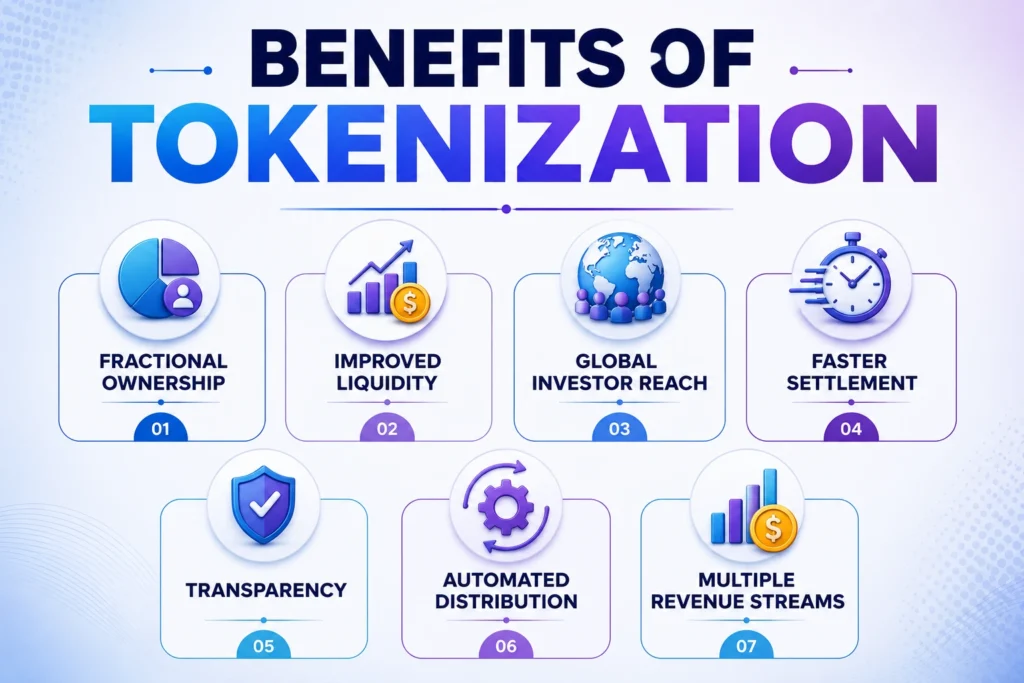
What Are the Benefits of Tokenization of Real World Assets?
Fractional Ownership
Tokenization divides high-value assets into smaller digital units. This allows more investors to participate in assets like real estate, gold, funds, and commodities.
Improved Liquidity
Assets such as property, private funds, and mining projects are difficult to sell quickly. Tokenization can create secondary market access and improve liquidity.
Global Investor Reach
A digital platform helps asset owners reach investors across different regions, subject to compliance rules. This improves fundraising opportunities.
Faster Settlement
Blockchain and smart contracts reduce manual paperwork and automate many transaction processes. This helps improve settlement speed.
Transparency
Token records, ownership transfers, and transactions can be tracked on blockchain. Combined with audits and asset reports, this improves investor trust.
Automated Distribution
Smart contracts can automate rental income, dividends, revenue share, royalties, or yield payments based on the token model.
Multiple Revenue Streams
An RWA platform can earn through token issuance fees, asset listing fees, transaction fees, secondary trading fees, custody fees, subscription plans, project listing fees, and management fees.
Takeaway
RWA tokenization gives businesses a practical way to convert real-world assets into digital investment products. It can improve liquidity, support fractional ownership, attract global investors, automate asset management, and create new revenue streams.
To launch your RWA tokenization project successfully, businesses must plan asset verification, token model, legal structure, compliance, platform architecture, smart contracts, custody, payments, and liquidity.
Why Choose ShamlaTech As Your Trusted Partner for Launching Your RWA Tokenization Project
ShamlaTech is the most RWA Tokenization Development company that helps businesses launch secure, scalable, and compliance-ready RWA tokenization platforms for real estate, gold, mining assets, commodities, funds, and other asset-backed products.
Our team supports the complete development journey, from token model planning and smart contract creation to wallet integration, investor onboarding, admin controls, and post-launch support. We build custom platforms and white-label tokenization solutions with KYC, KYB, AML, asset verification, payment integration, custody support, and secondary trading features.
We provide the technical expertise and launch support needed to build a secure, scalable, and market-ready RWA tokenization platform. Get in touch with our tokenization experts for your next RWA project and unlock 24*7 assistance from project development to market entry.