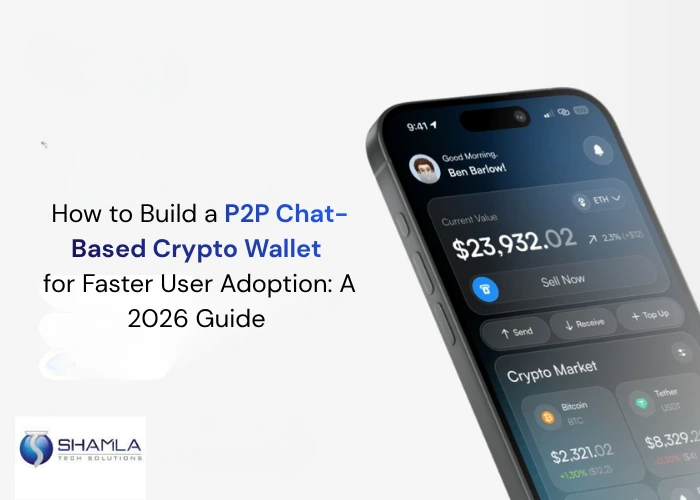

Most crypto wallets in the market expect users to manage addresses, understand gas fees, verify transaction hashes, and move through interfaces built around protocol logic rather than human behavior.these complications slows down the adoption. A P2P chat-based crypto wallet fixes it. By integrating the payments into the chat interface, it enables the users to make payment during interactions, and eliminates the need to execute the transactions as separate wallet actions, it makes them part of a natural conversation. This reduces onboarding friction, improves retention, and increases transaction frequency.
This model is especially relevant for fintech firms, banks and payment service providers that want to bring digital assets to a broader audience. These businesses are not only building wallet infrastructure. The following guide explores how financial institutions can build p2p chat based crypto wallets for faster user adoption.
The Significance Of P2P Cryptocurrency Wallet Development
A traditional wallet focuses on storage and transaction execution. A P2P chat-based crypto wallet adds context. It turns every transaction into a user interaction instead of a disconnected blockchain event. These wallets make sense for companies to rely on frequent user interaction, repeat transactions, and strong product stickiness.
In most blockchain products, adoption is usually blocked by experience. When a product feels too technical, users hesitate. A chat-based wallet addresses these issues by making peer payments easier for users who do not want to deal with long wallet addresses or technical wallet screens.
- For digital banks exploring crypto-enabled services, it offers a more approachable way to bring token transfers into a banking-style product experience.
- For crypto exchanges, it can support stronger wallet usage beyond trading by making direct transfers more social and more intuitive.
- For remittance platforms, it can simplify how users send and confirm cross-border value transfers.
- For gaming, creator, and community-led Web3 platforms, it creates a tighter connection between social activity and asset movement.
What Makes a Chat-Based Crypto Wallet Different From Traditional Wallets ?
A traditional crypto wallet focuses on storage, balances, and transaction execution. A chat-based crypto wallet adds interaction, context, and continuity.
Instead of opening a wallet app, copying an address, switching screens, and verifying details in isolation, the user can stay inside a conversation. The recipient is already visible. The payment request can be understood in context. The transfer history sits within the chat thread. This reduces uncertainty and supports faster decision-making.
For businesses, that creates measurable advantages:
- Higher transaction completion rates
- Better first-time user conversion
- More repeat wallet activity
- Stronger in-app engagement
The Business Case for Faster User Adoption
For financial institutions, wallet adoption is rarely about whether the technology works. It is about whether users feel comfortable using it repeatedly. A product that supports crypto transfers but still feels difficult will struggle to scale. A product that makes digital asset transfers feel simple has a much stronger chance of building daily or weekly usage.
A P2P crypto wallet built around chat can improve adoption in three important ways.
It Reduces Entry Barriers
Users who are new to crypto do not want to learn wallet mechanics before making a simple transfer. A conversation-first interface shortens that learning curve.
It Builds Trust Through Context
When payments happen inside a visible chat thread, users have stronger confidence about who they are paying, why they are paying, and what happened after the payment was sent.
It Encourages Repeat Usage
Messaging is a repeat behavior. When payments sit inside that behavior, the wallet becomes part of an ongoing user journey rather than a one-time utility.
For a business, this affects retention, revenue opportunities, and long-term platform value.
Core Features a P2P Chat-Based Crypto Wallet Should Include
A strong chat-based crypto wallet should feel simple on the surface and disciplined underneath. The product must protect users from complexity without hiding important information.
Real-Time Messaging With Payment Actions
The wallet should allow users to send messages, request payments, confirm transfers, and review transaction updates in real time. The messaging layer cannot feel secondary. It must be a core part of the product experience.
Contact-Based Transfers
This is one of the biggest adoption drivers. Users should be able to send funds through verified usernames, profile identity, phone-linked accounts, or app-native contacts rather than relying only on raw wallet addresses.
Clear Transaction Confirmation
A payment flow should show the asset, recipient, amount, fees, and transaction status in plain language. Confusion at the confirmation stage causes drop-off.
In-Chat Transaction History
Users should be able to see earlier transfers inside the conversation thread. This improves transparency and reduces the need to search across multiple screens.
Multi-Asset Support
A market-ready wallet should support relevant cryptocurrencies and stablecoins based on the product use case. A remittance product may prioritize stablecoins. A trading-linked wallet may need broader asset support. A gaming or loyalty ecosystem may need token-specific capabilities.
Security Controls
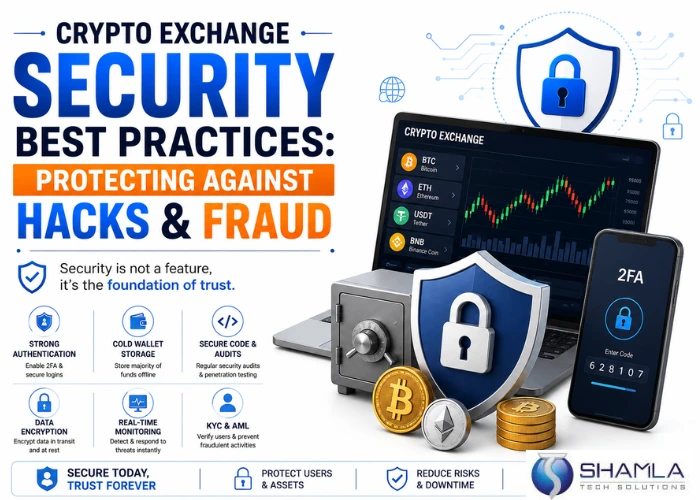
A needs strong authentication, session protection, fraud checks, encryption standards, transaction verification controls, and safe recovery mechanisms. In a chat-based wallet, the messaging layer and the payment layer must both be secured properly.
How to Build the P2P Cryptocurrency Wallet in 2026?
A P2P chat-based crypto wallet development must treat communication and payments as a single product architecture.
Start With the User Journey
The product should begin with the real use case, not the blockchain stack. Is the wallet being built for domestic peer transfers, cross-border remittance, creator payments, community rewards, or exchange-linked transfers? The answer changes the flow, compliance model, and asset strategy.
Decide the Wallet Model Early
The business must choose whether the wallet is custodial, non-custodial, or hybrid. A custodial model is often easier for mainstream adoption because the product can manage more complexity on behalf of the user. A non-custodial model gives users more control but requires stronger user education. A hybrid model may make sense for platforms trying to balance simplicity with asset ownership expectations.
Build the Messaging and Payment Logic Together
A strong crypto wallet app development strategy should connect message events and payment events intelligently. Payment requests, reminders, approval flows, success notifications, and dispute or support actions should all fit inside the communication flow.
Keep the Interface Familiar
Many crypto products lose users because they try to teach blockchain language too early. Most users do not need to see technical terms at every step. They need a clean product that shows what matters clearly. The interface should feel closer to trusted payment and messaging apps than to a developer console.
Security and Compliance Are Non-Negotiable
A chat-based wallet will only scale if users and regulators can trust it. That means crypto wallet development must include security and compliance from the start rather than adding them later.
- For financial firms, this includes KYC, AML screening, transaction monitoring, account risk scoring, audit trails, and data protection standards.
- For crypto exchanges, it also means careful attention to asset custody, withdrawal protections, fraud detection, and account-level controls.
- For remittance platforms, it means thinking about jurisdiction rules, recipient validation, and transfer transparency.
Security also has a communication side. Users trust products that explain what is happening. Clear payment status, visible verification steps, device alerts, and transparent confirmations all improve confidence. A secure system that feels unclear still creates hesitation.
Why This Model Has Stronger Long-Term Value
A P2P chat-based crypto wallet does more than improve the payment experience. It gives platforms a stronger relationship with the user.
The user does not come back only to check a balance. The user comes back to interact, communicate, send value, and stay active inside the product. That increases the strategic value of the wallet for the business. It can support more use cases over time, including merchant payments, invoicing, microtransactions, rewards, subscriptions, tipping, and community-driven transfers. This creates a better path to product stickiness. The wallet becomes a living part of the product experience, not a technical feature in the background. That is where faster adoption starts to translate into long-term platform value.
Final Verdict
Building a P2P chat-based crypto wallet is a strong move for businesses that want digital asset products to feel more natural, more trusted, and easier to use. The opportunity is not only in enabling crypto transfers. It is in removing the friction that keeps mainstream users from using them confidently. User adoption improves when crypto is presented through familiar behavior. Chat is familiar. Payments are essential. Bringing them together in one secure, well-designed product can create a much stronger wallet experience and a better commercial outcome.
Launch P2P Crypto Wallet in 7 Days with Shamlatech
Shamla Tech is a trusted Cryptocurrency Wallet Development Company helps businesses build secure, scalable, and market-ready blockchain products tailored to real business needs. With deep expertise in crypto wallet development, blockchain architecture, and user-focused product engineering, Shamla Tech supports fintech companies, digital banks, crypto exchanges, and emerging Web3 platforms in creating wallet solutions that are built for trust, usability, and long-term growth. Partner with experts at Shamlatech and launch your crypto wallet in 7 days.