
Understanding The Role Of Asset Tokenization in Business Platforms
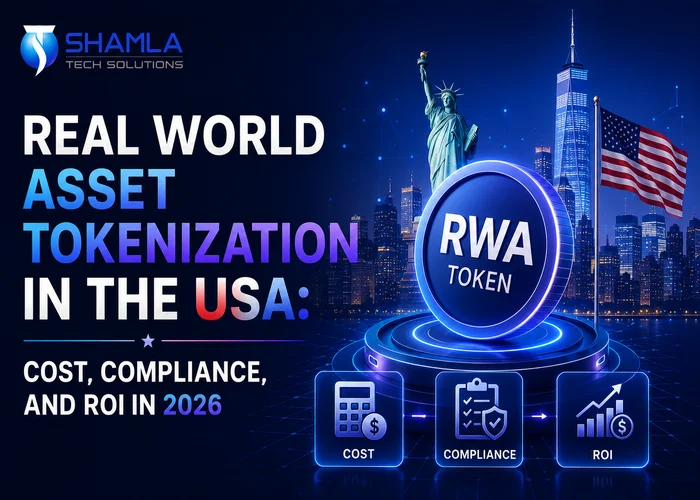
Asset tokenization converts an asset or its financial rights into digital tokens on a blockchain and represents ownership rights of real-world assets as blockchain-based digital tokens.
The asset tokenization for the business platform mints tokens and connects them with asset records, investor onboarding, ownership terms, legal documents, payment flows, custody proof, and compliance controls.
For example,
“A real estate asset tokenization company tokenizes a commercial property. Each token may represent a share of rental income, equity participation, debt exposure, or another legally defined right. The asset tokenization for the business platform manages who can buy, how ownership updates, when returns are distributed, and what documents investors can access.”
How Does Asset Tokenization Work for Businesses?
Tokenization works through a mix of legal structuring, asset verification, smart contracts, and platform workflows. Here are the steps it includes:
- Identify a valuable asset
The business first selects an asset with measurable value, such as real estate, gold, invoices, funds, commodities, or private assets. - Define what the token represents.
Legal teams decide whether the token represents ownership, revenue share, debt, fund interest, access rights, or redemption rights. - Create tokens using smart contracts.
The platform uses smart contracts to create digital tokens. These contracts define token supply, transfer rules, wallet access, investor limits, payout logic, and admin permissions. - Connect tokens with platform workflows.
The platform links tokens with investor onboarding, KYC/AML checks, document management, asset reporting, transaction records, and ownership tracking. - Bridge real-world assets with blockchain
The physical or financial asset stays outside the blockchain, while the token records ownership rights, movements, and participation on-chain. The platform keeps both connected securely.
Why Are Businesses Investing in Asset Tokenization Platforms?
Businesses are investing because traditional asset models have friction. Many assets are valuable but not liquid. They are difficult to divide, slow to transfer, expensive to administer, and hard to open to a larger investor base.
A tokenized asset platform can help a business create smaller investment units, reduce manual reconciliation, improve ownership visibility, and manage investor participation at scale. It can also support digital fundraising, secondary market access, and better reporting.
Tokenization can open alternative capital channels. For enterprises, it can modernize asset management. For investors, it can provide exposure to assets that were previously difficult to access.
This is one reason RWA tokenization Platform Development is growing across real estate, private credit, funds, commodities, and alternative investments.
What Types of Assets Can Be Tokenized by Businesses?
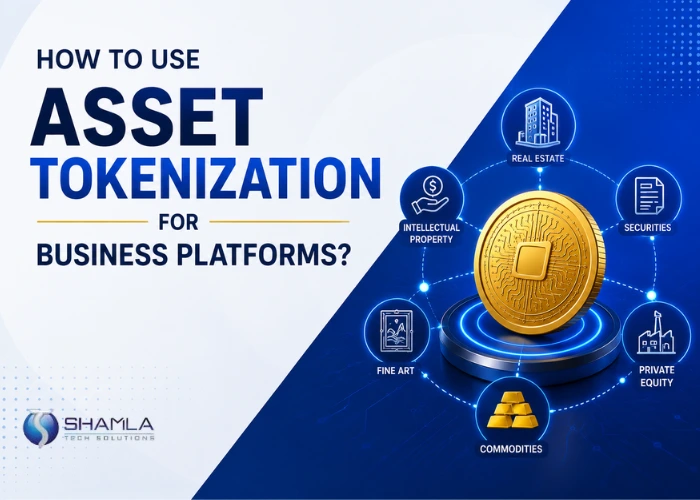
Businesses can tokenize many asset classes, but the strongest candidates usually have clear ownership, measurable value, investor demand, and a workable legal structure.
Real Estate Assets
Commercial buildings, residential projects, land parcels, rental properties, and development projects can be tokenized. Real estate tokenization is attractive because property values are high, but traditional ownership is hard to divide.
Commodities
Gold, silver, oil, agricultural goods, and other commodities can be represented through asset-backed tokens. These models need strong custody, regular audits, and transparent redemption or settlement terms.
Financial Assets
Bonds, private credit, invoices, funds, and revenue contracts can be tokenized to improve administration and investor access. These assets usually require strict compliance mapping.
Luxury and Alternative Assets
Fine art, diamonds, collectibles, watches, intellectual property, and carbon credits can be tokenized when ownership, valuation, and custody are clearly documented.
Enterprise Assets
Businesses can tokenize receivables, supply-chain assets, equipment, renewable energy credits, or project-based cash flows. These models are useful when buyers need proof, transparency, and structured participation.
7 Step to Build an Asset Tokenization Platform Successfully
A successful asset tokenization platform should be built like a financial product, not a crypto landing page.
Step 1: Select the Right Asset Class
The business should choose assets with clear demand, reliable valuation, clean ownership, and a strong reason for fractional access. Real estate, gold, funds, bonds, private credit, and commodities are common starting points.
Step 2: Define the Token Model
The token model should explain what token holders receive. It may include ownership exposure, income rights, debt repayment, asset redemption, voting rights, or access to future benefits.
Step 3: Structure Compliance Early
Compliance should not be added after development. KYC, AML, investor accreditation, jurisdiction restrictions, transfer rules, tax reporting, and document disclosure should shape the platform from day one.
Step 4: Develop Smart Contracts
Smart contracts should control token issuance, transfers, supply, burns, whitelisting, investor limits, payout logic, and administrative actions. They should be tested and audited before launch.
Step 5: Build Investor and Issuer Dashboards
Issuers need asset controls, document uploads, compliance approvals, and performance tracking. Investors need onboarding, portfolio views, transaction history, ownership records, and payout updates.
Step 6: Integrate Custody and Payments
The platform may need wallet integrations, fiat payment gateways, stablecoin payment rails, custodians, escrow providers, and banking partners.
Step 7: Launch with One Strong Use Case
A focused launch works better than a broad but shallow platform. Starting with one asset class helps the team refine operations, compliance, and investor experience.
What Are the Key Features of an Asset Tokenization Platform?
A business-ready asset tokenization platform should include the following features.
Asset Onboarding Module
This module helps issuers upload asset details, ownership documents, valuation reports, financial projections, images, legal files, and compliance notes.
Investor Onboarding
Investor onboarding should include KYC, AML, sanctions screening, identity checks, investor category verification, and jurisdiction-based access control.
Smart Contract Engine
The asset tokenization platform should support token minting, burning, transfers, whitelisting, lockups, ownership updates, payout automation, and administrative permissions.
Issuer Dashboard
Issuers should manage assets, investor requests, token supply, documents, returns, and performance updates from one dashboard.
Investor Dashboard
Investors should see available assets, documents, risk disclosures, investment history, wallet activity, payouts, and portfolio performance.
Marketplace Module
A marketplace can support primary issuance and compliant secondary transfers. This feature needs strict legal rules because not every token can trade freely.
Custody and Asset Proof
For asset-backed tokens, custody proof is critical. Gold, commodities, and collectibles need trusted storage, audit trails, insurance details, and periodic verification.
Reporting and Analytics
The platform should generate ownership records, transaction reports, payout summaries, tax documents, compliance logs, and asset performance updates.
How Does Blockchain Support Asset Tokenization?
Blockchain supports tokenization by creating a shared, tamper-resistant record of token ownership and transfer activity. It helps reduce duplicate records, improves traceability, and allows smart contracts to enforce rules automatically.
However, blockchain for Asset tokenization for business platforms alone does not solve everything. It does not verify a property title by itself. It does not replace custody for gold. It does not remove securities laws. The best platforms combine blockchain with legal documentation, off-chain verification, trusted custodians, and strong operational controls.
What Are the Benefits of Asset Tokenization for Business Platforms?
- Better Liquidity Potential
Tokenization can make traditionally illiquid assets easier to divide and distribute. This does not guarantee instant liquidity, but it can create better conditions for market participation.
- Fractional Ownership
High-value assets can be divided into smaller digital units. This allows broader participation and helps businesses reach more investors.
- Faster Administration
Smart contracts can reduce manual steps in ownership updates, payout distribution, investor records, and transfer approvals.
- Transparent Ownership Records
Blockchain-based records make it easier to trace token ownership and transaction history across the platform.
- New Fundraising Channels
Businesses can raise capital from verified investors through structured token offerings, private placements, or asset-backed digital investment models.
- Stronger Investor Experience
A good platform gives investors direct access to documents, portfolio data, payout history, and asset updates.
- Better Global Reach
A compliant tokenized platform can help businesses reach qualified investors across supported jurisdictions.
How Does Fractional Ownership Work in Asset Tokenization?
Fractional ownership divides asset exposure into smaller units. Instead of one buyer purchasing an entire property, fund interest, or commodity-backed product, many eligible investors can participate through tokens. Investors need to understand whether they own part of the asset, part of an entity that owns the asset, a debt claim, or only a contractual income right. Strong platforms explain this clearly before investment.
What Industries Are Using Asset Tokenization Platforms?
Real Estate
Developers, property funds, and real estate investment firms use tokenization to fractionalize assets and manage investor participation.
Financial Services
Banks, asset managers, fintech companies, and private funds explore tokenization for bonds, funds, private credit, and structured products.
Commodities
Gold, silver, oil, and agricultural assets can use tokenization when custody, storage, and audit systems are reliable.
Supply Chain
Tokenization can represent ownership or claims over goods, receivables, inventory, and logistics-linked assets.
Renewable Energy
Solar projects, carbon credits, energy certificates, and infrastructure assets can be tokenized for transparent tracking and participation.
Art and Collectibles
Luxury assets can be tokenized when authenticity, custody, valuation, and insurance are professionally managed.
How Can Businesses Raise Funds Through Asset Tokenization?
What Are the Legal and Compliance Requirements for Asset Tokenization?
Legal requirements differ by country, asset type, investor category, and token rights. The SEC has stated that tokenized securities are still subject to securities laws when they represent securities, regardless of format. Here are five important legal requirements businesses should review.
- Securities Law Classification
A business must determine whether the token is a security, commodity, payment token, utility token, fund interest, debt instrument, or contractual asset claim. If the token gives profit rights, income rights, or investment exposure, securities rules may apply. Legal classification decides registration, exemptions, disclosures, marketing limits, and transfer restrictions.
- KYC and AML Compliance
The platform should verify investor identity, screen sanctions lists, monitor suspicious activity, and maintain records for regulatory review. KYC and AML controls protect the RWA Tokenization platform from fraud, money laundering, terrorist financing, and prohibited transactions. These checks should be embedded into onboarding and transfer workflows, not handled manually after transactions occur.
- Investor Eligibility and Jurisdiction Rules
Not every investor can buy every tokenized asset. Some offerings may be limited to accredited, qualified, professional, or institutional investors. The platform should restrict access by country, investor category, investment limit, and holding period. This avoids illegal distribution and keeps secondary transfers aligned with the original offering rules.
- Asset Ownership and Custody Documentation
A token must connect to a real legal claim. Businesses should maintain title documents, custody agreements, valuation reports, insurance records, redemption terms, and audit statements. For physical assets such as gold or real estate, investors need proof that the asset exists, is controlled, and is not double-pledged elsewhere.
- Tax, Reporting, and Disclosure Obligations
Tokenized assets may trigger income tax, capital gains tax, withholding tax, stamp duty, transfer taxes, or fund reporting obligations. Investors also need clear risk disclosures, fee information, payout rules, and exit conditions. A platform should generate transaction reports and maintain records for both issuers and investors.
How Secure Are Asset Tokenization Platforms?
Security depends on design, not claims. A secure asset tokenization platform should include audited smart contracts, protected admin access, secure wallet integrations, encrypted data storage, transaction monitoring, and strong recovery procedures.
The highest-risk areas are smart contract bugs, admin key misuse, fake asset backing, weak identity checks, poor custody controls, and unclear redemption rules.
The fix is a layered security model. Smart contracts should be audited. Admin roles should use multi-signature controls. Investor data should be protected. Custody should be documented. Platform activity should be monitored. Every critical workflow should have approval controls.
What Challenges Do Businesses Face in Asset Tokenization?
Unclear Token Rights
Some projects fail because investors cannot understand what the token actually gives them.
How to fix it: Define the legal rights before development. Use simple disclosures, clear diagrams, and investor-facing summaries.
Weak Liquidity Planning
Tokenization does not magically create buyers. A platform needs a real investor network and a transfer framework.
How to fix it: Build distribution partnerships, marketplace rules, holding-period controls, and investor education before launch.
Poor Asset Verification
A token is only as trustworthy as the asset behind it.
How to fix it: Use third-party valuation, custody reports, title verification, insurance records, and regular audits.
Overbuilt MVP
Some businesses spend too much on features before proving investor demand.
How to fix it: Start with one asset class, one investor segment, and one clear monetization path.
Compliance Added Too Late
Late compliance changes can delay launch and increase cost.
How to fix it: Include legal, tax, and compliance advisors during product planning.
Which Blockchain is best for Asset Tokenization Development?
The best blockchain depends on business goals, investor type, compliance requirements, transaction volume, privacy needs, and ecosystem support.
- Ethereum is widely used because of its mature smart contract ecosystem and token standards.
- Polygon is often considered when lower transaction fees and faster processing matter.
- Avalanche, Solana, BNB Chain, and permissioned blockchain frameworks can suit specific enterprise use cases.
For regulated assets, the best blockchain is not always the fastest or most popular. The better choice is the network that supports security, compliance, wallet compatibility, auditability, token standards, and long-term maintainability. An RWA tokenization Development Company should help businesses compare public, private, and hybrid blockchain models before development begins.
How Much Does Asset Tokenization Platform Development Cost?
Cost depends on the platform scope. A basic MVP costs less than a full enterprise-grade tokenization marketplace.
A simple version may include asset listing, token creation, wallet connection, investor dashboard, and admin controls. A more advanced version may include KYC/AML, fiat payments, smart contract audits, custody integration, marketplace trading, reporting, role-based access, mobile apps, compliance automation, and API integrations.
A business should not choose the cheapest option without checking security and compliance. Tokenization platforms manage valuable assets and investor data. Poor architecture can create legal, operational, and reputational damage.
The better approach is to define the first use case, launch with essential features, and scale the platform in phases.
How Can Businesses Monetize Asset Tokenization Platforms?
A tokenization platform can create several revenue streams.
- Asset listing fees: Issuers pay to list verified assets on the platform.
- Token issuance fees: The platform charges for creating and launching tokenized assets.
- Transaction fees: The platform earns a percentage from primary sales or secondary transfers.
- Management fees: Asset managers charge ongoing fees for reporting, administration, and investor servicing.
- Custody or servicing fees: Platforms may earn from custody coordination, document management, or asset monitoring.
- White-label licensing: Enterprises can license the platform to financial institutions, real estate firms, or investment managers.
- Premium analytics: Advanced dashboards, portfolio analytics, and compliance reporting can become paid features.
The monetization model should fit the asset class. A real estate platform may rely on listing and management fees, while a commodity-backed platform may use custody and redemption fees.
How Can a Token be Backed by a Physical Asset?
A token can be backed by a physical asset when the digital token is connected to verifiable ownership records, custody arrangements, legal claims, and audit trails.
For example,
“A gold-backed token should connect to physical gold stored with a trusted custodian. The platform should show custody records, quantity, purity, insurance, audit reports, and redemption rules. For real estate, the platform should provide title records, valuation, SPV documents, income reports, and investor rights.”
Without this connection, a token is only a digital entry. With proper backing, it becomes part of a structured asset model.
Easy 7 Step to Launch a Tokenization Platform
Step 1. Choose the Business Model
The business should decide whether it wants a real estate platform, gold-backed token platform, private asset marketplace, fund tokenization platform, or multi-asset tokenization ecosystem.
Step 2. Map the Legal Structure
Legal teams should define token rights, investor categories, offering exemptions, jurisdiction limits, transfer rules, and tax obligations.
Step 3. Build the Product Architecture
The architecture should include user roles, smart contracts, dashboards, asset modules, KYC flow, payments, wallet support, reporting, and admin controls.
Step 4. Develop and Test Smart Contracts
Smart contracts should be reviewed for supply logic, permissions, investor restrictions, transfer rules, payout calculations, and emergency controls.
Step 5. Add Compliance and Security Layers
Identity verification, AML checks, access rules, data protection, audit logs, and multi-signature approvals should be built into the workflow.
Step 6. Launch with a Pilot Asset
A pilot asset helps the business test investor onboarding, payment flows, asset reporting, support processes, and platform performance.
Step 7. Scale with More Asset Classes
After the first launch works well, the business can add more assets, more jurisdictions, API integrations, and secondary market features.
Types Of Platform Model: Comparison Table
Platform Model | Best For | Main Strength | Main Limitation |
Custom tokenization platform | Enterprises with complex asset workflows | Full control over compliance, features, integrations, and branding | Higher development effort |
White-label tokenization platform | Businesses that need a faster launch | Quicker go-to-market with configurable modules | Less flexible than full custom development |
Real estate tokenization platform | Developers, property funds, and real estate firms | Strong use case for fractional ownership and investor access | Needs careful legal structuring |
Commodity-backed token platform | Gold, silver, oil, and physical asset businesses | Strong asset-backed narrative when custody is clear | Requires audits, insurance, and redemption rules |
Private marketplace platform | Funds and alternative investment firms | Supports controlled investor access and secondary transfers | Requires strong compliance and liquidity planning |
What Is the Future of Asset Tokenization for Enterprises?
The future of enterprise tokenization will likely move toward regulated platforms, institutional custody, stronger identity systems, better interoperability, and more practical asset servicing.
Businesses will not choose tokenization only because it sounds innovative. They will choose it when it reduces operational friction, expands investor access, improves transparency, and creates measurable business value.
For enterprises, Asset tokenization for business platforms will become part of the digital finance infrastructure. The platforms that succeed will be the ones that combine compliance, usability, secure blockchain architecture, and real asset expertise.
Choosing Among Top RWA Tokenization Platform Development Companies
When evaluating Top RWA Tokenization Platform Development Companies, businesses should look beyond smart contract skills. The right partner should understand asset classes, investor workflows, compliance controls, platform security, admin operations, and post-launch scaling. A strong provider should offer:
- Custom and white-label development
- Smart contract development and audits
- KYC/AML integration
- Custody and payment integration
- Marketplace development
- Investor and issuer dashboards
- API-first architecture
- Ongoing technical support
Why Choose an RWA Tokenization Development Company?
An experienced RWA tokenization Development Company reduces the risk of building a platform that works technically but fails commercially.
Tokenization needs more than blockchain code. It needs asset mapping, user flows, investor rules, compliance gates, transaction logic, audit trails, admin approvals, and business monetization.
A RWA Tokenization development company with RWA experience helps businesses avoid common mistakes, such as unclear token rights, weak custody proof, poor transfer restrictions, or underdeveloped investor dashboards.
This is especially important for enterprises that want to build a trusted platform, not just issue a token.
Takeaway
Tokenization can unlock new possibilities for businesses, but it works best when the platform is built with structure. The asset must be real. The rights must be clear. The investors must be verified. The smart contracts must be secure. The reporting must be reliable. Asset tokenization for business platforms gives enterprises a way to modernize ownership, improve liquidity potential, create digital investment channels, and manage assets with better transparency.