
Key Takeaways
- The RWA tokenization market has grown from an emerging blockchain use case into a multi-billion-dollar market spanning Treasuries, private credit, real estate, commodities, and funds.
- The $50 billion milestone was originally presented as a 2025 projection, but broader 2026 estimates now place the market around or above that level, depending on the assets and methodology included.
- Tokenized Treasuries currently represent one of the largest and most established RWA categories, supported by growing institutional demand for on-chain settlement and digital distribution.
- Major financial institutions including JPMorgan, BlackRock, Franklin Templeton, and other asset managers are actively developing or deploying tokenized financial products.
- Long-term forecasts point toward trillions of dollars in tokenized assets by 2030, although estimates vary considerably between research firms and should be treated as market scenarios rather than guaranteed outcomes.
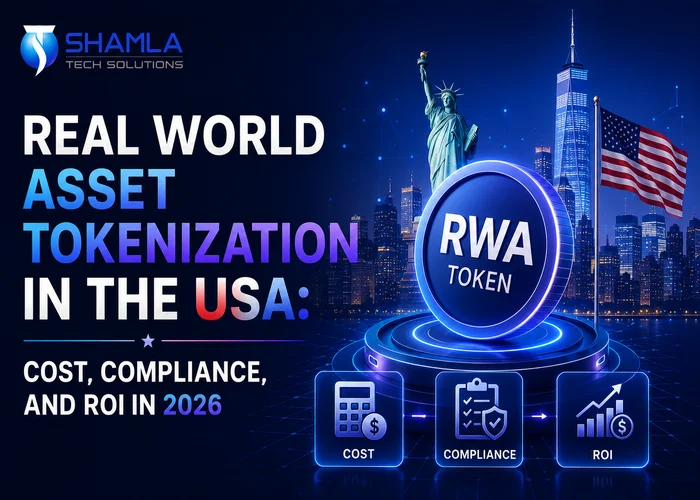
The financial world is going through a big change, with real world asset tokenization (RWA tokenization) becoming an important force in turning hard-to-sell assets into digital ones. By using blockchain technology, tokenization makes it possible to share ownership, increase liquidity, and manage assets online, removing many problems that exist in traditional markets.
Experts believe that RWA tokenization will grow to over $50 billion by 2025, driven by more institutions getting involved, clearer rules, and a stronger need for assets to work together.
Real estate, commodities, private equity, and debt are some of the main things being tokenized, and they all benefit from automated contracts, quick transactions, and secure record-keeping.
Businesses can free up capital that was previously stuck, investors can easily invest in a range of assets without high barriers, and industries can transfer assets more easily with better security.
As decentralized finance (DeFi) starts using tokenized real world assets, the mix of traditional finance (TradFi) and Web3 is set to change how assets are owned, traded, and managed around the world.
What is Real World Asset Tokenization?
Real world asset tokenization turns physical things, like property, gold, silver, and art, into digital tokens on a blockchain. It makes it easier for people to own parts of valuable items, allowing more people to invest without normal barriers. The tokenized items are stored on a decentralized record, making things clear and safe by stopping changes to transactions.
Common items tokenized include property (tokenized land and building shares), gold, silver, oil, art, and private investment funds. The benefits of RWA tokenization include more options to buy and sell things that are usually hard to trade, better safety with blockchain’s security, and easier access for people all over the world. This allows both big investors and everyday people to trade more easily.
The $50 Billion Milestone: RWA Market Size & Data
The $50 billion RWA tokenization milestone needs some context. In January 2025, reporting around Ozean projected that tokenized real-world assets could reach approximately $50 billion during 2025.
That figure was a forward-looking projection, not the actual size of the market at the time. A separate Keyrock–Centrifuge report published in March 2025 also presented $50 billion as its bull-case scenario for the end of 2025, alongside a $30 billion base case and $20 billion bear case.
What Happened in 2025?
The market grew substantially during 2025, but whether it reached or exceeded $50 billion depends on what assets and measurement methodology are included.
For example, CoinGecko’s 2026 RWA report tracks a narrower set of tokenized RWAs and shows the market growing from $5.42 billion at the start of 2025 to $19.32 billion by March 31, 2026. CoinGecko explicitly notes that its figures may differ from other sources because they cover only assets within its reporting scope.
Other datasets use broader definitions. A November 2025 report from Canton Network, for example, put on-chain RWA value excluding stablecoins at $36.27 billion.
Current RWA Tokenization Market Size in 2026
By June 2026, the broader tokenized RWA market had crossed $51 billion, according to Bernstein data reported by The Block—up approximately 40% year-to-date.
This means the $50 billion milestone is now an observed market benchmark rather than simply a 2025 forecast, although the exact market size varies by methodology and asset coverage.
| Period | RWA Tokenization Market Figure | Context |
| 2025 projection | ~$50B | Ozean projection for 2025 |
| 2025 bull case | $50B | Keyrock–Centrifuge scenario |
| Nov. 2025 | $36.27B | Canton Network estimate, excluding stablecoins |
| Mar. 2026 | $19.32B | CoinGecko tracked tokenized RWAs |
| Jun. 2026 | >$51B | Bernstein estimate reported by The Block |
The Market Landscape: Why RWA Tokenization is Growing Rapidly
The global market for real world asset tokenization is expected to be worth over $50 billion by 2025, according to reports from big companies like Shamla Tech, Deloitte, and PwC. Turning physical things into tokens has become very popular because it helps unlock money in markets that are usually hard to trade. As more big investors see blockchain-based assets as a safe, clear, and smart way to spread out their investments, the market is growing quickly. As blockchain technology gets better and more connected, and as markets for blockchain-based assets grow, tokenization becomes easier for more people and companies around the world to use, making its growth happen even faster.
The main things driving this fast growth are big improvements in blockchain technology and clearer rules. Blockchain innovation, especially in the areas like smart contracts, decentralized storage, and the ability to connect different blockchains, has actually made tokenized asset markets much safer and more efficient. The growth of decentralized exchanges (DEXs) and decentralized finance (DeFi) platforms has also made it easier to settle assets quickly and let people own small parts of things. At the same time, rules and laws around the world are slowly catching up, with governments in many countries working on legal standards for tokenized assets. These changes are giving big investors the trust they need to use blockchain as a key part of their investment plans, which helps create more demand and encourages more people to get involved in tokenization.
Institutional adoption is another important reason for the fast and steady rise of RWA tokenization market growth. Big financial companies, like BlackRock, JPMorgan, and Goldman Sachs, have started adding blockchain-based assets to their investment portfolios, proving that tokenization can last for the long term. These large companies are seeing tokenization not just as a new technology, but as an important tool to make better use of capital and make asset transfers easier. By investing in blockchain platforms or creating tokenized property and stock funds, these companies are leading innovation and helping set the rules for the industry. The increase in investment from big companies makes the market stronger, creates more trading options, and encourages smaller players to join in the financial world.
Stablecoins and central bank digital currencies (CBDCs) are playing a very important role in the adoption of RWA tokenization. These digital currencies offer a stable, government-backed way to exchange money, which is key for keeping tokenized assets useful in the real world. Stablecoins help make transactions between tokenized assets easy, acting as a link between digital finance and traditional finance. Also, CBDCs are expected to help bring tokenized assets into regulated financial systems by providing a government-backed, fully compatible digital currency that supports tokenizing many real world assets. As these digital currencies are used more, they improve the trust and function of RWA tokenization, making it simpler for both big investors and regular people to take part in tokenized markets.
Market Size & Projections by Asset Class
The RWA tokenization market is developing unevenly across asset classes. Tokenized Treasuries currently lead the market, while private credit, commodities, real estate, and other assets are expanding from smaller bases.
CoinGecko reported that tokenized RWAs reached $19.32 billion by the end of Q1 2026, up 256.7% from the beginning of 2025. Tokenized Treasuries accounted for 67.2% of that market, while tokenized commodities represented 28.7%.
Asset Class | 2025 / Recent Market Size | 2026 Market Signal | 2030 Outlook |
Tokenized Treasuries | ~$6.8B* | $13.6B in Apr. 2026 | Potentially $0.8T in Citi’s base case |
Private Credit | ~$11.5B* | Several-billion-dollar on-chain market | Potentially $0.1T in Citi’s base case |
Real Estate | ~$1.4B* | Still relatively small compared with Treasuries and credit | Potentially $0.2T in Citi’s base case |
Commodities | ~$1.3B* | $5.5B by Q1 2026 | Potentially $0.1T+ across broader tokenization scenarios |
Overall Tokenized RWAs | ~$22B* | $19.3B tracked by CoinGecko at Q1 2026 | $5.5T Citi base case |
Real-World Use Cases: Companies Embracing RWA Tokenization
RWA tokenization has moved beyond experimentation, with major financial institutions and fintech companies bringing money-market funds, U.S. Treasuries, equities, and other financial assets on-chain. The following examples show how leading firms are using blockchain for issuance, settlement, transfer, and distribution.
JPMorgan Kinexys: Institutional Assets and Tokenized Funds
JPMorgan’s blockchain business, Kinexys by J.P. Morgan, evolved from its Onyx platform and provides blockchain infrastructure for institutional financial markets. In 2026, Kinexys enabled J.P. Morgan Asset Management’s suite of tokenized money-market funds, using its infrastructure as a bridge between fund service providers and public Ethereum.
Kinexys has processed more than $3 trillion in transactions since inception and averages more than $5 billion in daily transaction volume, demonstrating how blockchain infrastructure is being deployed beyond experimental pilots.
What it tokenizes: Institutional money-market funds and other financial-market assets
Scale: $3T+ cumulative Kinexys transaction processing since inception
BlackRock BUIDL: Tokenized U.S. Treasury Fund
BlackRock’s USD Institutional Digital Liquidity Fund (BUIDL) is one of the most prominent examples of institutional fund tokenization. The fund provides eligible investors with on-chain exposure to assets such as U.S. Treasury bills, cash, and repurchase agreements.
BlackRock reported in 2026 that its tokenized Treasury fund had become the largest tokenized fund in the world.
BlackRock has continued expanding its tokenization strategy. In August 2026, it launched additional tokenized money-market products and introduced on-chain share classes for selected institutional cash-management funds in Europe using Kinexys’ asset-tokenization platform.
What it tokenizes: U.S. Treasury and money-market fund exposure
Scale: BUIDL is the world’s largest tokenized fund, according to BlackRock
Ondo Finance: Tokenized Treasuries and Securities
Ondo Finance has built a broad RWA ecosystem around tokenized financial assets. Its flagship products include USDY, a permissionless tokenized Treasury product, and OUSG, an institutional tokenized Treasury fund.
In January 2026, Ondo reported more than $2.5 billion in total value locked across its tokenized products, including approximately $2 billion across its two tokenized Treasury products. USDY had surpassed $1 billion in TVL, while OUSG had exceeded $770 million at the time.
Ondo has also expanded into tokenized equities and, in 2026, participated in a cross-border redemption pilot with Kinexys by J.P. Morgan, Mastercard, and Ripple that connected tokenized Treasury redemption with traditional bank settlement rails.
What it tokenizes: U.S. Treasuries, stocks, ETFs, and other securities
Scale: $2.5B+ TVL across tokenized products reported in January 2026
Franklin Templeton BENJI: Tokenized Money-Market Fund
Franklin Templeton’s Franklin OnChain U.S. Government Money Fund (FOBXX) is represented on-chain by the BENJI token. Launched in 2021, it became the first U.S.-registered mutual fund to use a public blockchain as its official system of record for transactions and share ownership.
By April 2026, Franklin Templeton reported that the BENJI suite represented approximately $1.98 billion in AUM, while the BENJI token itself had become the second-largest tokenized RWA on Stellar by value at more than $650 million.
The platform supports peer-to-peer transfers, on-chain dividend distribution, and 24/7 market access. Franklin Templeton has also expanded BENJI’s institutional utility through partnerships that allow tokenized fund shares to be used within digital-asset market infrastructure.
What it tokenizes: U.S. government money-market fund shares
Scale: $1.98B BENJI suite AUM reported in April 2026
How Real Estate Is Being Transformed by Tokenization
Real estate tokenization applies blockchain infrastructure to property ownership, investment funds, loans, and other real-estate interests by representing defined rights or economic interests as digital tokens. Instead of requiring investors to purchase an entire property or participate through traditional structures alone, tokenization can divide an eligible investment into smaller digital units.
For example, a $10 million property could theoretically be represented by 10,000 tokens, with each token corresponding to a defined fractional interest. The actual ownership rights, however, depend on the legal structure behind the token. Tokenization does not automatically transfer legal title to a property simply because a token exists on a blockchain.
How Tokenized Real Estate Works
A typical model connects the underlying property with a legal entity or investment structure and then represents the associated ownership or economic interests through blockchain-based tokens.
Smart contracts can automate predefined functions such as token issuance, transfers, investor eligibility checks, and distributions. Blockchain records can also provide a transparent transaction history, while off-chain legal and property records continue to establish the underlying rights.
Current Real Estate Tokenization Market
Real estate remains one of the largest potential applications for asset tokenization, but its current on-chain market is still relatively small compared with the overall global property market.
Citi’s June 2026 Tokenization 2030 report estimates current tokenized real estate exposure at approximately $165 million globally, while projecting around $200 billion of tokenized real-estate fund exposure by 2030.
Broader market research uses a different definition and estimates the global tokenized real estate market at $5.2 billion in 2026, illustrating why market-size figures should always be accompanied by the methodology and asset coverage used.
Deloitte takes a longer-term view, forecasting that approximately $4 trillion of real estate could be tokenized by 2035, compared with less than $0.3 trillion in 2024.
These figures are not directly comparable, but they point to the same underlying opportunity: real estate tokenization remains early-stage while the potential addressable market is enormous.
Fractional Ownership and Greater Accessibility
One of the most frequently cited benefits of tokenization is fractional ownership. Instead of requiring investors to commit enough capital to acquire an entire property, a compliant tokenized structure can divide the economic interest into smaller units.
This can potentially lower investment minimums and allow investors to diversify across multiple properties or strategies. However, minimum investment amounts depend on the issuer, legal structure, jurisdiction, and applicable investor rules; tokenization itself does not guarantee retail access.
Improving Real Estate Liquidity
Traditional real estate can be difficult to trade because transactions often involve significant capital, legal documentation, due diligence, and lengthy settlement processes.
Tokenization can make ownership interests easier to transfer by representing them digitally. Where a compliant secondary market exists, investors may be able to trade fractional interests more efficiently than transferring an entire property.
Importantly, tokenization does not create liquidity by itself. A secondary market still needs buyers, sellers, appropriate regulations, reliable valuation, and supporting infrastructure. Citi similarly notes that tokenization can improve transferability but does not fundamentally eliminate the underlying liquidity characteristics of private-market assets.
Greater Transparency and Operational Efficiency
Blockchain-based records can provide a persistent record of token ownership and transactions. Smart contracts can automate predefined workflows, potentially reducing manual reconciliation and administrative processes.
For real estate funds, tokenization can also support digital issuance, asset servicing, investor management, and secondary-market functionality. Deloitte identifies private real estate funds, real-estate loans and securitizations, and undeveloped or under-construction property as important areas within the tokenized real-estate ecosystem.
Expanding Access to Global Real Estate
Tokenized real estate can make property-related investment interests digitally transferable across markets, but borderless access does not mean unrestricted access. Securities laws, property regulations, investor eligibility, tax requirements, AML/KYC obligations, and ownership restrictions can still apply.
For businesses developing a tokenized real estate platform, the opportunity therefore lies in combining fractional ownership, compliant digital distribution, transparent ownership records, automated administration, and potential secondary-market access.
As the market develops, real estate tokenization is likely to become less about simply putting property ownership on-chain and more about building the regulated infrastructure that connects property, investors, custody, compliance, payments, and secondary markets.
How to Get Started with Real World Asset Tokenization?
Getting started with real world asset tokenization involves a few important steps that need some technical knowledge, legal rules, and a good partnership with a trustworthy real estate tokenization platform. The first step for investors or businesses is to choose the right asset to tokenize. For real estate, it’s super important for all investors to check where the asset’s location is, how in-demand it is, and if it will actually be profitable in the long run. The asset picked for tokenization should be good for fractional ownership and have a clear and easy-to-check ownership history, since tokenization needs a safe, clear base to build trust in the blockchain system.
Once an asset is chosen, the next step is to work with a trusted real estate tokenization platform. These platforms provide the needed technical setup, blockchain connections, and smart contract tools to tokenize an asset quickly and easily. Top platforms like Polymath, Securitize, and Tokeny Solutions offer strong systems to help with token creation, following the rules, and trading. They work well with different blockchain networks, giving flexible options that match the asset’s specific rules. By using these platforms, businesses can speed up the tokenization process and give investors simple access to tokenized real estate opportunities.
Legal compliance is another very important part of real world asset tokenization. Turning assets into tokens means dealing with complicated rules, which can be different depending on the area. It’s very important to make sure the tokenized assets follow the legal rules for securities in each place. Security Token Offerings (STOs) are usually used in tokenization because they match the traditional securities laws, giving both clear rules and protection for investors. Unlike Initial Coin Offerings (ICOs), which are often linked to utility tokens and may not follow financial rules, STOs show ownership of real world assets like stocks or loans and are legally seen as securities. By choosing STOs instead of ICOs, businesses can make sure their tokenization projects follow the right rules, which helps reduce the risk of legal problems.
Several key platforms are leading the way in tokenization of real estate in 2025. Polymath, for example, offers a full set of services that are made to simplify the process of creating security tokens while making sure they follow the legal rules in different areas. It lets users create security tokens that meet both local and global rules. Securitize is another big player, offering complete solutions for turning real world assets into tokens, from creating them to trading them, making sure both big investors and regular investors can safely and legally access tokenized real estate. Tokeny Solutions, on the other hand, is great at offering a platform that includes asset tokenization, helping investors get started, and trading in secondary markets, all while working with both public and private blockchain systems, giving businesses and investors the flexibility and room to grow.
When starting the process of RWA tokenization, it’s really important to understand the rules and legal things that apply. Tokenization using Security Token Offerings (STOs) makes sure that the asset follows the rules for securities, offering clear information, protecting investors, and making cross-border transactions easier. On the other hand, ICOs are usually more unclear from a legal point of view, which can put both the issuer and the investor at risk for legal and financial problems. Choosing the right legal setup, like STOs, gives not only clear rules but also helps build trust with investors and confidence in the market. For businesses, working with legal experts who know about blockchain and securities law is really important to handle these challenges the right way. By doing this, they make sure the tokenized real estate project follows the rules and remains appealing to big investors.
The Future of RWA Tokenization: Trends & Predictions
The future of RWA tokenization is expected to be shaped increasingly by institutional adoption rather than purely crypto-native experimentation. Tokenized U.S. Treasuries, money-market funds, private credit, real estate, and commodities are already moving into production environments, while banks and asset managers are building infrastructure for on-chain issuance and settlement. In 2026 and beyond, greater regulatory clarity, stronger custody standards, interoperable blockchain infrastructure, and improved compliance tooling could accelerate adoption. Tokenized Treasuries are likely to remain one of the leading categories because they combine strong institutional demand with relatively straightforward digital settlement and distribution models.
Longer term, the market could move from billions to trillions of dollars in tokenized assets as more traditional financial instruments migrate on-chain. Citi estimates that tokenized assets could reach $5.5 trillion by 2030 in its base case and $8.2 trillion in its bull case, while other industry forecasts are considerably more aggressive. The exact outcome will depend on regulation, institutional participation, liquidity, blockchain interoperability, and the ability to connect on-chain assets with existing financial infrastructure. Rather than replacing traditional finance overnight, tokenization is more likely to evolve as an additional infrastructure layer for issuing, transferring, settling, and managing real-world assets.
Frequently Asked Questions
1. How Big Is the RWA Tokenization Market?
The RWA tokenization market is already worth tens of billions of dollars, although estimates vary because research firms use different definitions and asset coverage. CoinGecko’s tracked tokenized RWA market reached $19.32 billion at the end of Q1 2026, while broader industry estimates placed the market above $50 billion by mid-2026.
2. Did RWA Tokenization Reach $50 Billion in 2025?
The $50 billion figure was primarily a 2025 projection, rather than a universally accepted measurement of the market at year-end. Ozean’s report popularized the projection, while other 2025 forecasts used different base and bull-case estimates. Current 2026 data shows that the market has continued expanding and has now reached or exceeded the $50 billion benchmark in some broader datasets.
3. What Will the RWA Tokenization Market Be Worth by 2030?
Forecasts vary significantly depending on the definition of tokenized assets. Citi’s 2026 research estimates a $5.5 trillion base case and $8.2 trillion bull case by 2030. Other industry forecasts are more aggressive, so these figures should be viewed as scenarios rather than guaranteed outcomes.
6.Why Is the RWA Tokenization Market Growing So Fast?
Growth is being driven by institutional adoption, faster settlement, fractional ownership, improved transparency, programmable financial assets, and demand for more efficient capital-market infrastructure. Increasing regulatory clarity and the development of institutional-grade custody and compliance systems are also helping traditional financial institutions explore tokenized assets.
7. Which Assets Lead RWA Tokenization?
Tokenized U.S. Treasuries are currently among the largest and most established RWA categories. Private credit, commodities, real estate, funds, and other financial assets are also being tokenized. CoinGecko reported that tokenized Treasuries represented the majority of its tracked RWA market at the end of Q1 2026, while tokenized commodities also recorded significant growth.
8. Which Institutions Are Adopting RWA Tokenization?
Major financial institutions participating in tokenization include JPMorgan, BlackRock, Franklin Templeton, and other banks and asset managers. Examples include JPMorgan’s Kinexys blockchain infrastructure, BlackRock’s BUIDL fund, and Franklin Templeton’s BENJI tokenized money-market fund.
9. What Is the Source of the $50 Billion RWA Projection?
The $50 billion projection was associated with an Ozean report and was subsequently reported by crypto-industry publications including Decrypt and CoinGeek. It represented a forward-looking 2025 projection rather than a universally standardized measurement of actual year-end market size.
10.How Can Shamla Tech Help Me Enter the RWA Market?
Shamla Tech can support businesses with RWA tokenization platform development, including token architecture, smart contracts, blockchain integration, compliance-oriented workflows, custody integrations, wallets, APIs, trading infrastructure, and custom platform development. The technology can be designed around the specific asset class, jurisdiction, business model, and investor requirements.
Build Your RWA Tokenization Project with Shamla Tech
Ready to explore an RWA tokenization opportunity?
Shamla Tech helps businesses design and develop custom RWA tokenization platforms that connect real-world assets with blockchain-based ownership, compliance, trading, and settlement infrastructure.
From token and smart-contract development to full-platform architecture and integrations, our team can help turn your RWA concept into a scalable digital-asset solution.