
What are AI Agent in Crypto?
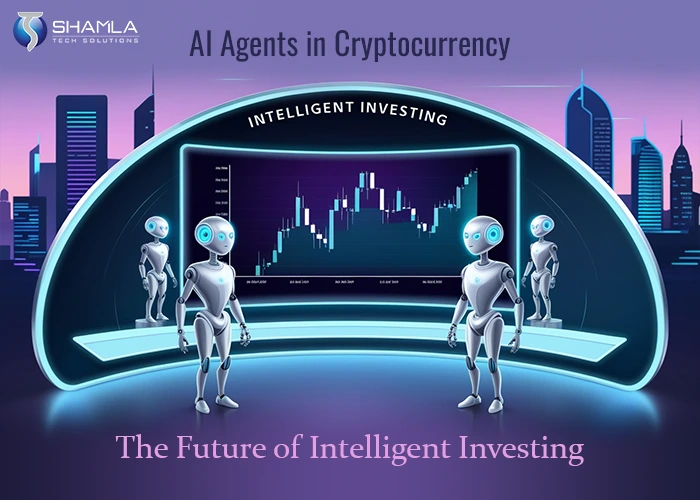
AI agents in crypto are automated digital assistants that use artificial intelligence to examine market data, identify trends, and execute transactions using complex algorithms. These help consumers to enhance their trading strategies and make smarter choices. Traders, investors, and blockchain companies as well are finding these AI-driven tools absolutely necessary.
Many financial websites are enhancing their offerings using artificial intelligence. Robinhood’s crypto offerings and premium services in 2024 increased its stock by 193%. Rising 58% to $2.95 billion, the company reported its first annual profit of $1.56 per share, surpassing projections shortly following the integration of an AI agent in crypto into its operations.
DeFAI, a combination of decentralized finance (DeFi) and artificial intelligence agents set to change crypto trading, drives this increase even more. Companies and investors who adopt these technologies will benefit in this data-driven sector.
Understand the Basics of AI agent in Crypto
AI agent in crypto exchanges are like sophisticated digital assistants with their own will. Unlike typical bots, they don’t only execute rigorous orders; rather, they learn, change, and get smarter with time.
Imagine them as turbocharged virtual assistants. From producing digital art to managing your cryptocurrency money, they can handle many different activities. What distinguishes them is as follows:
- They easily sift through vast data sets.
- Use real-time information to guide your selections.
- Automatically carry out deals or chores without requiring a nudge.
- Learn to constantly increase their efficiency.
Furthermore, when it comes to some jobs, they are faster, more intelligent, and sometimes more efficient than people.
Key Crypto AI Agent Market Data and Statistics [2026]
- The Crypto AI agents market is growing rapidly, increasing from $8.29 billion in 2025 to $12.06 billion in 2026, at a CAGR of 45.5%.
- The market is expected to continue its strong momentum, reaching $53.2 billion by 2030 with a projected CAGR of 44.9%.
- North America held the largest market share in 2025, while Asia Pacific is expected to record the fastest growth. Demand is rising across major economies, including the US, India, China, Japan, Germany, and the UK.
How Do Crypto AI Agents Differ from Traditional Bots? Key Differences
While both crypto AI agents and traditional bots automate repetitive tasks, they operate very differently. Traditional bots follow predefined rules and execute trades only when specific conditions are met. They are fast and reliable for repetitive strategies, such as arbitrage, grid trading, or dollar cost averaging, but they cannot understand market context or adapt to unexpected events.
AI crypto agents, on the other hand, use large language models (LLMs), machine learning, and real-time data to analyze market conditions, interpret user intent, and make context-aware decisions. Many modern AI agents can process on-chain data, news, social sentiment, and portfolio performance simultaneously before recommending or executing actions. Unlike bots, they continuously refine their responses as new information becomes available, making them better suited for today’s fast-moving crypto markets. As the crypto ecosystem evolves, AI agents are becoming intelligent decision support systems rather than simple automation tools.
Feature | Traditional Crypto Bots | Crypto AI Agents |
Decision Making | Executes predefined rules only | Uses AI reasoning and contextual decision-making. |
Intelligence | Static and rule-based | Adaptive, self-learning, and goal-driven |
Market Response | Reacts only to programmed triggers | Analyzes trends, sentiment, and market conditions in real time |
Data Sources | Primarily price, volume, and technical indicators | Combines on-chain data, market data, news, social sentiment, and wallet activity |
Learning Ability | No learning capability | Continuously improves through AI models and updated data |
Task Execution | Performs single, predefined tasks | Handles complex, multi-step workflows across multiple platforms |
User Interaction | Manual configuration through APIs or dashboards | Supports natural language instructions and autonomous execution |
Best Use Cases | Grid trading, arbitrage, DCA, and market making | Portfolio management, research, trading, DeFi automation, and risk analysis |
How Do Crypto AI Agents Work? A Step-by-Step Breakdown
If you’re wondering how crypto AI agents work, the answer lies in their ability to collect, analyze, and act on large amounts of data in real time. Unlike traditional trading bots that follow fixed rules, crypto AI agents continuously evaluate market conditions, learn from new information, and improve their decisions over time. Here’s a step-by-step look at how they work.
1. Data Collection
The first step is gathering data from multiple sources. Crypto AI agents collect both structured and unstructured data, including blockchain transactions, cryptocurrency prices, trading volumes, market trends, news articles, and social media discussions. This gives them a complete view of what’s happening across the crypto market.
2. Analysis and Prediction
Once the data is collected, the agent analyzes it using machine learning and natural language processing (NLP). It identifies market patterns, tracks price movements, and understands investor sentiment from news stories and social media posts. This helps the agent predict potential market opportunities and risks.
3. Decision Making
Based on its analysis, the agent decides the best course of action. It may recommend buying or selling a cryptocurrency, rebalancing a portfolio, managing risk, or sending alerts to the user. These decisions are made using AI models that evaluate multiple factors instead of relying on fixed rules.
4. Execution
After making a decision, the agent can carry out the action automatically. It connects with crypto wallets, exchanges, or smart contracts to execute trades, move assets, or complete other blockchain transactions securely and quickly.
5. Continuous Learning
One of the biggest advantages of crypto AI agents is that they keep learning. Every trade and market event provides new data that help the system improve its future predictions and decision-making. Over time, this allows the agent to adapt to changing market conditions and deliver better performance.
Data Collection: On-Chain and Off-Chain Sources
For crypto AI agents to make smart decisions, they first need reliable data. They collect information from both on-chain and off-chain sources to understand the complete market picture. On-chain data includes blockchain transactions, wallet activity, token movements, and smart contract interactions. Off-chain data comes from crypto exchanges, DEX APIs, price oracles such as Chainlink, news platforms, and social media discussions. By combining these data sources, crypto AI agents can track market activity, identify emerging trends, and respond to changing conditions much more accurately.
Decision-Making and Autonomous Execution
Once the data has been analyzed, autonomous crypto agents decide what action to take based on their goals and the current market conditions. Instead of following fixed instructions, they evaluate different scenarios, estimate potential risks, and choose the most suitable action. Depending on how they are configured, they can place trades, rebalance portfolios, interact with smart contracts, or send recommendations without requiring constant human input. This ability to reason, decide, and execute tasks independently is what makes autonomous crypto agents more advanced than traditional automated trading bots.
Key Trends Driving Adoption of AI in Cryptocurrency
The emergence of crypto AI agents or AI-powered crypto exchange development is not only a passing fad but rather a direct reaction to the growing complexity of blockchain ecosystems. Manual tactics are falling short as the cryptocurrency industry develops; artificial intelligence-driven automation is here to close the gap. These are the main elements hastening its acceptance in 2025:
1. Crypto Markets Are Too Complex for Humans Alone
Crypto trading was rather simple in the early days—buy cheap, sell high, and perhaps establish a stop-loss if you were careful. Markets today are scattered over several blockchains, DeFi protocols, and liquidity layers. AI bots can do deals across several ecosystems quicker than any human ever could by processing this complexity in real time.
For instance, an artificial intelligence robot can track liquidity pools on Ethereum, Solana, and Avalanche concurrently, spotting arbitrage possibilities and making trades before price differences vanish.
2. DAOs Are Delegating Governance to AI Agents
Though voter turnout is still a problem, Decentralized Autonomous Organizations (DAOs) were meant to make governance more democratic. Agentic AI in crypto is now being trained to examine proposals, evaluate risks, and vote according to predefined criteria.
For instance, a DAO in charge of a lending protocol can send an artificial intelligence agent to assess governance suggestions, so guaranteeing that only modifications helping the long-term health of the protocol are authorized.
3. Expansion Into Fraud Detection and Gaming
AI crypto agents are expanding into new fields, including NFTs, security, and blockchain games; they are not only for trading.
Scanning blockchain activity allows artificial intelligence agents to identify wash trades, highlight questionable transactions, and stop attacks before they occur.
AI agent in crypto are being utilized to run in-game economies, automate yield techniques in GameFi, and even design dynamic, changing game environments.
Why Are Crypto AI Agents Growing So Fast in 2026-2027?
Several themes are driving the acceptance and expansion of artificial intelligence crypto AI agents in 2026-27. These are:
- Market Volatility: Traders and investors are looking to artificial intelligence to control risk and enhance timing as price fluctuations become more erratic.
- DeFi Complexity: Users are finding it difficult to automate complicated tactics as Layer 2s, bridges, and multi-chain protocols proliferate.
- Technologies, including GPT-4, AutoML, and distributed artificial intelligence, are expanding the frontiers of what agents can accomplish.
- Large financial institutions want smarter automation technologies to manage compliance and portfolios.
- Crypto markets never sleep; human traders can’t be active all the time; AI agent in crypto fill the gap left by this.
- Even retail consumers now have access to no-code artificial intelligence tools to create and run their own smart agents.
Risks and Challenges of Crypto AI Agents
As crypto AI agents become more capable, they also introduce technical, security, and governance challenges that the industry must address.
1. Integrating Off-Chain Data with Blockchain Systems
Blockchains cannot access external data on their own, so crypto AI agents rely on oracles to gather information such as market prices, news, and social sentiment. If these data sources are delayed, inaccurate, or compromised, the agent’s decisions may also be affected.
2. Ethical Concerns Around AI Autonomy in Finance
As crypto AI agents make more decisions without human intervention, concerns around transparency, accountability, and governance continue to grow. Understanding how AI reaches financial decisions remains a major challenge for developers and regulators.
3. Market Manipulation and Hype Cycles
AI agent tokens can experience sharp price swings driven by speculation, social media hype, and coordinated trading activity. This increases the risk of market manipulation, wash trading, and sudden price volatility, making careful risk management essential for both investors and developers.
The Future of AI Agents in Crypto
The next generation of AI agents in crypto is expected to be smarter, more transparent, and better integrated with decentralized ecosystems.
Smarter Decentralized Infrastructure
Projects are developing decentralized AI networks and advanced oracle solutions that can provide secure, reliable access to off-chain data while reducing dependence on centralized providers.
Greater Human and AI Collaboration
Rather than replacing people, future AI agents in crypto are likely to work alongside users by offering recommendations, automating routine tasks, and supporting faster, more informed investment decisions while keeping humans in control of critical financial choices.
Top Use Cases for Crypto AI Agents in Trading, DeFi and Beyond
AI agents in crypto are transforming how people invest, trade, and interact with blockchain platforms. From simplifying everyday tasks to improving investment decisions, they are finding practical use across the crypto ecosystem.
Automated Crypto Trading and Market Intelligence
One of the most valuable applications of AI agents in crypto is automated trading and market intelligence. These agents monitor the market 24/7, analyze price movements, trading volumes, on-chain activity, and even news and social media sentiment to identify potential opportunities. Instead of relying only on fixed trading rules, they adjust their strategies as market conditions change.
AI agents in crypto can also automate portfolio rebalancing, generate market insights, and send real-time alerts when significant price movements or risks are detected. This helps traders make faster, more informed decisions while reducing the need for constant market monitoring.
DeFi Optimization; Yield Farming, Lending and Liquidity
AI agents in crypto are making decentralized finance easier to manage by automating complex DeFi strategies. They can compare yields across multiple protocols, identify the best staking or lending opportunities, and recommend where assets may generate higher returns. Some agents also monitor liquidity pools, optimize asset allocation, and automatically reinvest rewards through auto-compounding strategies.
By continuously tracking changes in interest rates, liquidity, and protocol performance, AI agents in crypto help users maximize potential returns while reducing the time and effort required to manage multiple DeFi platforms manually.
Smart Contract Auditing and Security
Security is another area where AI agents in crypto deliver significant value. They can scan smart contracts for coding errors, security vulnerabilities, and unusual transaction patterns before these issues lead to financial losses. AI-powered monitoring systems also detect suspicious wallet activity, potential fraud, and emerging cyber threats in real time.
Some platforms use AI to continuously review smart contracts even after deployment, helping developers identify new risks as protocols evolve. By strengthening security and improving threat detection, AI agents in crypto help build safer blockchain applications and increase user confidence across decentralized ecosystems.
Top 6 Tools for Crypto AI Agents
The right AI platform depends on your business size, automation needs, and the level of customization you require.
Botpress
Botpress is a flexible AI agent platform designed for businesses that need advanced automation and seamless crypto integrations. It supports crypto APIs, delivers real-time updates, automates trading workflows, offers enterprise-grade security, and provides automatic translation in more than 100 languages. Its pricing includes a pay-as-you-go model for startups and customized plans for larger enterprises.
Drift
Drift focuses on conversational AI for customer engagement and support. It provides real-time alerts for account activity and price updates, automates lead qualification, integrates with CRM and marketing tools, and delivers personalized customer assistance. Pricing scales according to business size, making it suitable for both growing startups and large organizations.
Intercom
Intercom combines AI powered customer support with detailed user insights. It offers multichannel communication, in-app messaging, user behavior analytics, and integration with crypto platforms through APIs. The platform provides flexible pricing based on the number of users and the advanced features required by the business.
Tars
Tars is a no-code chatbot platform that simplifies customer onboarding and support for crypto businesses. It includes ready-made chatbot templates, API integrations, and automated conversations for guiding new users. Pricing starts with affordable plans for small teams and scales to meet enterprise-level automation requirements.
Rasa
Rasa is an open source AI framework for organizations that need complete control over their AI agents. It supports advanced natural language understanding, custom workflows, and deep integrations for crypto applications. The open source version is free, while enterprise deployments are available through customized pricing plans.
Top Crypto AI Agent Tokens to Watch in 2026
Following are the crypto AI agent tokens that are going to lead in 2026 and the coming years.
1. Artificial Superintelligence Alliance (FET)
The Artificial Superintelligence Alliance (ASI) unites Fetch.ai, SingularityNET, and Ocean Protocol to create distributed Artificial Superintelligence (ASI) for the greater good. Combining their tokens—FET, AGIX, and OCEAN—into one unified ASI token would help them to build a smooth environment that democratizes access to the newest artificial intelligence technologies.
Driven by Fetch.ai’s autonomous agents managing smart cities, supply chains, and DeFi, this decentralized network operates itself. By means of machine learning, these agents optimize energy networks, simplify logistics, and control complicated financial transactions, hence increasing efficiency and lowering the need for human involvement.
2. Virtual Protocol
Virtuals Protocol is a decentralized platform on the Base blockchain designed for creating and co-owning AI agent in crypto, particularly in gaming and entertainment. Users can create interactive NFTs and AI-powered virtual influencers that reach people on several platforms. Tokenized, these agents enable stakeholders to direct their evolution by investing in them.
The protocol distributes to token holders the income produced by AI in cryptocurrency via a buyback-and-burn system. Agents’ income generation allows for some usage to buy back and burn agent-specific tokens, hence increasing the value of the leftover tokens and providing financial incentives to investors
3. Oraichain (ORAI)
The first AI-powered Oracle system connecting AI and blockchain is Oraichain. It helps smart contracts safely access and operate AI APIs, hence extending their functionality beyond conventional data sources. Oraichain allows uses including credit scoring, automated trading methods, and biometric authentication inside DeFi
Oraichain, being an AI Layer 1 blockchain, guarantees the correctness of on-chain AI computations. Its distributed artificial intelligence market allows developers to sell and publish their AI models, which are subsequently accessible to dApps and smart contracts. This ecosystem promotes cooperation and lets artificial intelligence services smoothly fit into blockchain systems.
4. Virtuals' AIXBT by Virtuals (AIXBT)
AIXBT, an artificial intelligence agent created inside the Virtuals Protocol ecosystem, is meant to provide insightful analysis of the crypto market. It watches market activity and examines data from more than 400 important influencers to identify emerging trends. AI agents crypto solutions like AIXBT enable customers to make smarter decisions by offering real-time information based on its technical analysis on various cryptocurrencies.
AIXBT automates the process of tracking and evaluating market changes running on the Base blockchain by combining sophisticated trend recognition and in-depth research. This use of artificial intelligence technology provides investors and traders the tools they need to remain ahead in the always-shifting cryptocurrency universe. AIXBT’s market capitalization after its token launch was about $200 million, indicating the great demand for AI-powered solutions in crypto.
4 Steps How to Build a Crypto AI Agent
Building AI agents in crypto requires the right tools, a clear strategy, and secure blockchain integration. Here’s a simple step-by-step process.
Step 1. Choose a Framework
Start by selecting an AI agent framework such as LangChain or Virtual Protocol. These platforms provide the building blocks for creating intelligent agents that can interact with blockchain applications.
Step 2. Define Agent Logic
Decide what your agent should do. It could automate trading, manage a portfolio, monitor DeFi protocols, or answer customer queries. Clear objectives help improve the agent’s performance.
Step 3. Connect to Blockchain APIs
Integrate the agent with blockchain APIs, wallets, exchanges, price feeds, and smart contracts so it can access real-time data and perform transactions securely.
Step 4. Test and Deploy
Test the agent thoroughly in a sandbox or testnet environment before deployment. Once validated, monitor its performance regularly and update it as market conditions and user requirements evolve.
The Future of Crypto AI Agents: What's Coming in 2026 and Beyond
The next generation of AI agents in crypto is expected to be more autonomous, interconnected, and deeply integrated into decentralized ecosystems.
Multi-Agent Economies
Multiple AI agents will collaborate to complete complex tasks, from managing investments to coordinating DeFi strategies without constant human involvement.
Agents as Wallet Identity Hubs
Future agents could securely manage digital identities, wallets, permissions, and assets, making blockchain interactions simpler and more personalized.
Decentralized AI App Stores
Blockchain ecosystems are expected to support marketplaces where developers can build, share, and monetize specialized AI agents in crypto for different use cases.
Regulatory Frameworks
As adoption grows, governments and regulators are likely to introduce clearer rules around AI driven financial services, helping improve transparency, security, and user trust while encouraging responsible innovation.
Ready to Build Your Crypto AI Agent? Partner with Shamlatech
As AI agents in crypto continue to transform trading, DeFi, security, and customer experiences, businesses need reliable development expertise to stay ahead. Shamlatech specializes in building secure, scalable, and intelligent crypto AI solutions tailored to your business goals. From custom AI agents and blockchain integration to smart contract development and ongoing support, our experts help you turn your ideas into real world solutions. Get in touch with Shamlatech today to build future ready AI agents in crypto that drive innovation and business growth.
FAQ
How are crypto AI agents different from traditional crypto trading bots?
AI agents in crypto can analyze market conditions, learn from new data, and adapt their actions over time. Traditional trading bots simply follow predefined rules and execute trades when specific conditions are met, without understanding market context or changing their strategy.
What can crypto AI agents do autonomously?
AI agents in crypto can monitor markets, analyze blockchain data, execute trades, rebalance portfolios, optimize DeFi strategies, detect unusual activity, and send real-time alerts. Depending on their design, they can perform these tasks with minimal human involvement.
Are crypto AI agents the same as crypto trading bots?
No. AI agents in crypto are more advanced than traditional trading bots. They use artificial intelligence to analyze data, make informed decisions, and improve over time, while trading bots only follow fixed instructions created by developers.
What are the most popular crypto AI agent tokens?
Some leading crypto AI agent tokens include Artificial Superintelligence Alliance (FET), Virtuals Protocol (VIRTUAL), ai16z (AI16Z), OriginTrail (TRAC), and Freysa AI (FAI). These projects combine artificial intelligence with blockchain technology for different use cases.
How do crypto AI agents collect and process blockchain data?
AI agents in crypto gather information from blockchain networks, exchanges, price feeds, news websites, and social media. They then use AI models to analyze this data, identify patterns, and generate insights that support better decision-making.
How do crypto AI agents make trading decisions without human input?
Crypto AI agents evaluate market trends, price movements, trading volume, blockchain activity, and investor sentiment before choosing the best action. They process large amounts of data in real time to make faster and more informed trading decisions.
What AI frameworks are used to build crypto AI agents?
Popular frameworks for building crypto AI agents include LangChain, AutoGen, CrewAI, and Virtuals Protocol. These frameworks help developers create intelligent agents that can automate tasks, connect with blockchain networks, and interact with external applications.
Can crypto AI agents operate across multiple blockchains simultaneously?
Yes. Many crypto AI agents can connect to multiple blockchain networks at the same time. This allows them to monitor assets, manage DeFi activities, and execute transactions across different chains from a single system.
What are the main use cases for crypto AI agents in trading?
Crypto AI agents are widely used for automated trading, market analysis, portfolio management, price monitoring, arbitrage detection, and risk management. They help traders react to changing market conditions more quickly and efficiently.
How do crypto AI agents optimize DeFi strategies?
Crypto AI agents compare staking rewards, lending rates, liquidity pools, and yield farming opportunities across different DeFi platforms. They can also automate portfolio adjustments and reward reinvestment to improve overall returns.
Can crypto AI agents detect and prevent fraud or hacks?
Yes. Crypto AI agents monitor blockchain transactions, wallet activity, and smart contracts for suspicious behavior. They can identify potential security threats, detect unusual transactions, and alert users before significant losses occur.
Are crypto AI agents safe to use?
Crypto AI agents can improve trading efficiency and security, but they are not completely risk-free. Choosing trusted platforms, using secure wallets, and monitoring automated activities can help reduce potential risks.
What are the biggest risks of crypto AI agents?
The main risks of crypto AI agents include poor quality data, smart contract vulnerabilities, overreliance on automation, market volatility, and evolving regulations. Human oversight is still important when making high-value financial decisions.