
Are you planning to launch the Digital Assets Exchange platform in 2026? Well! This guide is for you!
Now, digital asset trading has moved beyond mere crypto buy/sell. Businesses are choosing digital exchange platform development for trading in cryptocurrencies, stablecoins, tokenized real-world assets, real estate-backed tokens, utility tokens, and other blockchain-based assets. This not just unlock new revenue opportunities, but also provides wider access to a global audience.
However, to launch a digital asset exchange platform, compliance, regulations, liquidity support, custody requirements, and security need to be in place. With a well-planned exchange, businesses can attract traders and generate long-term ROI through multiple revenue streams. This guide provides step-by-step details on how to launch a digital assets exchange platform.
What is a Digital Assets Exchange Platform?
A digital assets exchange platform enables users to buy, sell, swap, store, and trade blockchain-based assets. These assets may include cryptocurrencies, stablecoins, and real-world asset tokenization products. The exchange may offer spot trading, token swaps, P2P trading, fiat deposits, wallet services, portfolio tracking, and asset listing features.
6 Steps to Launch Digital Assets Exchange Platform
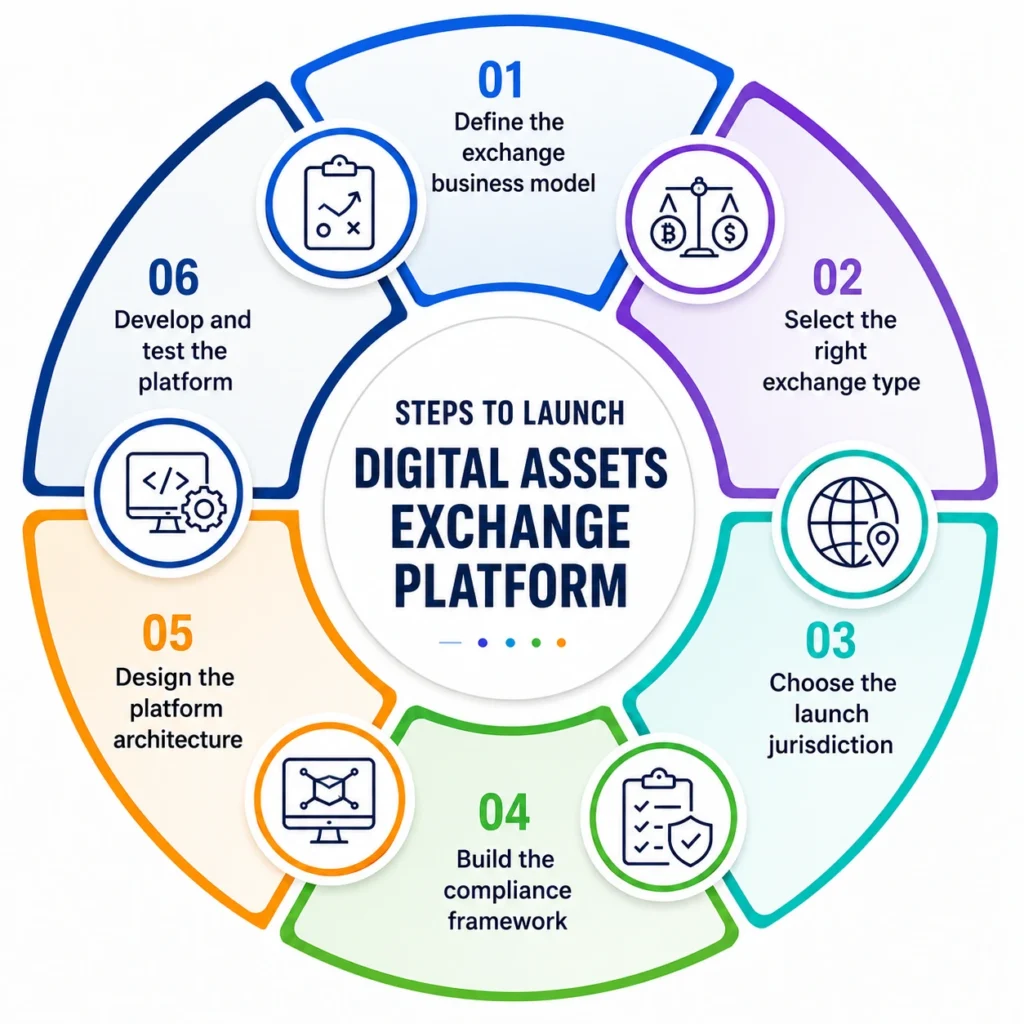
The following is the structured process to launch a secure, scalable, and revenue-ready exchange. These steps have a direct impact on the compliance, user experience, security, and long-term growth.
Step 1: Define the exchange business model
Decide what type of exchange to launch. This decision shapes the platform’s features, revenue channels, target users, compliance needs, and technology architecture.
Step 2: Select the right exchange type
- Choose Centralized Cryptocurrency exchange Development for control over custody, liquidity, user onboarding, trading pairs, and compliance workflows.
- Choose Decentralized Crypto exchange services for wallet-based trading, smart contract execution, liquidity pools, and DeFi access.
- Choose P2P crypto exchange development to support direct trading between users with escrow, local payments, dispute handling, and merchant controls.
Step 3: Choose the launch jurisdiction
Select the jurisdiction based on licensing rules, crypto regulations, tax structure, banking access, user location, and data protection laws.
Execute this step before development begins because legal requirements can influence KYC flows, reporting tools, asset listing rules, and custody design.
Step 4: Build the compliance framework
Compliance must be part of the platform’s core infrastructure from the beginning. A digital asset exchange needs KYC, KYB, AML screening, sanctions checks, transaction monitoring, wallet risk scoring, Travel Rule readiness, and suspicious activity reporting workflows.
Step 5: Design the platform architecture
Design the platform architecture. The architecture should support speed, scale, uptime, and security.
Step 6: Develop and test the platform
Perform rigorous testing on the platform before launch to review all trading scenarios before launch. This will help to reduce downtime, failed transactions, withdrawal errors, and security risks.
Types of Digital Asset Exchanges
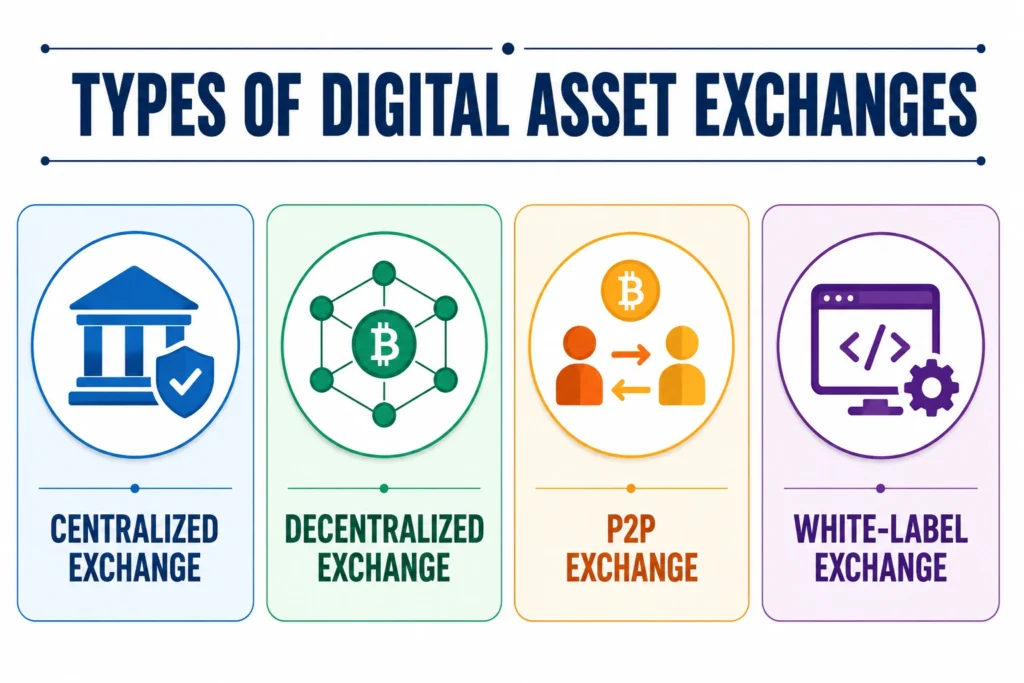
To create a crypto exchange platform, businesses can shortlist from multiple models based on their target market and revenue plan.
Centralized exchange
It provides the business complete control over user accounts, custody, liquidity, trading pairs, order books, and compliance. This model is suitable for companies that want a regulated and structured trading platform.
Decentralized exchange
It allows users to trade directly from their wallets through smart contracts. This model supports non-custodial trading and gives users more control over their assets.
P2P Exchange
It connects buyers and sellers directly. It usually includes escrow protection, payment options, user ratings, and dispute management.
White-Label Exchange
It gives companies a faster way to enter the market with ready-made exchange modules, custom branding, and configurable features.
What are the Challenges to Launching a Digital Assets Exchange?
Launching a digital asset exchange brings strong business potential, but it also comes with technical, legal, financial, and operational challenges.
Regulatory complexity
Crypto and digital asset rules differ across countries. A platform may fall under virtual asset service provider rules, securities laws, payment regulations, money transmission laws, or commodity trading rules. Carefully consider regulatory alignment to avoid licensing issues, banking problems, penalties, or business restrictions.
Liquidity shortage
Digital Exchange platform development must secure liquidity through market makers, liquidity APIs, trading partners, and cross-exchange connections. Without liquidity, it will not attract users.
Security risks
A strong security infrastructure is essential from the first day. Keep all the security features in check to ensure an uncompromised user experience and protect their sensitive information against online attacks.
User trust
Impose strong policies, smooth operations, and clear communication to earn the user’s trust. Make sure the exchange delivers consistent platform performance.
Asset listing quality
Review the asset carefully before listing it. A strong due diligence process can protect users and improve long-term platform credibility.
What are the Benefits of Launching a Digital Assets Exchange Platform?
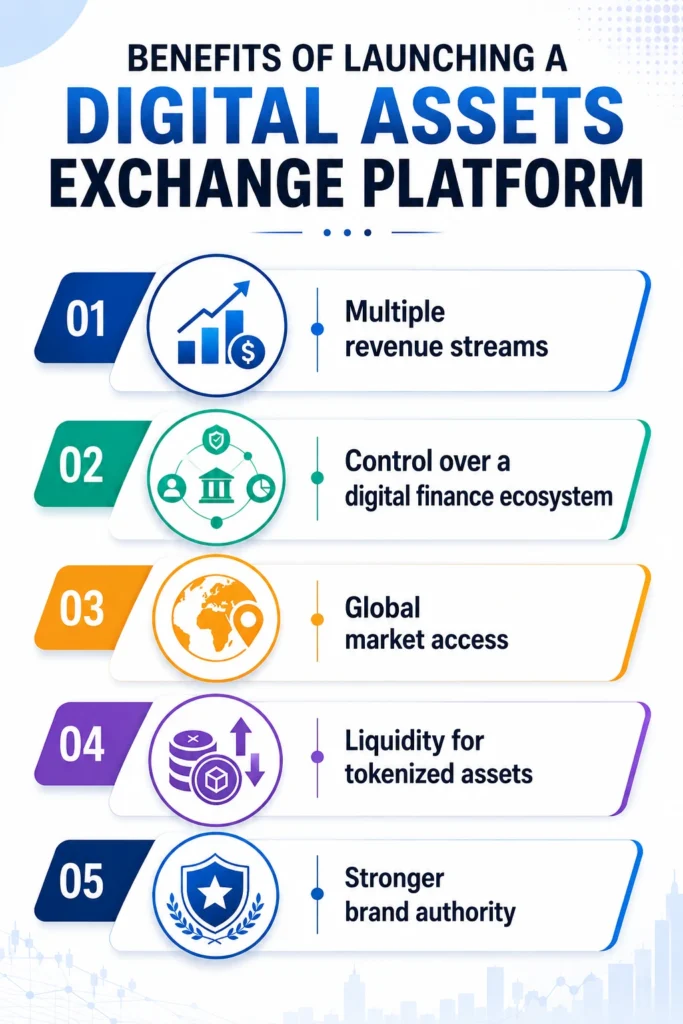
A digital asset exchange can become a strong revenue-generating business when it is built with the right strategy.
Multiple revenue streams
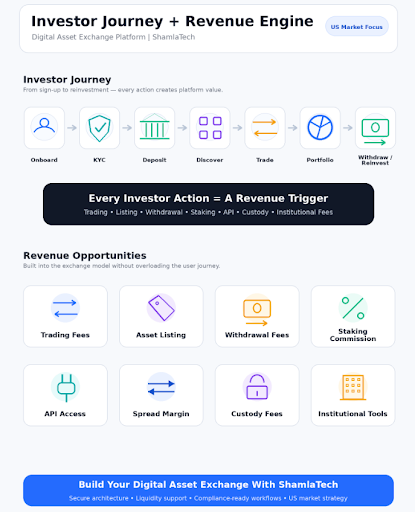
An exchange can earn revenue through trading fees, listing fees, withdrawal charges, staking commissions, premium accounts, API access, spread margins, launchpad fees, and institutional trading services. This unlocks several ways to grow income over time.
Control over a digital finance ecosystem
A company that owns an exchange can control its trading environment, list selected assets, launch native tokens, support partner projects, and build financial products around user activity. This creates stronger brand control and long-term ecosystem value.
Global market access
Digital assets can be traded across borders. A compliant exchange can attract users from different regions and serve retail, business, and institutional clients. This provides access to a much wider market than traditional financial platforms.
Liquidity for tokenized assets
Exchanges help asset owners create liquidity for real estate, commodities, private funds, bonds, carbon credits, and other tokenized products. For Real estate tokenization, this can help more investors access property-backed opportunities.
Stronger brand authority
A secure and compliant exchange positions the business as a serious player in the digital asset economy. It helps the company build trust with users, token issuers, liquidity providers, and institutional partners.
What are the Regulatory Requirements for Launching a Digital Assets Exchange
Regulation has become one of the most important parts of exchange development. A serious business must plan legal and compliance requirements before launch.
Licensing and registration
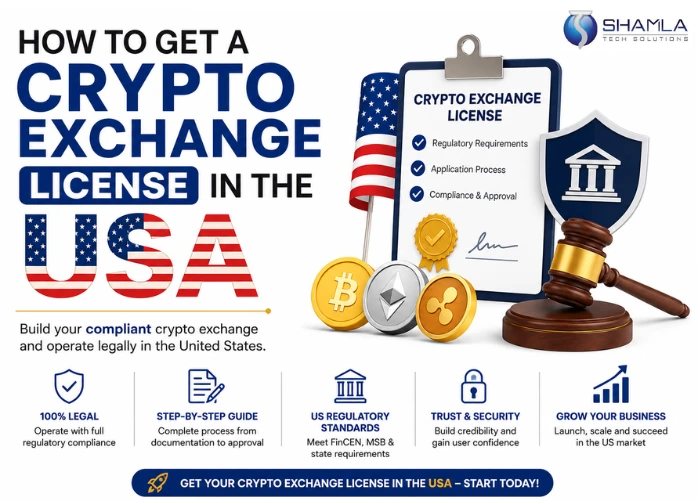
Depending on the jurisdiction, the exchange may need registration or licensing as a virtual asset service provider, crypto asset service provider, money service business, payment institution, broker-dealer, or alternative trading system.
The exact requirement depends on the asset type, user location, custody model, payment method, and trading service.
KYC, KYB, AML, and sanctions screening
The exchange must verify individual users through KYC and business users through KYB. It must also screen users against sanctions lists, politically exposed person databases, adverse media records, and high-risk jurisdictions.
AML and CFT controls help the platform detect fraud, suspicious transactions, money laundering risks, and illegal fund movement.
Transaction monitoring and Travel Rule readiness
A digital asset exchange should monitor blockchain transactions, wallet risk scores, deposit sources, withdrawal patterns, and suspicious trading behaviour.
If the platform supports cross-border crypto transfers, it should prepare for Travel Rule compliance based on relevant jurisdictional requirements.
Securities and tokenized asset rules
If the exchange lists tokenized securities, fund tokens, real estate tokens, or asset-backed instruments, it must review securities regulations, investor eligibility, disclosure requirements, transfer restrictions, and custody obligations.
Data protection and privacy
The platform stores personal data, identity documents, transaction records, financial activity, and communication history. It must protect user data through encryption, access controls, privacy policies, retention rules, and secure storage. Strong data protection improves user confidence and reduces compliance risk.
Market Opportunity To Unlock With Digital Asset Trading Platforms
The following are the market opportunities for businesses to unlock with the digital asset exchange platform development:
Market segment | Business opportunity | Revenue potential | Key success factor |
Crypto spot trading | Retail and institutional trading of major digital assets | Trading fees, withdrawal fees, spreads | Liquidity, speed, trust |
Stablecoin trading | Fiat-to-crypto access and payment settlement | Conversion fees, payment fees, treasury income | Banking access and compliance |
P2P trading | Direct local currency trading between buyers and sellers | Escrow fees, ad fees, merchant fees | Fraud control and dispute handling |
RWA trading | Tokenized bonds, commodities, funds, and private assets | Listing fees, trading fees, custody fees | Legal structure and asset verification |
Real estate tokenization | Fractional ownership and secondary trading of property-backed tokens | Issuance fees, trading fees, and management fees | Title validation and investor eligibility |
Institutional exchange | OTC trading, API access, custody, and reporting | Premium accounts, volume-based fees | Deep liquidity and strong reporting |
Decentralized exchange | Wallet-based token swaps through smart contracts | Swap fees and liquidity pool fees | Smart contract safety and user experience |
What are the Technology Stack Required To Launch Digital Assets Exchange Platform
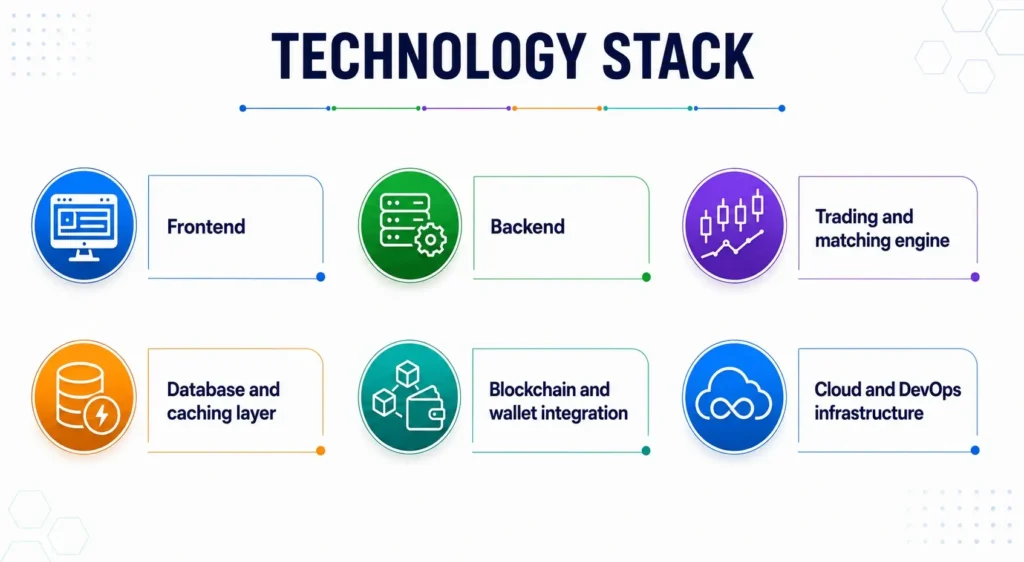
To launch a digital asset exchange platform, businesses need a strong technology stack that supports speed, security, scalability, and compliance.
Frontend
A clean frontend helps users place trades, manage funds, check balances, and complete verification without confusion. It may use React, Next.js, Angular, or Vue.js to build trading screens, wallets, dashboards, KYC pages, portfolio views, and admin interfaces.
Backend
The backend must be stable, fast, and secure because it controls the core platform operations. The backend handles business logic, user accounts, trading activity, compliance workflows, APIs, and system communication. Common backend technologies include Node.js, Java, Go, Python, and Rust.
Trading and matching engine
The trading engine must support market orders, limit orders, stop orders, partial fills, real-time order book updates, trade history, and risk checks.
For high-volume platforms, the matching engine must process large numbers of orders with low latency and high accuracy.
Database and caching layer
The exchange may use PostgreSQL, MySQL, MongoDB, Redis, and time-series databases to manage users, trades, order books, transaction history, analytics, and system logs. A strong database structure improves platform speed and reporting accuracy.
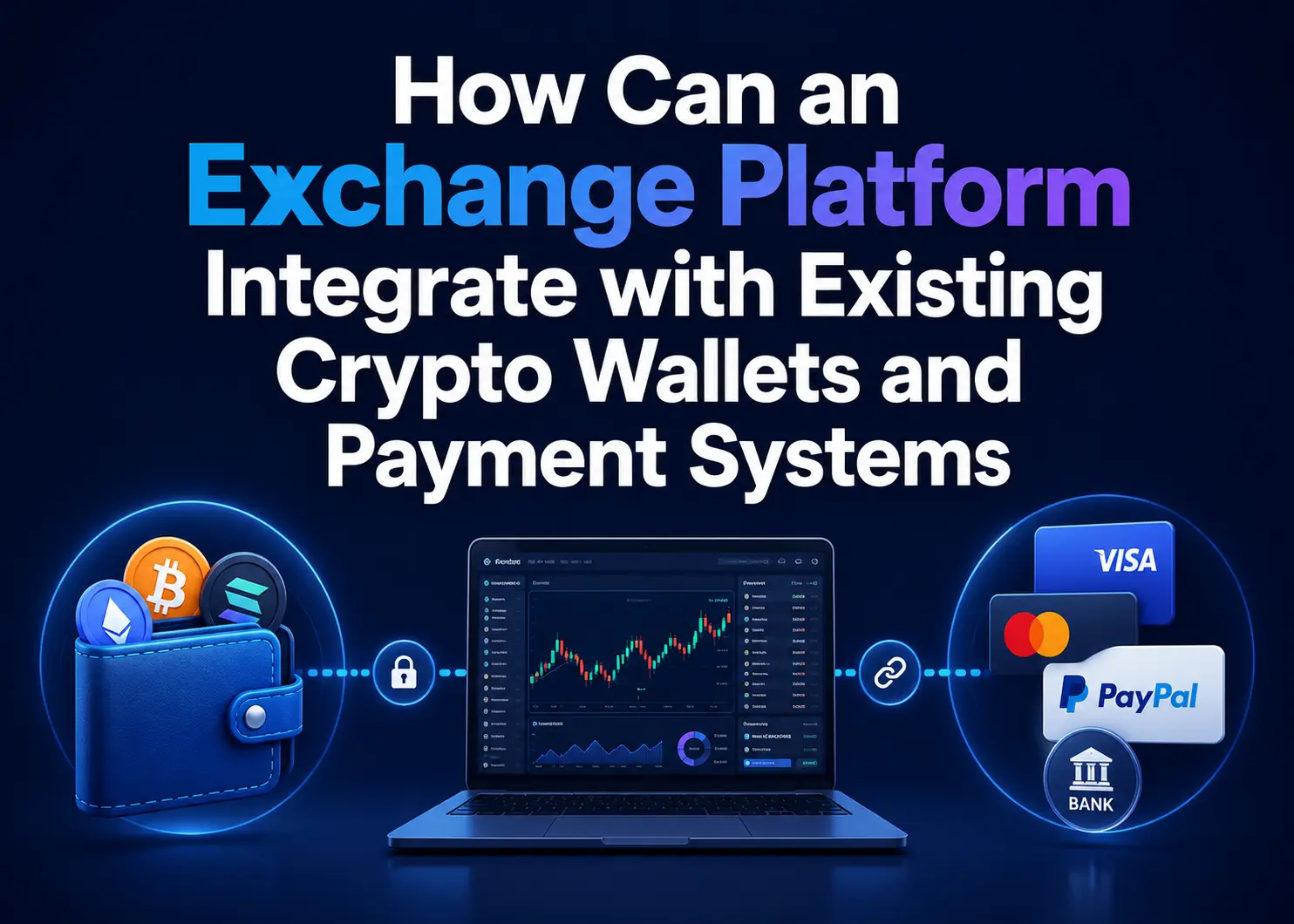
Blockchain and wallet integration
The exchange should integrate with major blockchain networks such as Bitcoin, Ethereum, BNB Chain, Polygon, Solana, Tron, and other chains based on the asset strategy. Wallet infrastructure should support deposits, withdrawals, address generation, transaction tracking, fee calculation, and asset reconciliation.
Cloud and DevOps infrastructure
Cloud infrastructure may include AWS, Azure, Google Cloud, Kubernetes, Docker, CDN, load balancers, monitoring tools, and disaster recovery systems. Strong DevOps practices help the platform maintain uptime, handle traffic spikes, and recover quickly from incidents.
How to List Digital Assets on Your Exchange?
Asset listing must follow a clear and transparent process. A good listing policy protects users, improves platform quality, and reduces legal and reputational risk.
Review the asset classification
Identify whether the asset is a utility token, payment token, governance token, stablecoin, security token, derivative, or tokenized real-world asset. This classification helps define compliance requirements, trading rules, disclosure needs, and user eligibility.
Evaluate the issuer or project
Review the project team, business model, token economics, market history, smart contract audit, legal documents, liquidity plan, community strength, and risk profile. Do not list assets only because the issuer pays a listing fee.
Verify tokenized real-world assets
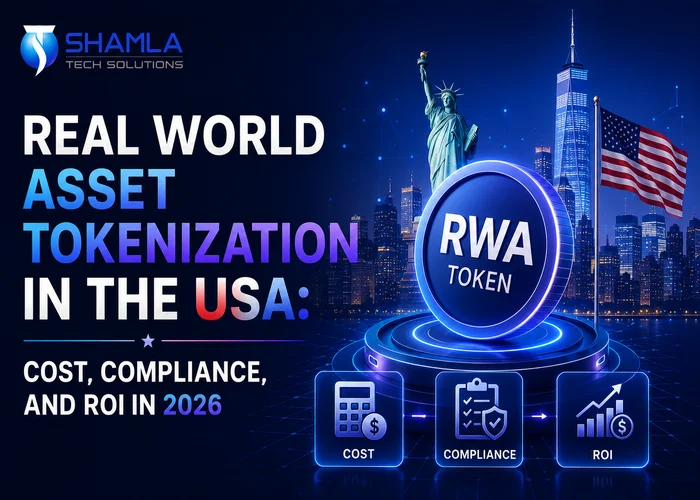
For real-world asset tokenization, verify asset ownership, legal structure, valuation method, custody arrangements, redemption rights, investor rights, and reporting obligations. Review should include title verification, property valuation, SPV structure, rental income model, jurisdiction review, and transfer restrictions.
Check technical compatibility
The technical team must confirm wallet support, token standard, network compatibility, deposit confirmations, withdrawal logic, fee settings, and blockchain monitoring. Any technical issue in asset integration can affect user funds and platform trust.
Set monitoring and delisting rules
Define rules for ongoing monitoring, liquidity review, legal updates, security alerts, project inactivity, and delisting triggers. This keeps the platform clean and protects users from weak or risky assets.
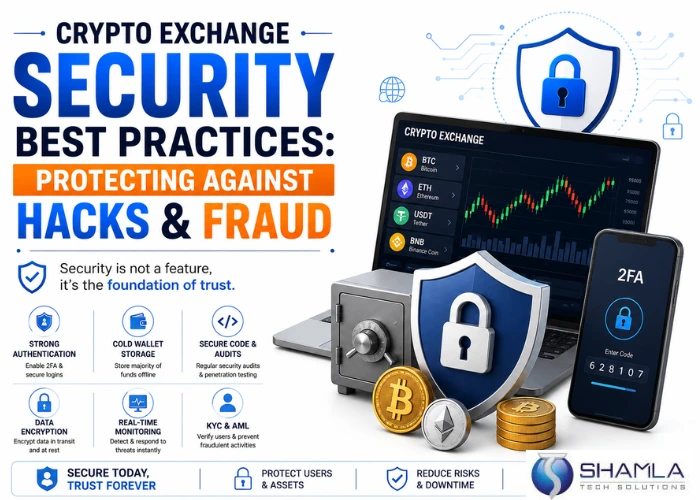
What are the Security Infrastructure Requirement for a Digital Assets Exchange
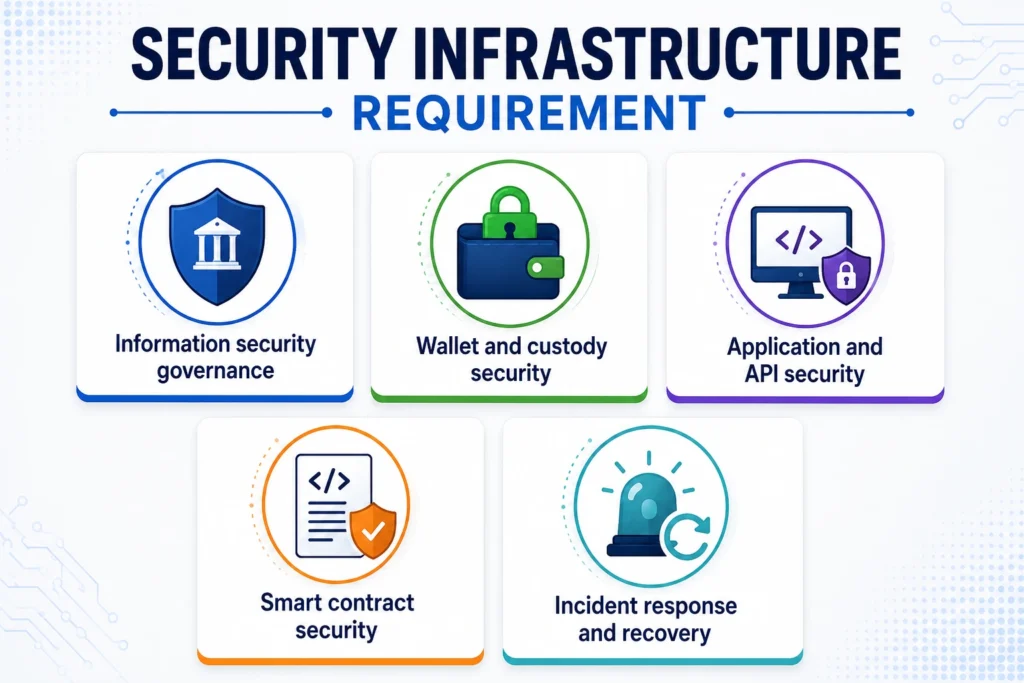
Security determines whether an exchange can earn long-term trust. A serious platform must protect user funds, personal data, private keys, trading systems, and admin access.
Information security governance
The platform should align its security program with ISO 27001 principles. This helps the business manage information security risks, document controls, review access, maintain policies, and improve governance.
For institutional clients, SOC 2 Type II readiness can also improve credibility because it evaluates security, availability, processing integrity, confidentiality, and privacy controls over a period of time.
Wallet and custody security
Wallet security is one of the most critical parts of the exchange infrastructure. The platform should use cold storage, hot wallet limits, MPC, multi-signature approvals, HSM-backed key protection, withdrawal whitelisting, and automated reconciliation.
Most funds should stay in cold storage, while hot wallets should only support daily operational liquidity.
Application and API security
The exchange must protect its web app, mobile app, APIs, admin panel, and user accounts. Key controls include secure coding, penetration testing, API rate limits, WAF, DDoS protection, MFA, session monitoring, role-based access, and admin activity logs.
These controls reduce the risk of account takeover, data leaks, unauthorized withdrawals, and service disruption.
Smart contract security
If the platform uses smart contracts for swaps, staking, tokenization, escrow, or decentralized trading, each contract should go through independent audit and testing.
The audit should check contract logic, upgrade controls, admin privileges, oracle dependency, reentrancy risk, and emergency pause functions.
Incident response and recovery
The exchange must have a clear incident response plan. The team should know how to detect threats, isolate affected systems, pause withdrawals, investigate suspicious activity, communicate with users, and restore services. A fast response can protect both funds and reputation during a security event.
Takeaway
A digital assets exchange platform can build new revenue streams for fintech and real estate companies. However, for the platform development, each step must be planned carefully. A well-built exchange can help businesses attract global users, support multiple trading models, and generate revenue through trading fees, listing fees, withdrawal charges, premium services, API access, staking, and institutional trading solutions. Businesses planning to make a move in 2026 with digital asset exchange platform development, now is the right time to build with a technology partner that understands both the opportunity and the execution.
Partner with ShamlaTech For Strategic development of Digital Asset Exchange
ShamlaTech is a trusted cryptocurrency exchange development company helping startups, enterprises, fintech brands, and investment-focused businesses launch secure, scalable, and compliance-ready digital asset exchange platforms in the US market.
We combine blockchain development, exchange architecture, liquidity integration, wallet infrastructure, compliance-aware workflows, advanced security, and product strategy to help businesses move from idea to launch with confidence. Whether you want to build a centralized exchange, decentralized exchange, P2P exchange, a white-label crypto exchange, or digital asset trading platform for tokenized real-world assets, we provide the technical foundation and strategic support needed to build a revenue-focused exchange.
For businesses planning to enter the fast-growing digital asset economy, ShamlaTech helps reduce development complexity, speed up launch timelines, and build an exchange platform designed for long-term growth, user trust, and commercial success