
Roughly $14 billion was stolen from crypto exchanges between 2023 and 2024, a number that should stop every founder, CTO, and exchange operator in their tracks. In an industry where trust is the entire product, a single security failure can undo years of growth in a single weekend.
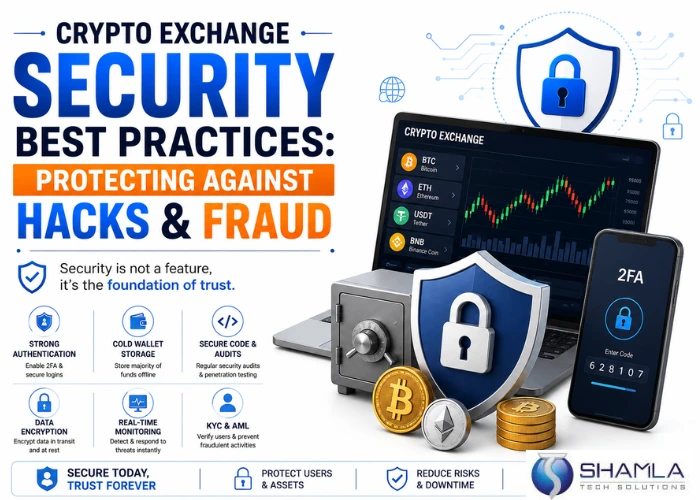
The most critical security practices for crypto exchange security best practices include multi-factor authentication, encrypted and segregated wallet architecture, DDoS protection, AI-driven fraud detection, and continuous threat monitoring, layered together as a system, not bolted on individually. Security isn’t a feature you add before launch. It’s the foundation the entire business sits on, and it’s rapidly becoming the differentiator between exchanges that scale into billion-dollar platforms and exchanges that become the next cautionary headline.
By the end of this guide, you’ll understand the enterprise-grade security architecture that Tier-1 exchanges use to protect user funds, pass regulatory scrutiny, and win institutional trust the same standard you should be holding your own platform to, whether you’re pre-launch or auditing something already live.
Every founder who takes custody of user funds inherits a responsibility that goes beyond product-market fit: protecting the assets people have trusted you with. That responsibility starts with understanding what building a secure crypto exchange actually requires at the architecture level, and it applies with equal weight whether you’re running an order book or a liquidity pool, centralized platforms require just as robust a security posture as their decentralized counterparts.
Why Crypto Exchange Security Matters
The Cost of Security Breaches
Major breaches average $45–200 million in losses, once you account for direct theft, regulatory fines, and user compensation. The Poly Network hack in 2021 resulted in $611 million drained from a single exploit. Mt. Gox, still the industry’s most-cited cautionary tale, lost approximately 850,000 BTC, a failure that reshaped how the entire industry thinks about custody.
These aren’t isolated, extreme cases. A mid-tier exchange and most of implementing security in crypto exchange that suffers a wallet compromise resulting in an $8 million loss can lose 60% of its active users within three months, the financial hit is often smaller than the trust hit that follows it. What security measures protect user funds in crypto exchanges? And Breach costs stack: direct theft, regulatory penalties, forensic and legal fees, user compensation, and the slow bleed of user churn and reputational damage that shows up in trading volume for years afterward.
Regulatory Pressure & Compliance
Security failures and crypto exchange fraud prevention don’t stay contained to a balance sheet, they trigger regulatory consequences. Bodies like the SEC, FinCEN, and OFAC in the US, along with regional equivalents globally, increasingly treat security posture as inseparable from licensing and ongoing compliance review. Understanding regulatory security requirements early avoids expensive retrofits later, and it’s worth knowing that most license requirements include security audits as a condition of approval, not an optional add-on.
Competitive Advantage
In a crowded market, security has become a genuine differentiator rather than table stakes buried in the fine print. How can exchanges prevent hacking and the users increasingly research an exchange’s security track record before depositing funds, and there’s a direct, measurable correlation between user trust and trading volume. Institutional capital takes this further, most institutional players simply won’t onboard onto a platform without demonstrable cryptocurrency platform security certifications in hand. Exchanges that treat this as a growth lever, not just a cost center, tend to win the users that matter most. That’s the philosophy behind how we build security-first exchanges from day one rather than retrofitting protection after launch.
Core Platform Security Architecture
This is where the real engineering work happens, the layer that determines whether your exchange security measures can withstand a targeted, well-resourced attack. Here are some of the Best practices for exchange platform security 2024
Lorem ipsum dolor sit amet, consectetur adipiscing elit. Ut elit tellus, luctus nec ullamcorper mattis, pulvinar dapibus leo.
Wallet & Fund Management
Why do crypto exchanges get hacked easily, because there are some security flaws in wallet and fund management.
The industry-standard approach is a hot wallet / cold wallet split:
- Hot wallets hold 5–15% of total assets, kept encrypted and isolated, purely for day-to-day liquidity needs.
- Cold wallets hold the remaining 85–95%, stored offline in multi-signature configurations for long-term security.
- Segregation is non-negotiable: user funds must never be commingled with platform reserves. This single principle has prevented — and its absence has caused — some of the industry’s largest collapses.
Multi-signature authorization adds a second layer of defense. A 2-of-3 or 3-of-5 signature requirement means no single compromised key can move funds. Pair this with time-locked withdrawals, which create a window to catch and halt suspicious transfers before they finalize, and geographic key distribution, which ensures a single physical breach can’t compromise the whole wallet.
Hardware Security Modules (HSMs) round out the architecture: encrypted key storage, air-gapped access that keeps signing keys off internet-connected systems entirely, and full audit logging of every access event. Together, these form the wallet architecture for CEX platforms processing meaningful transaction volume.
API Security & Communication
What API security measures prevent unauthorized access to exchange systems?
Every API endpoint should run behind:
- Encrypted communication – TLS 1.3+ as a baseline, certificate pinning to prevent man-in-the-middle interception, and disciplined key management practices.
- Rate limiting & DDoS protection – Per-user API throttling combined with distributed rate limiting and a Web Application Firewall (WAF) sitting in front of the whole stack.
- Access control – Role-based permission models that scope exactly what each secure API key can touch, scheduled key rotation policies, and IP whitelisting for high-privilege operations.
This combination is what separates a secure API architecture capable of surviving a sustained, automated attack from one that simply hasn’t been tested yet.
User Authentication & Account Security
What authentication methods protect exchange user accounts?
Strong multi-factor authentication (MFA) is the baseline: TOTP apps, hardware security keys like YubiKey, and biometric authentication where supported. SMS-based codes should exist only as a last-resort fallback — SIM-swap attacks have made SMS the weakest link in most MFA stacks, not the strongest.
Layer on anti-phishing measures: email verification workflows for sensitive actions, device fingerprinting to flag unrecognized access, and whitelisted withdrawal addresses that prevent funds from moving to an address the user hasn’t pre-approved. Security questions are worth flagging explicitly as an anti-pattern at this point — they’re easily social-engineered and shouldn’t anchor any part of your account recovery flow.
Account lockout policies — automatic lockouts after repeated failed attempts, active suspicious-activity detection, and geographic login flagging — reduce the window an attacker has to operate. And session management matters more than most teams initially budget for: short token expiration windows (15–30 minutes during active trading), limits on concurrent sessions, and secure cookie handling throughout.
Custody model changes the calculus here, and it’s worth understanding how DEX wallet security vs centralized account security before deciding which model, or hybrid, fits your platform.
Threat Detection & Response
Prevention only gets an exchange so far. The platforms that survive serious attack attempts are the ones built to detect and respond in real time.
Real-Time Fraud Detection
How do crypto exchanges prevent fraud?
- Behavioral analytics flag unusual trading patterns, abnormal withdrawal velocity, and access from anomalous devices or locations the moment they occur.
- Machine learning models catch subtler patterns that rule-based systems miss entirely, wash trading, pump-and-dump coordination, and the early behavioral signals of account takeover, often before a human analyst would notice anything wrong. AI-powered systems are increasingly expected to flag suspicious activity before it impacts the platform, not after.
- Transaction monitoring closes the loop: blockchain address blacklisting, OFAC sanctions screening on every transaction, and clustering analysis that surfaces linked accounts operating in coordination.
This is the same category of capability behind AI systems that detect fraudulent trading activity, AI-driven fraud and anomaly detection has moved from a nice-to-have to a core expectation for any exchange handling meaningful volume.
Security Incident Response
What should an exchange do when a security breach occurs?
A real incident response plan has five components: detection and alerting, containment (isolating affected systems immediately), investigation and forensics, clear communication protocols, and a defined recovery procedure. None of these can be improvised in the moment — they need to be documented and rehearsed well before they’re ever needed.
Post-breach, exchanges need firm, pre-committed policies: user notification within 24–72 hours, a clear compensation framework, regulatory reporting completed on schedule, and proof-of-funds verification to rebuild user confidence once the immediate crisis has passed.
Continuous Monitoring & Threat Intelligence
How do exchanges stay ahead of emerging security threats?
A Security Operations Center (SOC) running 24/7, log aggregation through a SIEM system, and active threat intelligence feeds form the monitoring backbone. On top of that sits ongoing vulnerability management — regular penetration testing, automated scanning, and a bug bounty program that gives ethical hackers a financial incentive to report issues to you rather than sell them elsewhere. This is the layer of continuous security monitoring and threat intelligence that turns a static security setup into one that actually adapts as new threats emerge.
Compliance-Driven Security
For a regulated exchange, security and compliance aren’t two separate workstreams, they’re the same discipline viewed from different angles.
KYC/AML Integration
How do security best practices and compliance work together?
Know Your Customer (KYC) starts with identity verification workflows: automated document scanning backed by manual review for edge cases, and liveness checks that catch synthetic identity fraud before an account is ever opened.
Anti-Money Laundering (AML) builds on top: transaction monitoring rules tuned to your platform’s typical activity, Suspicious Activity Reports (SARs) filed when patterns warrant it, ongoing customer risk scoring, and continuous — not one-time — transaction monitoring. Getting KYC/AML implementation for security right is just as critical for P2P exchanges that require robust identity verification as it is for centralized order-book exchanges — the compliance bar doesn’t lower just because the trading model is different.
Audit Trails & Regulatory Reporting
What audit and reporting requirements do regulated exchanges need?
Immutable logging is the foundation: tamper-evident audit logs, cryptographic signatures on every record, and long-term retention — typically seven-plus years — to satisfy regulator expectations. On the reporting side, exchanges need to stay current on FinCEN Form 114 (MSB registration), regular compliance audits, and third-party security certifications like SOC 2 and ISO 27001.
Data privacy rounds this out: GDPR compliance for any EU users, clearly defined data retention policies, and transparent user consent management — all of which increasingly show up as line items in regulatory reviews, not afterthoughts.
Smart Contract Security (For DEX & Hybrid Models)
Smart Contract Auditing
Why are smart contract audits critical for decentralized exchanges?
Because a single unreviewed vulnerability can drain a pool in one transaction, with no way to reverse it. Pre-launch audits should combine static analysis, dynamic testing, and independent code review by external auditors, firms like Trail of Bits, OpenZeppelin, and Certik have built their reputations specifically on this work.
Audit scope needs to cover contract logic vulnerabilities broadly, plus the specific failure modes that have caused the largest DeFi security protocols losses historically: integer overflow/underflow, reentrancy attacks, and flash loan exploits. This is the core of what DEX smart contract security means in practice, and it becomes more complex for platforms running a dual security model across hybrid platforms requiring a dual security model, where centralized and decentralized components both need independent hardening.
Liquidity Pool Security
How are liquidity pools protected from exploitation?
AMM (Automated Market Maker) protections need to include slippage protection, flash-loan safeguards, and secure price oracles resistant to manipulation. Liquidity providers also need clear, upfront communication about impermanent loss risk — a security posture that only covers smart contract exploits while leaving financial risk unexplained is an incomplete one. This is the layer of AMM security for DEX platform from one that’s one exploit away from a crisis.
Derivatives Exchange Security
What additional security measures do derivatives exchanges need?
Derivatives platforms carry risk profiles beyond spot trading, and their security needs to reflect that:
- Liquidation engine security — fair, manipulation-resistant price feeds (oracle protection), safeguards against liquidation cascades, and disciplined insurance fund management.
- Margin trading controls — enforced position limits, real-time risk monitoring across all open positions, and forced liquidation safeguards that prevent a single volatile move from cascading into platform-wide losses.
Because these risks compound quickly during periods of volatility, risk management for derivatives platforms deserves dedicated architecture and How to build a secure crypto exchange platform and not an extension of whatever security stack was built for the spot exchange.
Security Implementation Roadmap
Security is best built in disciplined phases, not attempted all at once.
Phase 1 – Foundation (Months 1–3): Core infrastructure hardening, authentication and authorization systems, and baseline monitoring and alerting. This phase establishes the non-negotiables before anything else gets layered on top.
Phase 2 – Advanced (Months 3–6): AI/ML-driven fraud detection, advanced Wallet security for exchanges (multi-sig, HSMs), compliance system integration, and formal third-party penetration testing.
Phase 3 – Optimization (Month 6 onward): Continuous improvement cycles, scheduled incident response drills, ongoing staff security training, and recurring compliance audits.
Following an implementation timeline for a secure platform like this keeps security spend predictable and avoids the common trap of trying to build everything simultaneously under launch pressure.
Common Security Mistakes to Avoid
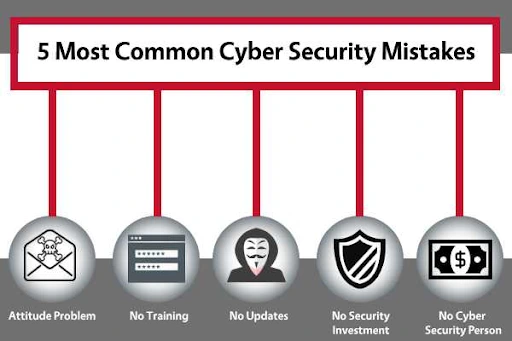
What security mistakes do crypto exchanges make most often?
- Insufficient key management. A single point of failure with poorly encrypted keys is still one of the most common root causes of major breaches. Solution: multi-sig wallets and HSMs, no exceptions.
- Inadequate user verification. Weak KYC processes let bad actors in the front door. Solution: biometric verification layered with government ID checks.
- Poor API rate limiting. Leaves the platform exposed to bot attacks and credential stuffing. Solution: distributed rate limiting paired with CAPTCHA on sensitive actions.
- Lack of continuous monitoring. Delayed breach detection turns a contained incident into a full-blown crisis. Solution: a 24/7 SOC with real-time alerting.
- Outdated dependencies. Known vulnerabilities left unpatched are an open invitation. Solution: automated patch management as a standing process, not a quarterly task.
- Inadequate testing. No penetration testing means your first real test is a live attack. Solution: annual red-team exercises, at minimum.
Avoid common security pitfalls with expert guidance — it just requires discipline most fast-moving teams deprioritize under launch pressure. If you’d rather not find out the hard way, get guidance on avoiding common security pitfalls.
Industry Benchmarks & Certifications
Security Certifications Every Exchange Should Target
- SOC 2 Type II — operational, security, and confidentiality audits over a sustained period, not a point-in-time snapshot.
- ISO 27001 — the international standard for information security management systems.
- PCI DSS — required if the platform handles fiat payment card processing.
- SOC 3 — a distributed, publicly shareable version of audit reporting.
Compliance Frameworks Worth Knowing
- FATF Travel Rule — Governs information sharing on qualifying transactions between platforms.
- MiCA (EU) – The Markets in Crypto-Assets Regulation, now central to operating in the European market.
- SEC Custody Rule – Qualified custodian requirements for platforms handling client assets.
- NY BitLicense – One of the most rigorous state-level licensing regimes in the US.
Understanding certification and compliance requirements before you build, not after a regulator flags a gap, saves significant rework down the line.
Cost-Benefit Analysis of Security Investment
Security Investment Breakdown
- Platform development: Security-related features typically account for 20–30% of total build cost.
- Ongoing monitoring: Roughly $50K–$200K/month, depending on platform scale.
- Compliance staff: $150K–$300K/year for dedicated in-house expertise.
- Annual security audits: $50K–$150K per cycle.
ROI of Security Spending
The math consistently favors investment over deferral. Breach prevention alone can save tens of millions in losses that never happen. Strong security postures correlate with a 30–40% increase in trading volume, driven directly by user trust. Institutional clients simply won’t onboard without the certifications outlined above. And regulatory approval tends to move faster for platforms that can demonstrate a mature security posture from the outset.
For a full model of what this looks like for your platform specifically, see our breakdown of security ROI for exchange platforms, or get our free ROI calculation guide: Security Investment Breakdown.
Why Partner With a Specialized Development Company
The Complexity of Building Secure Exchanges
Should you build security in-house or hire a development partner?
Building this in-house means:
- Hiring 15–25+ dedicated security specialists
- Committing to a 12–18 month development timeline before launch
- Carrying concentration risk if your security expertise sits with a small internal team
- Owning the ongoing compliance burden indefinitely, with no external redundancy
A specialized development partner offers a different path:
- Pre-built, production-tested secure architecture rather than security designed from scratch
- Frameworks proven across live platforms handling real transaction volume
- Compliance-ready solutions that don’t require reinventing KYC/AML from zero
- Post-launch support and monitoring that continues past the delivery date
What to Look For in an Exchange Development Partner
- 8+ years of dedicated blockchain development experience
- A track record of 1,000+ delivered projects
- Demonstrable security audits and certifications
- Real compliance expertise across KYC/AML and regional regulatory frameworks
- A genuine post-launch support commitment, not just a handoff at deployment
Shamlatech's Security Approach
At Shamlatech, we’ve built cryptocurrency theft prevention strategies that have processed billions in transactions while maintaining a clean security record. Shamlatech’s security-first exchange development approach is built around:
- Security-first architecture from Day 1 — not layered on after the fact
- AI-powered fraud detection embedded in the core platform, not added as a plugin
- Pre-audited smart contracts before any DEX or hybrid component goes live
- KYC/AML integration ready out of the box
- Enterprise-grade compliance features built into the platform itself
- 250+ blockchain engineers with direct experience across centralized, decentralized, and white-label exchange models, all working from compliance-ready security foundations.
Ready to see what this looks like for your platform?
Conclusion
Security breaches cost $45M+ on average — prevention is not optional, it’s the cheapest option available. Enterprise-grade exchange security spans 12+ interlocking components, from wallet architecture and API hardening to AI-driven fraud detection and audit-ready compliance logging. Compliance and security are inseparable at this point; treating them as separate workstreams is how gaps form. And in 2024’s environment, AI/ML-powered fraud detection isn’t a differentiator anymore — it’s table stakes.
Building a secure cryptocurrency exchange isn’t just about protecting user funds — it’s about building a business that scales, attracts institutional capital, and survives regulatory scrutiny. The best time to implement security was during platform design. The second-best time is today.
FAQs
1. What are the most important security practices for a crypto exchange?
A crypto exchange should use multiple layers of security, including multi-factor authentication (MFA), cold storage for digital assets, encryption, secure key management, real-time transaction monitoring, withdrawal controls, and regular security audits. A layered approach helps reduce the impact of a single compromised system or account.
2. How can crypto exchanges protect users from account takeovers?
Exchanges can reduce account takeover risks by implementing MFA, strong password policies, device and login monitoring, IP-based risk detection, withdrawal address whitelisting, and alerts for suspicious account activity. Additional verification should be required for sensitive actions such as changing security settings or adding new withdrawal addresses.
3. Why is cold storage important for crypto exchange security?
Cold storage keeps most digital assets offline and away from internet-connected systems. This significantly reduces exposure to online attacks and unauthorized access. Exchanges typically maintain only the liquidity needed for daily operations in hot wallets while keeping the majority of assets in more secure offline storage.
4. How can crypto exchanges prevent fraudulent transactions?
Exchanges can use transaction monitoring, risk-scoring systems, withdrawal limits, behavioral analytics, and automated fraud detection to identify suspicious activity. Large or unusual transactions can also be subjected to additional verification before they are processed.
5. What role does encryption play in crypto exchange security?
Encryption protects sensitive information such as user credentials, personal data, API keys, and transaction-related information from unauthorized access. Exchanges should use strong encryption both when data is stored and when it is transmitted between systems.
6. How often should a crypto exchange conduct security audits?
Security audits should be conducted regularly and whenever significant changes are made to the platform. Exchanges should perform penetration testing, vulnerability assessments, smart contract reviews where applicable, and code audits. Independent third-party security assessments can also help identify weaknesses that internal teams may overlook.
7. What should a crypto exchange do after a security breach?
The exchange should immediately contain the breach, isolate affected systems, secure compromised credentials or keys, investigate the attack, and assess potential asset or data exposure. Users should be informed when necessary, while incident-response procedures should guide recovery and system restoration. A post-incident review can help strengthen security controls and prevent similar attacks in the future.