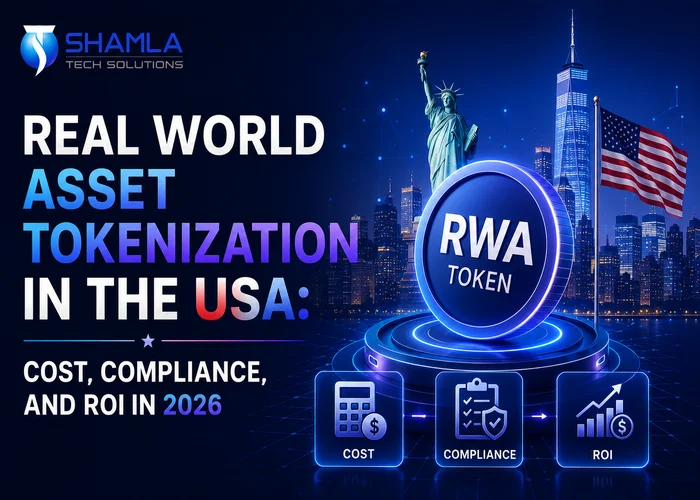

Imagine a world where you can buy a small part of a fancy apartment in New York or invest in a rare piece of art, all with just a few clicks. This indeed can become reality with Asset tokenization. But what does that actually mean? Is it legal, is it safe to invest in this? At its core, real world asset tokenization is turning ownership of real things like buildings, art, or goods into digital tokens on a blockchain network. This new idea can change how we invest and trade, making it easier, safer and faster for everyone. By 2025, asset tokenization is expected to change the whole financial world, with AI and automation playing a big role.
As asset tokenization grows, smart AI tools and automatic systems will make deals smoother, save time, and open up new ways to invest. In a world where old markets are often slow and unclear, AI in asset tokenization offers us a path which is a clear, safe, and quicker option. It offers a bright future for investors and businesses, making owning and leasing assets simple and fair.
What is Asset Tokenization and How does it Exactly Work?
Asset tokenization is a process that turns real-world things into digital tokens using blockchain. It takes physical or non-physical assets, like property, art, or shares in a business, and makes them into digital items you can trade. These tokens represent small parts of the asset, making it easier for more people to invest and trade.
The process starts by picking the asset to tokenize. It could be a house, a painting, or something like gold. The asset’s value is checked, and once it’s decided, a smart contract is made on a blockchain. This smart contract creates tokens that show ownership of the asset. These tokens are secure, clear, and unchangeable. For example, in real-world tokenization, a property can be turned into tokens, with each one showing part of the property. This lets many people own or lease parts of it without buying the whole thing. It’s a big change for real estate, which used to need lots of money upfront and long wait times to sell.
Asset Tokenization Development: How AI and Automation Are Driving the Change in 2025
Real World Asset Tokenization Development: Opportunities and Challenges
Real world asset tokenization Development is changing the financial world by turning real things like buildings, art, or goods into tradable digital tokens. This process gives a new way to make money from things that are usually hard to sell, offering shared ownership and letting more people invest. With blockchain technology, tokenization keeps ownership records clear, safe, and unchangeable. More people are becoming interested in tokenization, bringing chances for growth but also challenges that need fixing for it to be used widely.
One big chance in real world asset tokenization is making it easier to sell things that are usually hard to sell. Things like office buildings or rare art have been hard to trade because they cost a lot and need middlemen. Tokenization splits these things into small, tradable digital pieces. This lets people buy and sell parts of something, making it easier to trade and drawing more investors. Tokenization also allows shared ownership, which lowers the cost of investing. For example, buying a luxury home or an expensive painting usually takes a lot of money. But with tokenization, these things can be split into smaller pieces so more people can own a part of them. This opens the door for more people to join markets that were once only for the rich.
With easier access to investments, tokenization also helps people spread their money across different things. Smaller investors, who couldn’t afford expensive items like real estate, can now join in. Tokenized assets are also available worldwide, so people from different countries can invest in global markets. This makes it safer for investors by letting them spread their money across many types of assets. Even with these benefits, real-world asset tokenization has challenges that need fixing. One big problem is unclear rules. The laws about tokenization are still being made, and different places have different rules. This makes it hard for businesses to understand what to do. Clear rules are needed to build trust and help this market grow.
Real-world asset tokenization offers exciting chances like easier trading, shared ownership, and wider access to investments. But problems like unclear rules, improving technology, and safety concerns must be solved for it to succeed. With teamwork and new ideas, these problems can be fixed. By 2025, tokenization could be used more widely, bringing new chances to people and markets everywhere.
AI’s Contribution to Reducing Risk and Increasing Efficiency in Asset Tokenization
AI is playing a very important role in the development of asset tokenization, especially by helping to reduce risk and make the process more efficient. Asset tokenization means turning real-world things like real estate or art into digital tokens using blockchain technology. This allows people to own small parts of these assets and makes it easier to buy and sell them. However, without using advanced technologies like artificial intelligence (AI), the process could still face risks like wrong asset valuations or fraud. AI can help overcome these problems by making the tokenization process safer, faster, and more reliable. This will help the idea of asset tokenization spread more quickly.
One key way AI helps with asset tokenization is by improving the value of assets. Traditional ways of valuing assets often depend on people’s opinions or limited data, which can lead to wrong prices. AI, on the other hand, uses special computer programs to look at a lot of data, giving more accurate and real-time asset values. This is especially useful in asset tokenization, where it’s important that the digital tokens match the real value of the assets. AI helps make the tokenization process more honest and trustworthy by providing precise asset valuations.
Another big benefit of AI in asset tokenization is automating the process of following rules and regulations. Asset tokenization works within a complicated set of rules, which can change depending on the area. It can be very difficult for token issuers and investors to keep up with these rules. AI systems can automatically check and report transactions to make sure they meet all the rules. By applying the rules in real time, AI reduces mistakes and ensures that tokenized assets are following the regulations. This helps businesses manage the legal side of asset tokenization.
In addition to making things safer and easier to follow the rules, AI also helps speed up the asset tokenization process. Normally, tokenization involves many middlemen, like brokers, lawyers, and banks, which slow everything down and add costs. AI can reduce the need for these middlemen by automating key steps, like checking identities, making contracts, and approving transactions. This makes the process faster and cheaper. As a result, businesses can tokenize assets more quickly and at a lower cost, improving the efficiency of the whole system.
Key Players and Innovators in Asset Tokenization by 2025
As the asset tokenization market keeps growing quickly, many important players and innovators are really leading the way in changing how real-world assets are easily turned into tokens. Blockchain platforms like Ethereum and Polkadot have become really central to asset tokenization, providing the strong systems needed for the safe and clear creation of tokens. These platforms are being improved by companies that focus on tokenization services, such as Tokeny, Securitize, and Polymath. These companies are giving businesses the necessary tools needed to easily turn many kinds of assets into tokens, from real estate to fine art, making real-world asset (RWA) tokenization a lot easier, faster, and more reliable for investors and asset owners.
Besides blockchain platforms and tokenization service providers, many fintech startups are also playing a big role in really helping asset tokenization grow. Companies like Harbor, tZERO, and SolidBlock are finding new ways to easily turn real-world assets, like real estate and stocks, into tokens. By creating easy-to-use platforms and using new AI and automation technologies, these companies are helping smaller investors get involved quickly. This opening up of asset tokenization to more people is so important to spreading its use around the world and making it more available to a lot of people.
As the industry keeps growing and changes in the long-run, traditional banks and financial companies will start to see the huge potential of asset tokenization for sure. Banks and investment firms like JPMorgan, Goldman Sachs, and BlackRock are already looking to invest into tokenization because it can make all traditional assets like real estate and private equity much easier to buy and sell. With the addition of blockchain technology and RWA tokenization to their services, these big financial companies are placing themselves right at the front of asset tokenization development, which will have a really big impact on the industry. Their involvement will definitely help make asset tokenization more trusted and accepted by 2025, really helping to create a new way of handling financial transactions. These companies will likely lease a big part of the market and help push the future of asset tokenization forward in a huge way.
What Does the Future Hold for Asset Tokenization with AI and Automation?
One of the biggest ways AI will impact asset tokenization is by improving asset valuation. Traditional methods as we know, often depend on human judgment, which can lead to mistakes and delays in the trading process. AI in asset tokenization can be made to process large amounts of data, analyze market trends, and provide traders with real-time, accurate valuations. This means that investors will be able to make better decisions with more confidence and precision. AI could even extend tokenization to include more features like intellectual property or future earnings, allowing more types of investments to be tokenized.
Some estimates suggest the asset tokenization market could reach a huge $24 trillion by 2027. This is just the start. The future is bright, and with AI and automation leading the way, the potential for asset tokenization is limitless. So, get excited, real world asset tokenization is a revolution in progress, and it’s happening right now.
Conclusion
AI’s entry into asset tokenization has brought significant efficiency, and the automation involved can be useful in analytics and trading with fewer risks, which benefits everyone in this ecosystem in 2025. With the security and ease provided by trading through this, new avenues are opened up for people who want to enter such competitive trading environments. If you are looking for real-world asset tokenization development solutions, partner with Shamla Tech, a leading asset tokenization development company. With several years of experience in this real world asset tokenization development, our team possesses all the essential skills and knowledge to provide you with the best solutions for your business.