
One of the big changes that is ongoing across all industries is real world asset tokenization. This tokenization of real world assets turns real things like property, art, or goods into digital tokens using blockchain. These tokens show ownership and make managing assets easier, safer and more transparent. People can even own small parts of big assets. It is solving problems like high costs, lack of access and assets being hard to sell quickly.
Industries like real estate and finance are starting to use this technology to make investing open to more people and find new possibilities. With blockchain, tokenization is not just changing how assets are seen. It is also changing their value and the way they are traded across the world.
This blog talks about how tokenization is affecting five main industries. We will see how it solves problems, gives useful ideas for businesses and shows what the future might look like. Whether you own a business or are just curious, this guide helps you understand tokenized assets and how they can create a fairer and more efficient economy.
Key Takeaways
- Real-world asset (RWA) tokenization is transforming traditional industries by representing physical and financial assets as digital tokens on blockchain networks.
- Real estate is benefiting from fractional ownership, greater accessibility, and improved liquidity for traditionally illiquid properties.
- Financial services are adopting tokenization for assets such as bonds, private credit, and securities, enabling faster settlement and more efficient transactions.
- Commodities, art, collectibles, and supply chains are also emerging as important areas where tokenization can improve transparency, ownership tracking, and accessibility.
- In 2026, regulatory developments, institutional adoption, blockchain infrastructure, and growing demand for digital ownership are contributing to the expansion of RWA tokenization across multiple sectors.
What is Real World Asset Tokenization?
Real world asset tokenization is actually the process of turning real things like real estate, art, or goods into digital tokens on a blockchain. These tokens show who owns the asset and make transactions safe, clear and easy. Blockchain helps to digitize these assets, which makes trading and owning them simple.
One big feature of asset tokenization is fractional ownership. This lets people buy small parts of expensive assets, so more people can invest. Tokenized assets also have better security because blockchain keeps records safe from tampering. Plus, they are easier to sell since tokens can be traded worldwide on digital platforms.
For example, properties can turn into digital shares and industries transformed by RWA tokenization, expensive art can be owned by many people and even commodities like gold and oil can become tokens. This technology is changing the way people manage assets and is making it easier for everyone to invest and grow wealth.
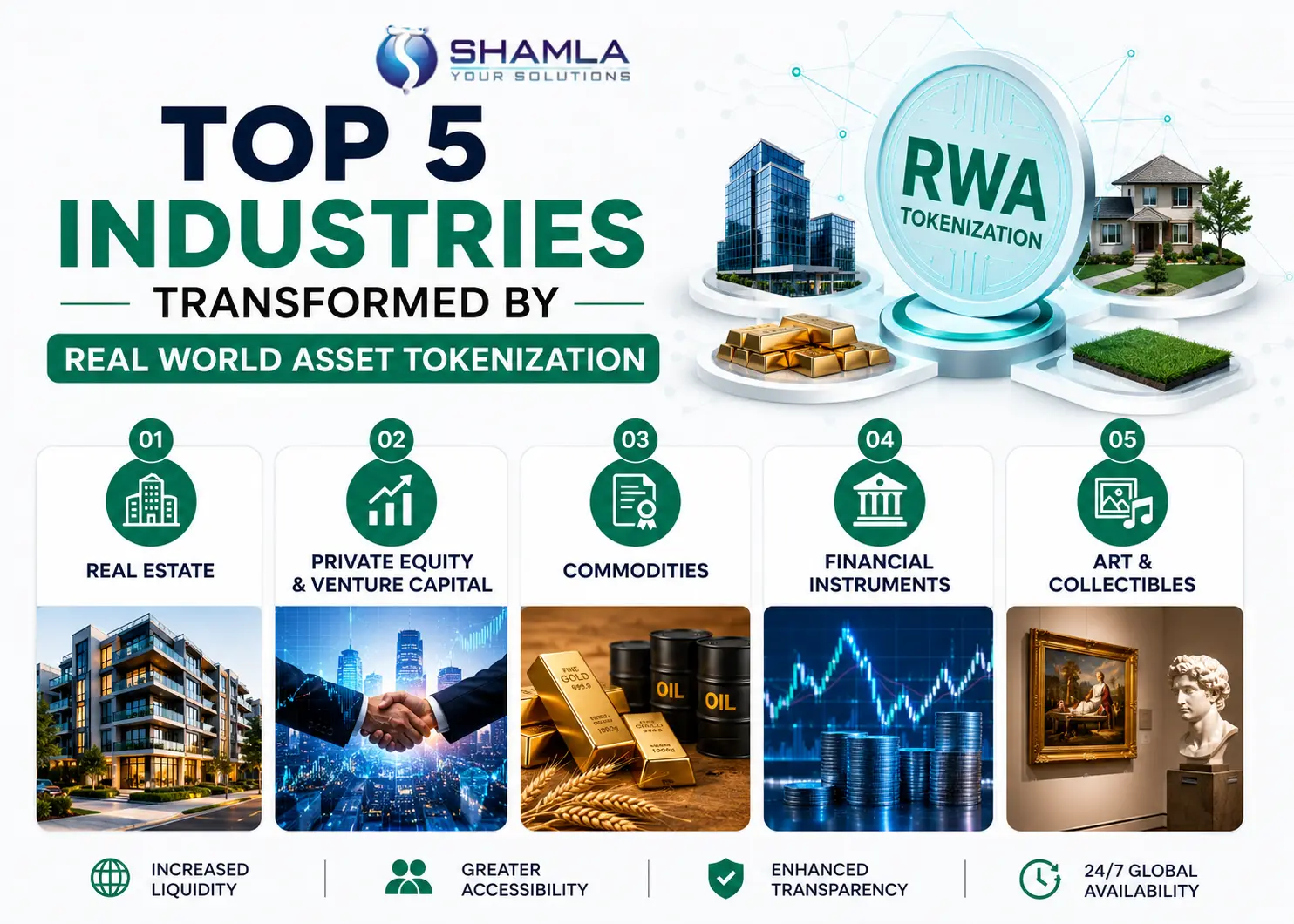
Top 5 Industries Transformed by Real World Asset Tokenization
1. Real Estate
The real estate industry has faced many problems like being hard to sell quickly, high costs to enter and complicated steps that scare small investors. Traditional property investments need a lot of money upfront, involve too much paperwork and take a long time to complete. These things make it tough for most people to join the market. Also, people can’t easily invest in properties outside their own country, which limits their choices.
Real world asset tokenization is changing this by solving these problems. It lets people divide property ownership into small digital parts. So, investors can buy just a piece of a property instead of the whole thing. This helps people with less money to invest in expensive real estate. Tokenization also removes borders, letting investors buy properties worldwide through digital platforms.
Blockchain technology makes everything easier by keeping records safe, clear and fast. It cuts out middlemen, which lowers costs and speeds up deals.
Platforms like Propy and RealT are good examples of this change. They let users invest in tokenized real estate, manage properties easily and access clear ownership records. Tokenization is making real estate open to more people, helping them invest with less money and making the market easier to use for everyone.
2. Art and Collectibles
The art and collectibles market has mostly been for rich people. High prices and limited chances to invest keep smaller investors away. Also, people often doubt if artwork and collectibles are real. Fake items and fraud are common problems. These issues, along with how hard it is to sell art quickly, make investing in art difficult for most people.
Real world asset tokenization is changing this by solving these old problems. With tokenization, expensive art and collectibles can be split into small digital shares. This means many people can own a part of a painting, sculpture, or rare item without needing millions. Tokenization also brings more trust. Blockchain keeps ownership records safe and proves if the items are real.
For artists and collectors, tokenization gives big benefits. Artists can reach more people and collectors can trade tokenized art easily on online platforms, which makes selling faster.
Platforms like Masterworks and Maecenas help by giving access to tokenized art investments. These platforms allow people to invest in famous pieces that were only for the wealthy before.
By making art ownership open to more people and improving trust and trading, tokenization is changing how art is bought, sold and valued. It is making the art market available to a global audience.
3. Financial Instruments
The financial industry has been controlled by centralized systems for a long time. These systems create problems like high costs, slow processes and limited access. Traditional markets for things like bonds, stocks and derivatives need middlemen, which causes delays and adds to the expenses. This setup keeps smaller investors away and makes it hard for people around the world to join in. Big companies benefit more, while others face challenges.
Tokenization is changing this by turning financial assets into digital tokens. Tokenization of real world assets like bonds, stocks and derivatives can be traded easily on blockchain platforms. This removes the need for middlemen, cuts costs and speeds up transactions. Fractional ownership also lets more people invest, making the market open to smaller investors.
Blockchain brings more safety and trust by keeping records of every transaction that can’t be changed. This reduces fraud and helps investors trust the system. With tokenization, people can trade financial assets anytime, anywhere, making the market more active and global.
In the future, tokenized assets might completely change capital markets. As rules start to include blockchain, new global investment chances are opening. Platforms like Securitize and Tokeny already help with creating and trading tokenized securities, showing the power of this idea.
By making things clear, easy and open to everyone, tokenization is not just updating financial tools. It is helping to build a worldwide system where anyone can invest. This new way can connect traditional and digital markets and change how investments work.
4. Supply Chain and Commodities
The supply chain and commodities industries face many problems like slow processes, lack of clarity and chances for fraud. Traditional systems depend on many steps and middlemen, which cause delays, mistakes and high costs. Also, it is hard to check where products come from, which allows fake goods to enter the market.
Tokenization is solving these issues by making everything traceable and easier to trade. Blockchain records every step in the supply chain in a way that cannot be changed, which ensures clarity and trust. Tokenization turns assets like gold, oil, or farm products into digital tokens that can be tracked from the source to the buyer. This helps stop fraud and gives people live updates on goods’ movements.
For trading, tokenization makes things faster and cuts out middlemen. Once commodities are tokenized, they can be traded on online platforms. This increases the ease of trading and allows more people to invest. Fractional ownership also helps smaller investors join markets that were mostly for big players before.
An example is the tokenization of gold. Platforms like Paxos and Digix have made gold-backed tokens. These let people buy and sell small parts of physical gold. Tokens make gold trading safer and remove issues like storage and shipping costs.
By bringing more clarity, fixing slow processes and making trading simple, tokenization is changing supply chains and commodity markets. This change builds trust, lowers risks and gives new chances to businesses and investors.
5. Gaming and Virtual Assets
Gamers are now spending a lot of time and money on virtual items like skins, weapons, characters and currencies. But these items often work only in specific games or platforms. They have no value outside these systems. Also, game developers control these assets. Players cannot truly own, trade, or make money from them freely.
Tokenization is changing this. It connects real world assets with gaming economies. In-game items become blockchain-based tokens. This gives players clear ownership and lets them trade or sell their assets on different platforms. Players can now get real world value from their virtual investments.
Tokenization does more than just offer ownership. It creates decentralized marketplaces. These platforms let players buy, sell and trade items directly. They don’t need middlemen. Blockchain records all transactions, making them transparent and trustworthy. Tokenized assets can also work across many games, creating a single gaming economy for players and developers.
Some platforms, like Enjin and Gala Games, are leading this change. They let players earn and trade items easily. This helps players make money from their time and effort in games. The gap between gaming and the real world economy becomes smaller.
Tokenization gives players more control over their digital items. It also brings real world value into games. This is changing how virtual assets are owned and used. It creates a gaming economy that focuses on players. This change opens up many new ideas and opportunities.
Common Themes Across Industries
Despite differences between sectors, RWA tokenization is driving several common changes across traditional industries. By representing real-world assets as blockchain-based tokens, businesses and investors can access new models of ownership, trading, and asset management.
- Greater liquidity: Tokenization can make traditionally illiquid assets easier to transfer and trade by creating digital representations that can be exchanged on compatible platforms.
- Fractional ownership: High-value assets can potentially be divided into smaller tokenized interests, lowering the barrier to participation and allowing multiple investors to share ownership.
- Improved transparency: Blockchain-based records can provide a transparent and traceable history of ownership and transactions, helping improve visibility across the asset lifecycle.
- Global access: Tokenized assets can potentially reach a broader pool of eligible investors across geographical boundaries, subject to applicable regulations and compliance requirements.
- Automation through smart contracts: Smart contracts can automate processes such as transfers, payments, compliance checks, and settlement, reducing manual intervention and improving operational efficiency.
Together, these themes help explain why RWA tokenization is gaining attention across industries in 2026. The technology is not limited to digitizing ownership; it is also creating new approaches to how assets are issued, managed, transferred, and accessed.
Benefits of RWA Tokenization
Real-world asset tokenization can reshape how assets are owned, managed, transferred, and traded by combining traditional asset structures with blockchain-based infrastructure. As adoption grows across industries, several benefits are becoming increasingly important.
Increased Liquidity
Tokenization can make traditionally illiquid assets easier to transfer and access by creating digital representations that can be traded through compatible marketplaces. This can potentially expand the pool of buyers and sellers while improving the efficiency of transactions.
Fractional Ownership
High-value assets such as real estate, artwork, and certain financial instruments can be divided into smaller tokenized interests. Fractional ownership can lower the minimum investment required and allow a wider range of eligible investors to participate.
Greater Transparency
Blockchain technology can provide a transparent and traceable record of token ownership and transactions. This can improve visibility into an asset’s history while helping participants verify transfers and ownership records.
Global Accessibility
Tokenized assets can potentially be made accessible to eligible investors across different geographic markets. This broader reach can create new opportunities for asset issuers and investors, subject to local regulations, compliance requirements, and platform availability.
Automated Transactions
Smart contracts can automate processes such as ownership transfers, payments, settlement, and other predefined actions. By reducing manual intervention, automation can help streamline operations and potentially lower administrative costs.
Faster and More Efficient Settlement
Blockchain-based settlement can reduce the number of intermediaries involved in certain transactions and enable assets and payments to be coordinated digitally. This may help shorten settlement times and improve operational efficiency.
Improved Asset Management
Tokenization can provide digital infrastructure for tracking ownership, transfers, and other asset-related activities. Combined with smart contracts and blockchain records, this can make asset management more structured and easier to monitor.
Overall, these benefits help explain why RWA tokenization is being explored across industries in 2026. Its potential value extends beyond simply putting assets on a blockchain, creating opportunities to improve liquidity, accessibility, transparency, automation, and transaction efficiency.
Factors to Consider When Implementing Tokenization
Implementing real world asset tokenization in your business can bring great benefits, but it needs careful planning and thought about several things to make it work. Here are some important points to remember when adopting tokenization.
Regulatory Compliance: One of the most important parts of tokenization is following legal rules and local regulations. Laws for tokenizing real-world assets are still changing and are different in each region. So, it is important to talk to legal experts. They will guide you on topics like taxes, securities laws and data privacy. If you do not follow the right legal steps, you may face penalties, legal troubles, or delays in your tokenization process. Following the rules keeps your business running smoothly and reduces risks in tokenization.
Choosing the Right Blockchain Platform: Choosing the right blockchain platform is very important for tokenization. You need to think about scalability, security and transaction speed. A good blockchain must handle many transactions and still stay secure. People mostly use Ethereum for tokenization. But, platforms like Polkadot and Stellar might work better for faster transactions or lower costs. You should pick the platform that fits your business needs. It must support the tokenization process and keep it safe and efficient.
Market Demand and Audience: Before moving forward with tokenization, businesses must assess market demand and understand their target audience. Consider the appeal of the asset being tokenized and whether there is enough investor interest. Understanding the preferences of your audience and how easily the tokenized asset can be traded is crucial. This knowledge helps businesses develop a strategy that boosts participation and maximizes profits. By aligning the tokenized asset with market interests, businesses can attract more investors and ensure the success of their tokenization efforts.
Risk Management: Tokenization uses blockchain technology. It is secure but still has some risks. To stop problems like hacking, smart contract bugs, or network failures, businesses need to use strong cybersecurity measures. Regularly checking risks is important to find weaknesses and stop threats. Audits of smart contracts and system security must be done often to fix problems quickly. Staying alert and active helps businesses lower risks. This way, they can keep their assets safe and make sure tokenized platforms and transactions work smoothly
The Future of RWA Tokenization Across Industries
RWA tokenization is expected to expand beyond early use cases as blockchain infrastructure, regulatory frameworks, and institutional participation continue to develop. In the coming years, the technology could influence how a wider range of physical and financial assets are issued, owned, traded, and managed.
Growing Institutional Adoption
Banks, asset managers, financial institutions, and other large organizations are increasingly exploring tokenized assets as part of their digital infrastructure strategies. Greater institutional participation could help improve market liquidity, establish standardized processes, and accelerate the adoption of tokenized financial and physical assets.
Cross-Industry Convergence
The boundaries between traditionally separate asset markets may become less distinct as tokenization infrastructure develops. Real estate, financial services, commodities, supply chains, and other sectors could increasingly use interoperable blockchain networks and shared standards, creating more connected digital asset ecosystems.
Evolving Regulation
Regulatory clarity will remain a major factor in the growth of RWA tokenization. Governments and financial regulators are expected to continue developing frameworks around digital ownership, investor protection, custody, taxation, securities classification, and cross-border transactions. Clearer rules could provide businesses and investors with greater confidence to participate in tokenized markets.
Expansion Into New Asset Classes
Tokenization is likely to move into additional asset categories as the underlying infrastructure matures. Beyond real estate and financial instruments, potential applications include intellectual property, infrastructure projects, private funds, carbon credits, collectibles, and other assets with verifiable ownership or economic value.
Improved Interoperability and Infrastructure
Future tokenization platforms may place greater emphasis on interoperability between blockchains, financial systems, custodians, and marketplaces. Improved connectivity could make it easier for tokenized assets to move between compatible platforms while supporting more efficient settlement and asset management.
More Automated Asset Management
Advances in smart contracts and blockchain-based applications could enable more sophisticated automation. Compliance checks, distributions, reporting, transfers, and settlement processes may increasingly be integrated directly into tokenized asset ecosystems.
Overall, the future of RWA tokenization will depend on the combined development of technology, regulation, market infrastructure, and institutional adoption. As these elements mature, tokenization could become an increasingly important component of how industries create, manage, and exchange real-world value.
Frequently Asked Questions
1. What Industries Can Use Real-World Asset Tokenization?
Real-world asset tokenization can be applied across industries such as real estate, financial services, commodities, art and collectibles, supply chain, private markets, and infrastructure. The suitability depends on the asset’s ownership structure, legal framework, liquidity requirements, and the availability of appropriate blockchain infrastructure.
2. What Are Examples of Tokenized Real-World Assets?
Examples include real estate properties, government and corporate bonds, private credit, commodities, artwork, collectibles, investment funds, and infrastructure assets. Tokenization can create digital representations of ownership or economic rights associated with these assets.
3. Which Industry Benefits Most from RWA Tokenization?
There is no single industry that benefits the most in every situation. Real estate and financial services are among the prominent use cases because they involve high-value assets that can benefit from fractional ownership, improved liquidity, streamlined settlement, and greater transparency.
4. How Does Tokenization Transform Real Estate?
Tokenization can represent ownership interests in real estate as digital tokens, potentially allowing assets to be divided into smaller investment units. It can also support more efficient ownership transfers, improve transparency around transactions, and expand access to eligible investors, subject to applicable regulations.
5. How Is Tokenization Used in Financial Services and Securities?
Financial institutions can tokenize assets such as bonds, private credit, funds, and other financial instruments. Blockchain-based infrastructure can support digital issuance, ownership tracking, transfer, and settlement while smart contracts can automate certain processes.
6. Can Supply Chains, Commodities, and Art Be Tokenized?
Yes. Commodities, artwork, collectibles, and supply-chain-related assets can potentially be represented through digital tokens when their ownership and underlying value can be appropriately verified. Tokenization can support provenance tracking, fractional ownership, asset transfers, and improved transparency.
7. What Is the Future of RWA Tokenization Across Industries?
The future of RWA tokenization is likely to involve greater institutional adoption, clearer regulation, improved blockchain interoperability, new asset classes, and increased automation. As infrastructure matures, tokenization could become more integrated with traditional financial and commercial systems.
8. Is Real-World Asset Tokenization Legal and Regulated?
RWA tokenization is subject to the laws and regulations applicable to the underlying asset, token structure, issuer, investors, and jurisdiction. Depending on the circumstances, tokenized assets may be subject to securities, financial-services, property, taxation, anti-money-laundering, and investor-protection requirements. Businesses should obtain appropriate legal and regulatory advice before launching a tokenized asset.
9. How Can Shamla Tech Tokenize Assets for My Industry?
Shamla Tech can potentially help businesses explore blockchain-based asset tokenization according to their specific industry requirements. A typical process may involve identifying the asset and ownership structure, defining the token model, establishing compliance requirements, selecting appropriate blockchain infrastructure, developing smart contracts, and integrating the resulting solution with relevant business systems.
10. Tokenize Your Industry's Assets with Shamla Tech
The future of real world asset tokenization looks bright, as it changes the global markets. Tokenization makes handling assets more efficient, clear and easy for everyone. It brings new chances for businesses, investors and people. As more assets, like real estate, art, financial instruments and commodities, get digitized and tokenized, this technology will affect many industries.
Tokenization is becoming an important tool to give people easier access to valuable assets, increase liquidity and open new investment opportunities. For businesses, using tokenization is a smart choice that can lower costs, widen market participation and make processes more efficient. By using tokenization, companies can offer more investment options, make their work faster and reach people worldwide.
As tokenization grows and improves, businesses that use this technology will lead the way in the digital economy. Tokenization is changing how we think about assets, investments and economic activity, showing a future that is clearer, faster and without borders. Businesses that start using tokenization now will get the most out of it, finding new ways to grow and succeed in the digital world.
If you need to tokenize real world assets and grow your business, partner with us. We are Shamla Tech, a top company specializing in real world asset tokenization. Our services help businesses to get new investment opportunities, increase their liquidity and streamline processes.
Contact us today to learn how we can help you tokenize your assets and take your business to the next level.