
Across global financial markets, real-world asset (RWA) tokenization is rapidly transforming how assets are issued, traded, and managed. From tokenized real estate to private credit and treasury instruments, blockchain infrastructure is enabling new levels of efficiency and accessibility.
Tokenized assets are projected to reach 16 trillion dollars by 2030 representing nearly 10 percent of global GDP based on research from Boston Consulting Group and ADDX highlighting rapid institutional adoption while simultaneously increasing the need for AI driven risk monitoring systems to manage fraud detection AML compliance and real time transaction surveillance across digital asset ecosystems
This article explains how AI risk monitoring for RWA tokenization platforms works, the infrastructure required, and how firms can implement fraud detection, AML surveillance, and smart contract alert systems effectively.
Why AI Risk Monitoring is Critical for RWA Tokenization Platforms
Real-Time Fraud Detection
Increasing AML and Regulatory Pressure
Smart Contract Risk Exposure
High Transaction Volume and Complexity
Institutional Trust and Platform Credibility
Core AI Risk Monitoring Infrastructure for Tokenized Platforms
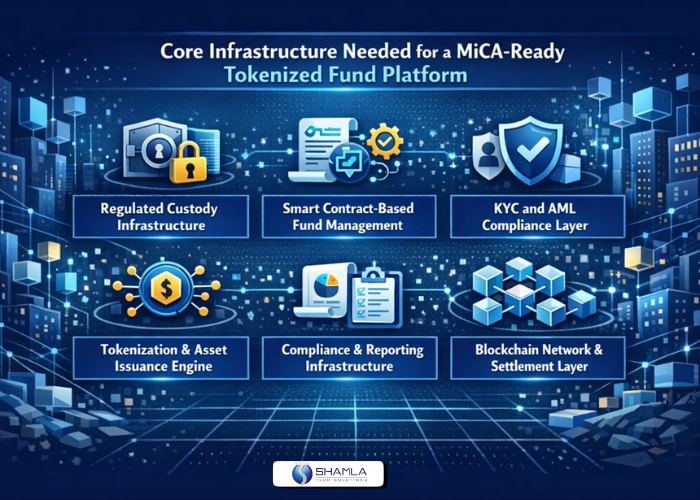
1. AI-Based Transaction Monitoring Engine
Tokenized platforms require a real-time transaction monitoring system powered by machine learning to detect suspicious activity. This engine continuously analyzes transaction flows, identifying anomalies, irregular patterns, and high-risk behaviors. By learning from historical transaction data, the system improves detection accuracy over time, reduces false positives, and adapts to emerging fraud tactics in dynamic blockchain environments.
2. Wallet Behavior and Identity Analytics
AI-driven analytics monitor wallet behavior by tracking transaction patterns, frequency, and interactions across networks. These systems build behavioral profiles that help link wallets to potential identities or risk categories. By identifying unusual spikes, clustering of related wallets, or indirect associations with illicit entities, platforms gain deeper insights beyond traditional KYC, enabling proactive detection of hidden financial risks.
3. AML and Sanctions Screening Layer
A comprehensive AML framework integrates global sanctions lists, politically exposed persons databases, and regulatory watchlists. AI enhances this layer by identifying indirect connections, complex transaction chains, and obfuscated laundering techniques. It analyzes transaction patterns to detect suspicious flows that may bypass standard checks, ensuring stronger compliance while minimizing manual intervention and improving efficiency in regulatory screening processes.
4. Smart Contract Monitoring and Alert System
AI-powered monitoring tools track smart contract activity in real time to detect abnormal or malicious behavior. These systems identify issues such as unexpected token minting, irregular transfers, vulnerabilities, or exploitation of contract logic. Upon detecting risks, automated alerts are generated, and predefined safeguards can be triggered, helping platforms prevent financial losses and maintain integrity within decentralized ecosystems.
5. Risk Scoring and Decision Engine
A dynamic risk scoring engine evaluates each transaction, wallet, or interaction using AI models. It considers factors such as transaction size, frequency, counterparties, geography, and historical behavior. Based on these inputs, the system assigns risk levels and enables automated decisions like blocking, flagging, or escalating transactions, ensuring efficient and consistent risk management across tokenized platforms.
6. Compliance Reporting and Audit Infrastructure
AI systems streamline compliance by generating detailed logs, audit trails, and regulatory reports in real time. These tools ensure transparency by recording all transactions and risk assessments in structured formats. Automated reporting reduces manual workload, supports multi-jurisdictional compliance requirements, and enables regulators or auditors to access accurate, traceable data, strengthening trust and accountability within tokenized financial systems.
Key Risk Areas AI Helps Address in RWA Tokenization
Risk Area | AI Capability | Impact |
Fraud Detection | Pattern recognition, anomaly detection | Prevents unauthorized or manipulative transactions |
AML Compliance | Transaction monitoring, behavioral analysis | Detects and prevents money laundering activities |
Smart Contract Exploits | Code behavior monitoring, anomaly alerts | Reduces financial and operational risk |
Insider Threats | Behavioral profiling, access monitoring | Identifies suspicious internal activities |
Market Manipulation | Trade pattern analysis | Maintains fair and transparent markets |
1.Fraud Detection
AI enhances fraud detection in RWA tokenization platforms by using pattern recognition and anomaly detection techniques. It analyzes transaction behavior in real time to identify suspicious activities such as unusual transfers, rapid fund movements, or unauthorized access. By proactively detecting threats, AI helps prevent fraudulent or manipulative transactions, protecting both investors and platform integrity.
2. AML Compliance
AI strengthens AML compliance by continuously monitoring transactions and applying behavioral analytics to detect suspicious financial activities. It identifies complex laundering patterns, unusual transaction flows, and indirect links to sanctioned entities. This enables platforms to detect and prevent money laundering more effectively while ensuring adherence to global regulatory standards and reducing reliance on manual compliance processes.
3. Smart Contract Exploits
AI helps mitigate smart contract risks by monitoring code behavior and detecting anomalies in execution. It identifies vulnerabilities such as reentrancy attacks, unauthorized minting, or unexpected logic flows. By generating real-time alerts and enabling rapid intervention, AI reduces both financial losses and operational disruptions, ensuring the reliability and security of tokenized asset infrastructures.
4. Insider Threats
AI addresses insider threats by analyzing behavioral patterns and monitoring access to sensitive systems. It can detect deviations from normal user behavior, such as unusual access times, unauthorized data usage, or suspicious internal transactions. This allows platforms to identify potentially malicious insiders early, reducing the risk of internal fraud, data breaches, or operational compromise.
5. Market Manipulation
AI detects market manipulation by analyzing trading patterns and identifying irregular behaviors such as wash trading, spoofing, or coordinated price movements. It continuously monitors market activity to ensure fairness and transparency. By flagging suspicious trading strategies, AI helps maintain trust in tokenized markets and protects investors from artificial price distortions and unethical practices.
Steps to Implement AI Risk Monitoring in RWA Tokenization Platforms
1. Define Risk Framework and Monitoring Objectives
2. Integrate AI with Blockchain Data Sources
3. Deploy Machine Learning Models
4. Implement Smart Contract Monitoring Tools
5. Establish Automated Alert and Response Systems
6. Build Compliance Reporting and Audit Systems
Final Thoughts
As RWA tokenization platforms scale, risk monitoring can no longer rely on manual processes or static rule-based systems. AI introduces a proactive, adaptive approach that evolves with emerging threats and regulatory expectations.
For asset managers and platform operators, implementing AI-driven fraud detection, AML compliance, and smart contract monitoring is not just a technical upgrade – it is a strategic necessity.
Platforms that invest in intelligent risk monitoring today will be better positioned to scale securely, attract institutional capital, and operate within increasingly complex regulatory environments.
Build Secure AI-Powered RWA Platforms with Shamla Tech
Shamla Tech is an RWA tokenization platform development company building secure, AI-powered infrastructure for modern digital asset ecosystems. We design scalable platforms with integrated risk monitoring, enabling real-time fraud detection, AML compliance, and smart contract security across tokenized asset environments.
We combine blockchain expertise with advanced AI capabilities to strengthen platform security and operational efficiency. Our solutions help automate compliance workflows, deliver intelligent alerts, and ensure transparent, reliable performance for asset managers operating in fast-evolving tokenized markets.