

Institutional interest in tokenized real-world assets is accelerating in 2026, but scaling these platforms requires more than blockchain infrastructure. Legal enforceability, regulatory clarity, and investor protection frameworks are becoming decisive factors for enterprises entering tokenized asset markets.
Market projections highlight the scale of this shift. The global tokenized asset market could reach $16 trillion by 2030, reflecting growing institutional demand for compliant blockchain infrastructure and regulated digital asset markets.
This article explains the legal framework for RWA tokenization, covering regulatory structures, compliance requirements, and licensing considerations. It also explores how enterprises can structure tokenized assets while aligning with evolving financial regulations and institutional investment standards.
Why Is Compliance and Legal Framework Becoming Critical for RWA Tokenization in 2026?
Regulatory architecture is becoming a central design layer for RWA tokenization platforms in 2026. As tokenized assets interact with traditional financial systems, enterprises must integrate legal structuring, jurisdictional compliance, and enforceable ownership mechanisms directly into platform development strategies.
Several underlying factors are driving this increasing emphasis on compliance:
- Asset–token linkage requires formal legal structuring: Tokenized assets must be connected to legally recognized entities such as Special Purpose Vehicles (SPVs), trusts, or custodial arrangements to ensure that token holders possess enforceable claims over underlying assets.
- Secondary trading introduces regulatory obligations: When tokenized assets become tradable, platforms must address securities trading rules, transfer restrictions, investor eligibility requirements, and regulatory reporting obligations across participating jurisdictions.
- Identity and investor verification infrastructure is becoming foundational: Institutional-grade tokenization platforms increasingly embed KYC, AML, and transaction monitoring systems directly into onboarding and transaction layers to maintain regulatory compliance across global investor networks.
- Regulators are actively developing tokenization-specific frameworks: Several jurisdictions are publishing regulatory guidance and sandbox programs to govern digital securities and tokenized assets, shaping how platforms structure issuance, custody, and asset management processes.
- Tokenized treasury markets are expanding rapidly: The value of tokenized U.S. Treasury products surpassed $1 billion in 2025, reflecting growing institutional interest in regulated on-chain financial instruments.
Global Regulatory Landscape for RWA Tokenization
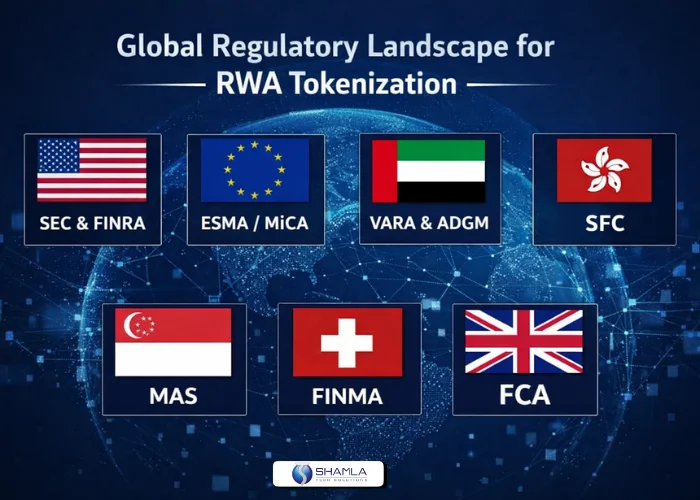
United States: SEC and FINRA oversight
In the United States, real-world asset tokenization is primarily assessed under existing securities regulations. The U.S. Securities and Exchange Commission (SEC) determines whether tokenized assets qualify as securities, particularly when tokens represent ownership, revenue rights, or investment interests tied to real-world assets.
For RWA tokenization platforms, this typically means structuring tokenized real estate, private equity, funds, or debt instruments under securities exemptions. The Financial Industry Regulatory Authority (FINRA) supervises broker-dealers that facilitate tokenized securities issuance, trading, and secondary market infrastructure.
European Union: MiCA regulatory framework
The European Union is establishing a harmonized regulatory structure for digital assets through the Markets in Crypto-Assets Regulation (MiCA). This framework introduces licensing requirements and operational standards for crypto asset issuers and service providers across EU member states.
For RWA tokenization, MiCA creates regulatory clarity for platforms issuing asset-backed tokens linked to financial instruments or investment products. Oversight from the European Securities and Markets Authority (ESMA) helps ensure market transparency, investor protection, and financial stability within tokenized asset ecosystems.
United Arab Emirates: VARA and ADGM frameworks
The United Arab Emirates has positioned itself as a growing hub for digital asset innovation and tokenized finance. The Virtual Assets Regulatory Authority (VARA) in Dubai regulates virtual asset service providers and provides licensing pathways for tokenization platforms operating within the emirate.
Meanwhile, Abu Dhabi Global Market (ADGM) offers a structured regulatory regime for digital securities and tokenized investment products. This framework allows enterprises to issue tokenized real estate, funds, and alternative assets within a clearly defined financial regulatory environment.
Hong Kong: SFC digital asset supervision
Hong Kong is developing a regulated ecosystem for tokenized financial products under the supervision of the Securities and Futures Commission (SFC). The regulator applies existing securities laws to digital asset platforms and tokenized investment offerings.
This approach allows financial institutions to tokenize assets such as bonds, funds, and structured financial products while maintaining traditional investor protection standards. Licensing requirements and compliance frameworks aim to support institutional participation in tokenized markets.
Singapore: MAS institutional tokenization initiatives
Singapore remains one of the most advanced regulatory environments for institutional tokenization projects. The Monetary Authority of Singapore (MAS) regulates digital asset services and oversees licensing requirements for financial institutions operating tokenized asset platforms.
MAS also collaborates with global banks through initiatives such as Project Guardian, which explores tokenization of bonds, funds, and other real-world assets. These initiatives aim to build compliant blockchain infrastructure for institutional financial markets.
Switzerland: FINMA token classification framework
Switzerland has developed one of the clearest regulatory environments for blockchain-based financial assets. The Swiss Financial Market Supervisory Authority (FINMA) classifies tokens into categories such as payment tokens, utility tokens, and asset tokens.
For RWA tokenization, asset tokens that represent ownership or claims on real-world assets fall under securities regulations. This classification system provides enterprises with legal clarity when structuring tokenized securities, investment products, and asset-backed tokens.
United Kingdom: FCA oversight of tokenized securities
In the United Kingdom, tokenized assets are regulated within the broader financial services framework overseen by the Financial Conduct Authority (FCA). The FCA applies securities laws when tokenized assets represent investment products or financial instruments.
RWA tokenization projects involving assets such as property, funds, or debt instruments must comply with financial promotion rules, investor protection standards, and licensing requirements. The UK also supports experimentation through regulatory sandbox programs for financial technology innovation.
KYC and AML Compliance in Tokenized Asset Platforms
Compliance Requirement | Purpose | Implementation |
Investor Identity Verification | Confirm the identity of investors before accessing tokenized assets. | Government ID verification, address validation, sanctions screening. |
AML Monitoring | Detect suspicious financial activity and prevent illicit capital flows. | Transaction monitoring, wallet risk scoring, suspicious activity reporting. |
Investor Eligibility Checks | Ensure investors meet securities law participation requirements. | Accredited investor verification, jurisdiction-based restrictions. |
Compliance Recordkeeping | Maintain transparent records for regulatory audits and oversight. | Investor databases, transaction logs, audit trails, regulatory reports. |
1. Investor Identity Verification
2. AML Monitoring And Transaction Screening
3. Accredited And Eligible Investor Verification
4. Ongoing Compliance And Regulatory Recordkeeping
Licensing Requirements for RWA Tokenization Platforms
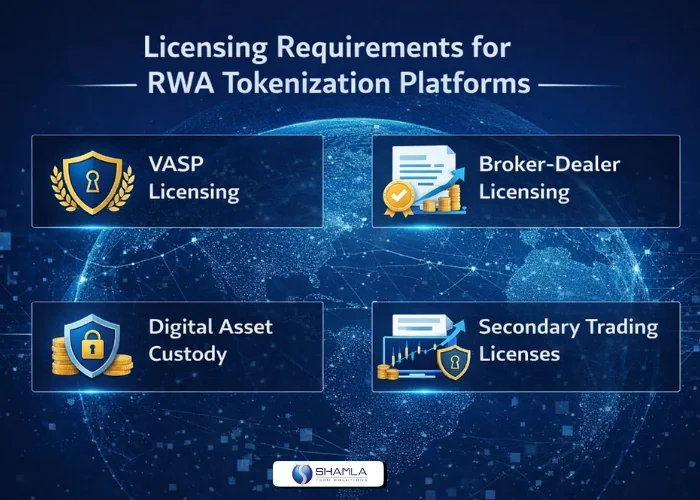
Virtual Asset Service Provider (VASP) Licensing
Securities Issuance And Broker-Dealer Licensing
Digital Asset Custody And Asset Safekeeping
Secondary Trading And Regulated Marketplaces
Bottom Line
The regulatory environment for real-world asset tokenization is gradually becoming more structured as governments and financial authorities introduce clearer rules for digital securities and blockchain-based financial products. This growing clarity is helping enterprises design tokenization platforms that align with established legal and compliance standards.
As regulatory guidance continues to mature across major financial hubs, enterprises now have a clearer pathway to launch compliant tokenization platforms. Organizations that proactively integrate legal structuring, licensing, and compliance frameworks will be better positioned to participate in the next phase of institutional tokenized asset markets.
Build RWA Tokenization Platforms with Legal Consulting from Shamla Tech
Shamla Tech is an RWA tokenization legal consulting company supporting enterprises in launching compliant RWA tokenization platforms. Our team provides regulatory guidance, legal structuring, and compliance planning to help projects align with existing global financial regulations.
We work closely with clients to design legally structured tokenized assets, establish compliant platform frameworks, and integrate licensing and regulatory requirements into development strategies. Our consulting approach helps enterprises build scalable RWA tokenization platforms ready for institutional adoption.