

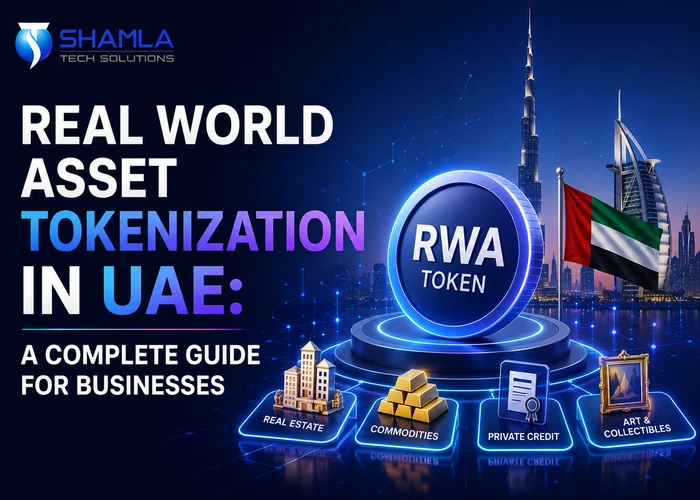

Dubai is becoming a booming market for real-world asset tokenization in the UAE. Businesses are now deploying RWA Tokenization Platform to manage high-value assets, global investors, real estate portfolios, commodities, private funds, and alternative investments. Tokenization gives these businesses a way to digitize ownership, reduce entry barriers, improve investor access, and create more efficient asset management models.
This guide explores how businesses can invest in Real World Asset Tokenization in UAE to improve their productivity, security, speed, efficiency, and generate higher returns.
What Is Real World Asset Tokenization?
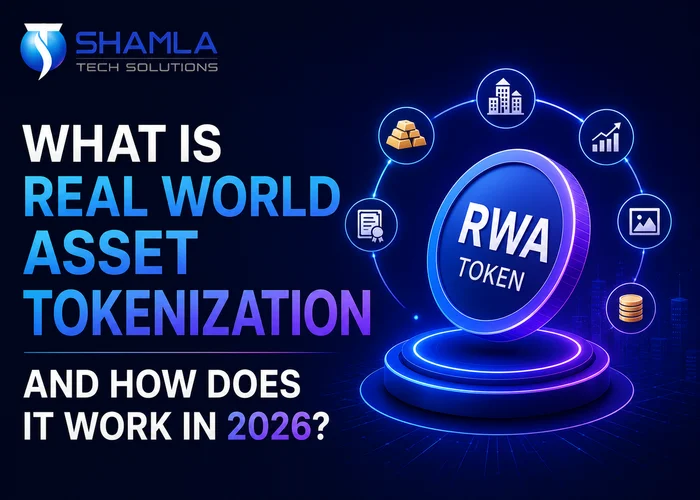
Real world asset tokenization is the process of converting ownership rights, income rights, or economic claims linked to a physical or financial asset into blockchain-based tokens. These tokens can represent fractional ownership, fund units, rental income rights, debt exposure, commodity claims, or other legally structured benefits.
In the UAE, the success of an RWA tokenization platform depends on the legal structure behind the token. A token must clearly define what the investor owns, what rights they receive, how income is distributed, and what happens if the asset is sold, redeemed, or disputed.
Why Dubai Is a Strong Market for RWA Tokenization
Dubai is attractive for asset tokenization Dubai because it combines real estate growth, The UAE is attractive for RWA tokenization platform development because it combines capital, regulatory ambition, asset-heavy industries, international investors, and advanced digital-asset infrastructure.
Dubai and the UAE offer several advantages:
- Specialized virtual asset regulation- Dubai’s Virtual Assets Regulatory Authority, VARA, regulates virtual assets across Dubai mainland and free zones, except the DIFC. VARA’s framework includes rulebooks for issuance, custody, exchange, broker-dealer, advisory, transfer and settlement, technology, market conduct, compliance, and company governance.
- Multiple regulatory routes- A business may consider Dubai/VARA, DIFC/DFSA, ADGM/FSRA, SCA, or CBUAE depending on the token structure, investor type, payment model, and asset class.
- Strong real estate market- Dubai real estate is one of the most obvious use cases for asset tokenization Dubai, especially for fractional property investment, rental-income distribution, and cross-border investor access.
- Institutional capital and family offices- The UAE has a high concentration of family offices, investment holding companies, sovereign-linked entities, real estate developers, private banks, and asset managers.
- Government-backed digital economy ambition- The UAE has positioned digital assets, fintech, blockchain, and tokenization as part of its financial innovation agenda.
- Regulated sandbox pathways- DIFC’s DFSA launched a Tokenisation Regulatory Sandbox for firms exploring tokenized investment products and services in a controlled regulatory environment. Applications for that cohort are closed, but it demonstrates the regulatory direction in Dubai’s financial free zone.
Who Should Consider Launching an RWA Tokenization Platform in the UAE?
A Dubai RWA tokenization platform is suitable for businesses that own, manage, broker, or distribute asset-backed investment opportunities. This includes companies that want to create fractional investment access, digitize investor onboarding, automate income distribution, or launch a regulated asset marketplace.
Businesses that may benefit include:
- Real estate developers and property investment firms
- Family offices and asset managers
- Fintech and blockchain startups
- Commodity, gold, and trade finance companies
- Private credit, fund, and investment platforms
What Types of Assets Can Be Tokenized in the UAE?
The UAE market supports several strong use cases for RWA tokenization UAE, but each asset class requires a different legal, compliance, and technology structure.
Real Estate Tokenization Dubai
Real estate tokenization Dubai is one of the strongest RWA use cases because property is high-value, income-generating, and traditionally illiquid. Possible models include:
- Fractional ownership of residential or commercial property
- Tokenized rental income rights
- Tokenized real estate fund units
- Tokenized SPV shares linked to property
- Tokenized development project participation
- Tokenized REIT-style products
- Tokenized hotel, holiday home, or serviced apartment income
Commodity Tokenization
The UAE is a major trading hub for commodities such as gold, oil-linked products, metals, diamonds, and agricultural commodities. Commodity-backed tokens require strong custody, auditing, reserve verification, insurance, redemption rules, and legal clarity on whether the token represents ownership, a claim, or exposure. Commodity tokenization may involve:
- Gold-backed tokens
- Precious metal tokens
- Warehouse receipt tokenization
- Inventory-backed tokens
- Trade finance tokenization
- Commodity ownership or redemption claims
Private Credit and Invoice Tokenization
Private credit is one of the fastest-growing institutional RWA categories globally. This model can be attractive in the UAE because of the region’s trade, logistics, SME, and cross-border commerce activity. But it can also trigger lending, securities, fund, or financial promotion rules depending on structure. UAE businesses may tokenize:
- Receivables
- Trade finance assets
- SME loans
- Invoice financing products
- Supply-chain finance instruments
- Corporate debt claims
Fund Tokenization
Investment funds can tokenize fund units to improve subscription, transfer, cap table management, investor reporting, and settlement. Common structures include:
- Tokenized private fund units
- Tokenized real estate funds
- Tokenized money market funds
- Tokenized sukuk funds
- Tokenized private equity or venture funds
- Tokenized alternative investment funds
In ADGM and DIFC, tokenized fund structures may fall under financial services regulation rather than general virtual asset regulation.
Sukuk and Debt Tokenization
The UAE is an important Islamic finance market. Tokenized sukuk and debt products are likely to be treated as securities or investment products, so they require careful structuring. Tokenized sukuk could support:
- Digital issuance
- Fractional participation
- Automated profit distribution
- Transparent asset backing
- Secondary transfer workflows
- Improved settlement
Luxury Asset Tokenization
Dubai is also a strong market for high-value luxury assets. These models require strong asset verification, custody, insurance, valuation, and dispute-resolution mechanisms. This includes:
- Art
- Watches
- Collectibles
- Classic cars
- Yachts
- Diamonds
- Rare goods
How RWA Tokenization Works: Business Model Explained
1. Asset Layer
2. Legal Structure Layer
3. Token Layer
4. Platform Layer
5. Compliance and Operations Layer
The Legal Structure Behind Tokenization
Regulation comes before development in RWA tokenization UAE because token classification decides the license, platform features, investor rules, custody model, and transfer controls. A token linked to property, income, debt, fund units, commodities, or payment value may fall under different UAE regulators.
VARA for Dubai Virtual Asset Activities
VARA is important for tokenization VARA UAE when a business operates in Dubai outside DIFC and issues, sells, brokers, transfers, manages, custodies, or enables trading of virtual assets. For an RWA tokenization platform in Dubai, VARA may affect licensing, issuance approval, disclosures, custody, market conduct, and platform operations.
ARVA for Asset-Referenced Virtual Assets
ARVA, or Asset-Referenced Virtual Asset, matters when a token is linked to real-world assets such as property, gold, commodities, or other value references. In real world asset tokenization UAE, ARVA classification may require stronger reserve checks, disclosures, governance, redemption rules, investor protection, and approval before launch.
DIFC and DFSA for Investment Products
DIFC is outside VARA’s jurisdiction and is regulated by the DFSA. It may suit businesses launching tokenized funds, wealth products, structured products, or professional-investor platforms. For asset tokenization Dubai, DIFC can be useful when the token behaves more like an investment product than a general virtual asset.
ADGM FSRA for Digital Securities and Funds
ADGM FSRA may suit businesses tokenizing fund units, private markets, digital securities, SPV-backed assets, or institutional investment products. For RWA tokenization UAE, ADGM is often considered when the project needs a strong financial-services framework, legal infrastructure, asset holding structure, and professional investor environment.
SCA for Securities and Commodities
SCA may become relevant if the token represents shares, debt, sukuk, fund units, commodity interests, investment returns, or securities-style rights. For a business building an RWA tokenization platform in UAE, SCA considerations are important when the product is marketed as an investment opportunity.
CBUAE for Payment Tokens and Stablecoins
CBUAE may apply when the platform uses payment tokens, stablecoins, fiat-referenced tokens, or token-based settlement. In RWA tokenization UAE, payment design matters because investor subscriptions, income distributions, redemptions, and stablecoin flows can affect licensing, banking, custody, compliance, and platform architecture.
Key Features of an RWA Tokenization Platform
A professional RWA platform development UAE project needs more than token minting. It should support asset verification, investor onboarding, compliance, smart contracts, custody, payments, reporting, dashboards, and controlled transfers.
- Asset Onboarding Module- The asset onboarding module verifies property, gold, invoices, funds, or commodities before issuance. For asset tokenization Dubai, it stores ownership records, valuations, insurance, custody details, legal documents, and asset descriptions.
- Investor Onboarding and KYC/KYB- Investor onboarding protects an RWA tokenization platform in UAE from compliance risk. It verifies individuals, companies, beneficial owners, jurisdictions, sanctions exposure, investor category, wallet ownership, and eligibility before allowing participation.
- Smart Contract Development- Smart contracts manage issuance, transfers, restrictions, income distribution, redemption, burning, and admin rights. In real world asset tokenization UAE, they should support whitelisting, transfer limits, pause controls, compliance rules, and audits.
- Custody and Asset Protection- Custody defines who controls the real asset and digital tokens. In RWA tokenization UAE, this may involve SPVs, trustees, vaults, property managers, custodians, MPC wallets, insurance, reserve audits, and recovery procedures.
- Payments, Stablecoins, and Settlement- Payments shape user experience and regulation. An RWA tokenization platform in Dubai may use bank transfers, fiat wallets, cards, stablecoins, or custodians, but CBUAE implications should be reviewed before token-based settlement.
- Secondary Market and Liquidity- Secondary transfers are highly regulated in asset tokenization Dubai. The platform must decide whether transfers are restricted, manually approved, broker-assisted, exchange-based, or redemption-only before promising liquidity to investors.
- Admin Dashboard for Platform Operators- The admin dashboard helps operators manage assets, investors, token supply, compliance approvals, documents, transactions, income distribution, reporting, audit logs, and regulator-ready exports across the full RWA platform development UAE lifecycle.
- Investor Dashboard for Token Holders- The investor dashboard should show holdings, asset details, documents, income history, valuation updates, risks, transfer status, and redemption options. For RWA tokenization UAE, it should feel like a secure investment portal
How To Choose the Right Blockchain For RWA Tokenization Development?
The best blockchain for real world asset tokenization UAE depends on security, cost, compliance controls, custody support, finality, and institutional acceptance. Businesses should not choose a blockchain only because it is popular or cheap.
For regulated RWA platforms, permissioned controls may matter more than open trading. Ethereum, Polygon, Avalanche, Solana, private chains, and enterprise blockchain networks may all be considered depending on the asset type, investor base, and compliance requirements.
Development Roadmap for Launching an RWA Platform in UAE
Launching an RWA tokenization platform in UAE should follow a structured roadmap. The safest approach is to define the business model and regulatory classification first, then design the legal structure, then build the technology.
A typical roadmap includes:
- Business model and asset-class discovery
- Regulatory classification and legal structuring
- MVP platform and smart contract development
- Security audit, compliance testing, and pilot launch
- Full launch with investor onboarding and asset pipeline
What is the Cost to Build an RWA Tokenization Platform in the UAE?
The cost of RWA platform development UAE depends on platform complexity, regulatory requirements, asset class, integrations, smart contract logic, custody model, and reporting needs. A simple MVP costs far less than a regulated multi-asset marketplace.
A basic MVP may start from USD 40,000 to USD 90,000. A business-grade platform may range from USD 100,000 to USD 250,000+. A regulated enterprise marketplace with custody, advanced compliance, secondary transfer workflows, and institutional reporting may exceed USD 250,000 to USD 750,000+.
Revenue Models To Unlock With RWA For Tokenization Businesses
A Dubai RWA tokenization platform can generate revenue through different models based on whether the business operates as a technology provider, issuer, marketplace, asset manager, or regulated financial services provider.
- Token issuance fees charged when a real-world asset is tokenized and launched on the platform.
- Asset listing fees charged to asset owners, developers, or issuers for listing property, gold, funds, credit assets, or commodities.
- Investor subscription fees earned when investors participate in tokenized asset offerings.
- Management fees charged for managing tokenized assets, investor records, compliance, reporting, or income distribution.
- Transaction fees earned from approved token transfers, secondary-market activity, or platform-based asset transactions.
- Redemption fees charged when investors redeem tokens for cash, asset claims, or exit proceeds.
- White-label software fees earned by licensing the RWA tokenization platform to other businesses.
- Custody administration fees charged for managing asset custody workflows, wallet integrations, or reserve reporting.
- Reporting and compliance fees charged for investor statements, audit reports, regulatory exports, and asset performance updates.
- Performance-based fees earned when tokenized assets generate returns above a defined benchmark or target.
Key Risks Business Owners Must Understand Before Building RWA Tokenization UAE Platform
The main risks in RWA tokenization UAE are not only technical. Most risks come from weak legal structuring, unclear investor rights, regulatory misclassification, custody gaps, poor asset verification, liquidity overpromising, and weak compliance controls.
Before launch, business owners should review five major risks:
- Wrong token classification or license route
- Weak legal link between token and asset
- Poor custody or reserve verification
- Liquidity promises without regulated secondary market
- Smart contract, cybersecurity, or AML failures
TakeAway
Before investing in development, a business owner should confirm the asset class, token rights, investor type, jurisdiction, license route, legal wrapper, custody structure, payment model, and compliance obligations. These decisions shape the entire platform.
The most successful RWA tokenization UAE projects start with legal and business clarity before smart contract development. This reduces rework, improves regulator confidence, and creates a more trustworthy platform for investors.
Launch Your RWA Tokenization Platform in Dubai with Shamla Tech
Shamla Tech helps businesses build secure, scalable, and compliance-ready RWA tokenization platforms in UAE for real estate, commodities, funds, private credit, and other asset-backed use cases. From smart contract development and investor dashboards to KYC/KYB workflows, custody integrations, and admin panels, Shamla Tech delivers end-to-end asset tokenization platform development for businesses ready to enter Dubai’s digital asset market.