

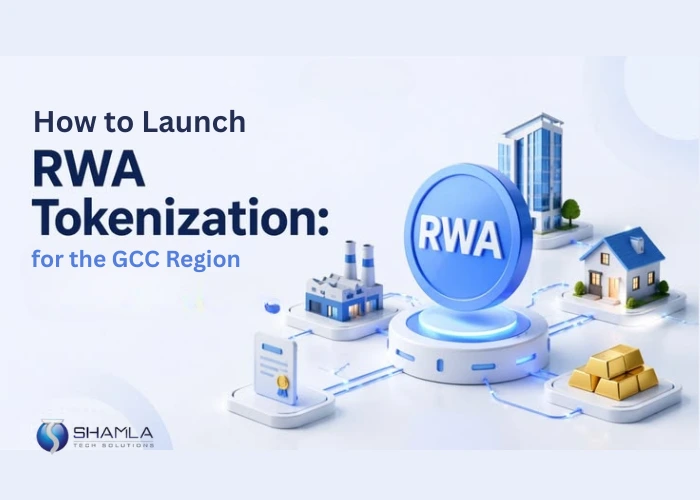

Real-world asset tokenization demand is growing. Across the GCC region, governments, regulators, banks, real estate developers, asset managers, and technology companies are exploring how physical and financial assets can be represented as digital tokens on blockchain networks.
An RWA tokenization platform for the GCC region allows assets to be digitally issued, owned, transferred, and managed. Instead of relying only on manual process, tokenization creates programmable, transparent, and more efficient ownership rails. The opportunity is particularly strong in the Gulf because the region combines capital depth, digital transformation agendas, sovereign wealth activity, real estate growth, and increasingly sophisticated virtual asset regulation. Around $500 billion of assets across the GCC could be represented on-chain by 2030, with private markets, funds, and bank deposits among the strongest opportunities. So how do you launch a credible, compliant, and scalable RWA tokenization platform in the GCC? Read the guide to find out!
What Is an RWA Tokenization Platform?
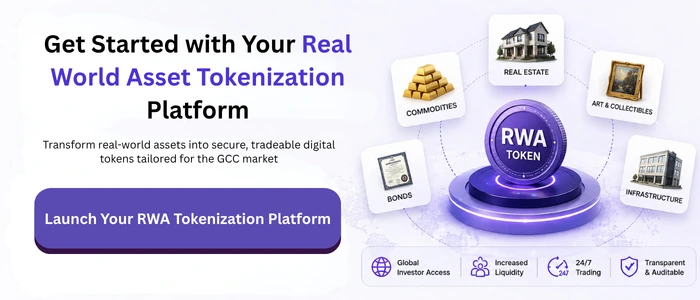
An RWA tokenization platform is a digital infrastructure layer that converts ownership rights or economic rights in real-world assets into blockchain-based tokens. These tokens can represent full or fractional ownership, income rights, fund units, debt instruments, commodities, or asset-backed claims.
For example- a real estate developer may tokenize a property so multiple investors can hold fractional exposure. A fund manager may tokenize fund units to simplify subscription, transfer, reporting, and investor access. A bank may issue tokenized deposits for faster institutional settlement and programmable payments.
The platform typically includes asset onboarding, investor onboarding, KYC/AML checks, token issuance, smart contract management, custody integration, compliance controls, payment rails, reporting dashboards, and secondary transfer functionality
Why Real-World Asset Tokenization Is Growing in the GCC
The GCC has several structural advantages that make it well suited for RWA tokenization.
- First, the region has large pools of capital. Sovereign wealth funds, family offices, institutional investors, and high-net-worth individuals are active across private equity, real estate, infrastructure, commodities, and global markets.
- Second, the region is investing heavily in financial technology and digital infrastructure. The UAE, Saudi Arabia, Qatar, Bahrain, and Oman are all exploring different approaches to digital assets, fintech sandboxes, and blockchain-enabled market infrastructure.
- Third, many GCC asset classes are naturally suited for tokenization. Real estate, private markets, funds, commodities, gold, oil and gas exposure, and carbon credits all have characteristics that tokenization can improve: limited liquidity, high entry barriers, complex transfer processes, or fragmented ownership records.
Dubai’s Real Estate Tokenisation Project is a clear example. Dubai Land Department says the initiative aims to diversify property ownership by enabling multiple investors to co-own properties through tokenised real estate assets, while strengthening Dubai’s position as a virtual asset hub.
Which Regulations Apply to RWA Tokenization in the GCC?
UAE: Advanced and Structured Framework
The UAE has one of the most mature regulatory environments for real-world asset tokenization. Authorities like the Virtual Assets Regulatory Authority (VARA), Abu Dhabi Global Market (ADGM), and Dubai Financial Services Authority (DFSA) provide clear licensing pathways for virtual asset service providers (VASPs). The framework distinguishes between payment tokens, security tokens, and asset-backed tokens, making it easier to structure compliant RWA platforms.
Saudi Arabia: Cautious but Evolving
Saudi Arabia is taking a measured approach. While there is no comprehensive virtual asset law yet, regulators such as the Saudi Central Bank are exploring use cases like tokenized deposits and fintech sandboxes. More formal frameworks are expected as part of Vision 2030.
Qatar: Legal Recognition of Digital Assets
Qatar has introduced a Digital Assets Framework through the Qatar Financial Centre. It provides legal clarity around token ownership, custody, and smart contracts, making it attractive for structured tokenization projects.
Bahrain: Early Regulatory Mover
Bahrain’s Central Bank regulates crypto assets through a dedicated module and sandbox environment. It has already enabled tokenized asset issuance, positioning itself as a fintech-friendly jurisdiction.
Oman & Kuwait: Developing vs Restrictive
Oman is building its regulatory framework with a focus on compliance and licensing. Kuwait remains restrictive, limiting most tokenization and crypto-related activities, which may impact platform launch decisions.
Steps to Launch A Real World Asset Tokenization Platform In GCC Region?
Step 1: Choose the Right Asset Class for Tokenization
Step 2: Select the GCC Jurisdiction Carefully
Step 3: Build Compliance Into the Platform From Day One
Step 4: Design the Technology Architecture
Step 5: Create a Strong Legal and Ownership Structure
Step 6: Plan Custody, Payments, and Settlement
Step 7: Build Investor Trust Through Transparency
Step 8: Enable Controlled Secondary Liquidity
Step 9: Develop a Go-To-Market Strategy for GCC Investors
Step 10: Prepare for 2030, Not Just Launch
Step 1: Choose the Right Asset Class for Tokenization
The first step in launching an asset tokenization platform is selecting the right asset class. Not every asset is equally suitable for tokenization. In the GCC, the strongest RWA categories include:
- Real estate: Tokenized real estate is one of the most visible use cases because it enables fractional ownership, broader investor access, and potential secondary liquidity.
- Private markets: Private equity, venture capital, and private credit are attractive because they are traditionally illiquid and often limited to sophisticated investors.
- Funds: Tokenized funds can reduce administrative burden, improve investor onboarding, and support more efficient transfer of fund units.
- Bank deposits: Tokenized deposits can support real-time settlement, programmable payments, and improved treasury operations.
- Commodities: Gold, oil-linked products, and other commodities are relevant because of the GCC’s trading, storage, and energy-market strengths.
- Carbon credits: Tokenized carbon credits may become more relevant as the UAE and Saudi Arabia build ESG and climate-market infrastructure.
The right choice depends on regulation, investor demand, custody requirements, valuation standards, and transferability.
Step 2: Select the GCC Jurisdiction Carefully
Regulation is one of the most important decisions in any RWA platform development project.
The UAE is currently one of the most developed digital asset jurisdictions in the region. Dubai’s VARA regulates virtual asset activities in and from Dubai, while ADGM and DIFC have their own financial free zone frameworks. VARA states that it regulates and oversees the provision, use, and exchange of virtual assets in and from Dubai.
Jurisdiction selection should not be based only on tax or company setup. It must consider licensing, asset classification, investor eligibility, custody rules, marketing restrictions, secondary trading, and cross-border distribution.
Step 3: Build Compliance Into the Platform From Day One
A credible RWA tokenization platform for the GCC region cannot treat compliance as an afterthought. Compliance must be embedded into the product architecture.
Key compliance layers include KYC, AML, sanctions screening, investor accreditation, jurisdiction-based access controls, transaction monitoring, audit trails, disclosures, custody rules, data protection, and smart contract governance.
Smart contracts can automate some of these controls, but legal design must come first. The token must accurately represent the underlying rights. Without a strong legal wrapper, a token may become only a technical record rather than an enforceable ownership instrument.
Step 4: Design the Technology Architecture
A successful blockchain tokenization platform requires more than minting tokens. Institutional-grade RWA infrastructure needs a full-stack architecture.
Core modules should include:
- Asset onboarding and verification.
- Issuer dashboard.
- Investor onboarding and KYC.
- Token issuance engine.
- Smart contract templates.
- Custody and wallet integration.
- Payment and settlement rails.
- Compliance rules engine.
- Cap table or ownership registry.
- Corporate action management.
- Document management.
- Reporting and audit dashboard.
- Secondary transfer controls.
The blockchain layer may be public, private, permissioned, or hybrid. For institutional GCC use cases, many platforms prefer permissioned or compliance-enabled blockchain environments because they offer stronger control over identity, transfer restrictions, privacy, and regulatory reporting.
The most important technical principle is synchronization between off-chain asset records and on-chain token records. If the land registry, fund administrator, custodian, or bank database does not match the blockchain token ledger, legal and operational risk increases.
Step 5: Create a Strong Legal and Ownership Structure
Before launch, the issuer must define what the token represents.
Is it equity? Debt? Fund interest? Beneficial ownership? Revenue share? Commodity claim? Real estate co-ownership? A contractual right?
This determines licensing, disclosures, tax treatment, transfer rules, investor protections, and redemption rights. Common structures may include special purpose vehicles, fund structures, trust arrangements, nominee structures, custody agreements, or asset-backed token frameworks. The correct structure depends on asset type and jurisdiction.
For the GCC region, legal enforceability is especially important because tokenization may involve cross-border investors, local asset registries, free zone entities, and regulated financial products.
Step 6: Plan Custody, Payments, and Settlement
Investors will not trust an RWA platform unless custody and settlement are reliable.
Custody applies at two levels: custody of the digital token and custody or control of the underlying asset. For real estate, this may involve land registry recognition or ownership documentation. For gold, it may involve vaulting and third-party verification. For funds, it may involve regulated fund administration and transfer agency controls.
Payment infrastructure is equally critical. Platforms need fiat on-ramps, stable-value settlement options where legally permitted, banking partnerships, reconciliation systems, and withdrawal processes.
Step 7: Build Investor Trust Through Transparency
Trust is the difference between a serious tokenization platform and a speculative crypto product.
A credible real-world asset tokenization GCC platform should provide clear asset information, valuation methodology, legal documentation, risk disclosures, ownership records, fees, redemption terms, governance rights, and reporting frequency.
For asset-backed products, proof of reserves or proof of asset ownership is essential. For real estate, investors need property documents, valuation reports, rental income assumptions, title information, and exit scenarios. For funds, investors need NAV reporting, strategy documents, subscription terms, and audited financials.
Transparency should be built into both the platform interface and the blockchain infrastructure.
Step 8: Enable Controlled Secondary Liquidity
One of the biggest promises of tokenization is liquidity. However, liquidity does not happen automatically.
A token is only liquid if there are eligible buyers, compliant transfer rules, market-making mechanisms, trading venues, custody support, and regulatory permission. Many RWA projects fail because they tokenize the asset but do not build a functioning distribution or secondary market strategy.
For the GCC region, secondary liquidity may develop through licensed exchanges, regulated marketplaces, private transfer boards, broker-dealer networks, or institutional distribution channels.
The platform should support whitelist-based transfers, jurisdiction restrictions, lock-up periods, automated compliance checks, and transaction reporting.
Step 9: Develop a Go-To-Market Strategy for GCC Investors
Launching the platform is only half the challenge. The other half is building investor adoption.
A GCC-focused RWA platform should target specific user segments: real estate investors, family offices, institutional allocators, private market investors, Islamic finance participants, developers, wealth managers, and cross-border investors seeking exposure to Gulf assets.
The messaging should focus on practical benefits: fractional ownership, improved access, operational efficiency, transparency, faster settlement, portfolio diversification, and regulated digital investment infrastructure.
Avoid overpromising guaranteed returns or instant liquidity. Institutional investors in the GCC value credibility, governance, and regulatory alignment.
Step 10: Prepare for 2030, Not Just Launch
By 2030, tokenization in the GCC may move beyond isolated pilots into mainstream financial infrastructure. The platforms that succeed will be those built for interoperability, regulation, institutional adoption, and asset lifecycle management.
Future-ready platforms should support multiple asset classes, API integrations, digital identity, automated compliance, multi-chain interoperability, institutional custody, Arabic and English interfaces, audit-ready reporting, and integration with traditional financial institutions.
The GCC opportunity is large, but execution will determine winners.
Takeaway
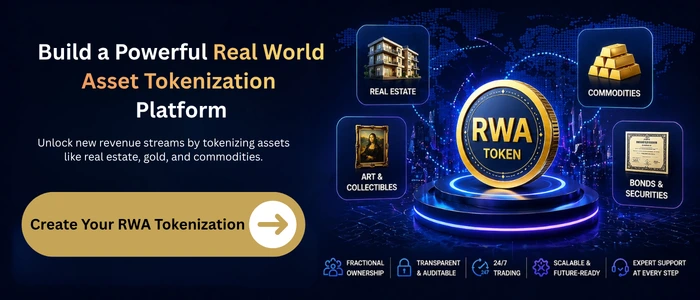
Launching an RWA tokenization platform for the GCC region requires more than blockchain development. It requires regulatory strategy, asset structuring, investor protection, custody design, market infrastructure, smart contract engineering, and local market understanding.
The GCC is well positioned to become one of the world’s most important tokenization markets because it has capital, ambition, digital policy momentum, and asset classes that are ideal for tokenization.
How ShamlaTech Can Help Launch Your RWA Tokenization Platform
ShamlaTech helps businesses design and develop secure, scalable, and compliance-ready RWA tokenization platforms for the GCC region. From token architecture and smart contract development to investor dashboards, KYC workflows, asset management modules, wallet integration, and platform deployment, ShamlaTech builds digital asset infrastructure tailored for real-world business use cases. Whether you are a real estate developer, fintech startup, fund manager, enterprise, or investment platform, ShamlaTech can help turn your tokenization concept into a market-ready product with the right technology foundation, user experience, and scalability.