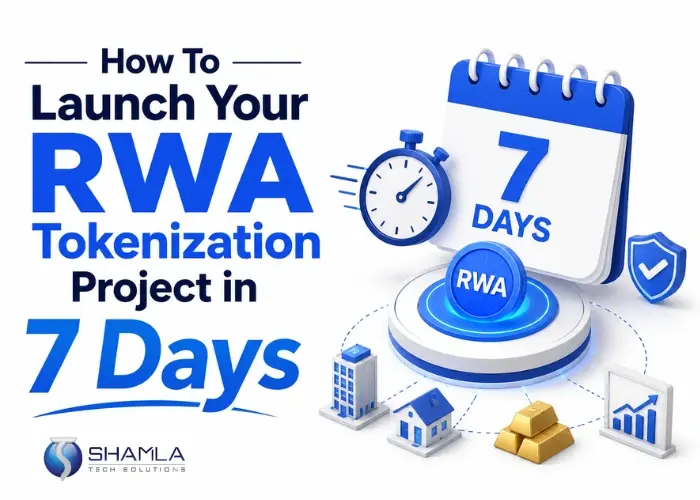



In 2026, the real-world asset tokenization market reached about $33.85 billion in distributed on-chain value and $340.10 billion in represented value as of May 2026. McKinsey estimates tokenized market capitalization could reach around $2 trillion by 2030, excluding cryptocurrencies and stablecoins.
For founders, this raises a more practical question: should you build an RWA tokenization platform, and what kind of platform can actually attract users, investors, and asset owners?
This RWA tokenization guide is written for business owners, fintech founders, real estate companies, fund managers, private credit platforms, commodity businesses, and enterprises planning to launch an asset-backed digital investment platform.
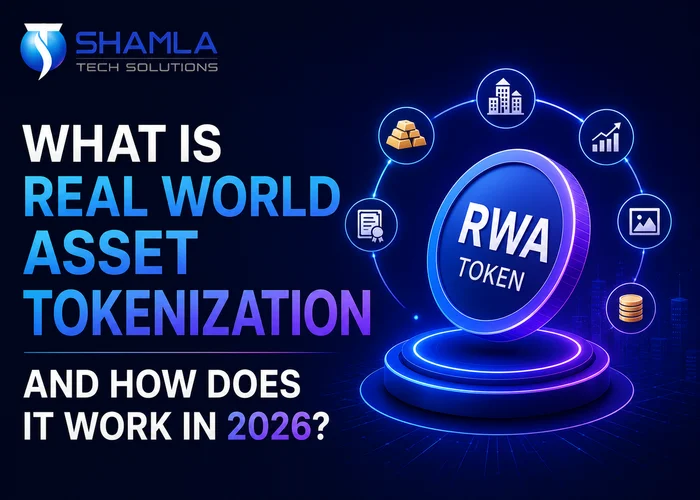
What Is RWA Tokenization?
RWA tokenization is the process of converting rights linked to a real-world asset into blockchain-based digital tokens. These tokens can represent ownership, revenue rights, debt claims, fund units, redemption rights, or another legally defined economic interest.
Here is asset tokenization explained from a business perspective:
A real estate company may own a commercial building worth $20 million. Instead of selling the entire asset to a single buyer, the company can create digital tokens representing fractional economic rights in the property. Investors can buy smaller portions, the company can unlock liquidity, and the platform can manage ownership records, distributions, and transfers digitally.
Why Businesses Are Looking at Real World Asset Tokenization in 2026?
Businesses exploring real-world asset tokenization in 2026 are trying to solve expensive, slow, and outdated asset-market problems.
Traditional asset markets are full of friction, with deals that take weeks or months, credit is difficult for smaller investors to access, ownership often depends on intermediaries, and secondary liquidity is limited.
A well-built real-world asset tokenization platform can help businesses solve these problems by digitizing asset ownership, automating parts of investor management, and creating new ways to raise and distribute capital.
What RWA Platform Should You Build?
A generic RWA Tokenization guide that claims to tokenize everything usually struggles. Investors do not trust unclear assets. Asset owners do not join without a clear benefit. Regulators do not like vague structures. Marketing becomes weak because the platform has no sharp positioning. A better approach is to choose one strong vertical first. You can build around:
- Tokenized real estate
- Tokenized private credit
- Tokenized commodities
- Tokenized funds
- Tokenized invoices
- Tokenized bonds or treasury products
For example, a real estate tokenization platform should focus on rental yield, property documentation, investor reporting, and secondary resale. A private credit tokenization platform should focus on borrower quality, repayment tracking, credit risk, and yield distribution.
Best Business Models for RWA Tokenization Platforms
A founder planning real-world asset tokenization needs a revenue model before platform development begins. The platform should not depend only on token launch fees. A sustainable RWA business usually earns from multiple revenue streams.
1. Asset Listing Fees
You can charge asset owners a fee to list tokenized assets on your platform. This works well for real estate firms, fund managers, and commodity businesses that want digital investor access.
2. Token Issuance Fees
Your platform can charge for creating and managing the tokenized asset structure. This may include smart contract deployment, investor setup, compliance workflows, and token dashboard access.
3. Transaction Fees
If your platform supports buying, selling, or transferring tokens, you can earn a small transaction fee. This model becomes stronger when the platform has active investor participation.
4. Management Fees
For income-generating assets, you can charge annual management or administration fees. This is common in real estate, private credit, and fund tokenization models.
5. Secondary Market Fees
If regulations allow secondary trading, the platform can earn from resale transactions. However, this should only be added after legal review because tokenized RWAs may fall under securities rules.
6. Enterprise Licensing
If you build strong infrastructure, you can license the platform to real estate groups, private funds, banks, or investment companies as a white-label RWA tokenization solution.
This is where asset tokenization explained becomes more serious. The value is not only in creating a token. The value is in building a revenue-generating financial technology platform around tokenized assets.
Which Assets Should You Tokenize First?
Not every asset is a good fit for real world asset tokenization 2026. A founder should choose assets based on real-world legal clarity, cash flow, valuation reliability, and operational feasibility.
1. Real Estate
Real estate is one of the easiest asset classes for users to understand. Investors already know rental income, property appreciation, and ownership value. Tokenization can help property developers, real estate firms, and investment platforms offer fractional access to commercial buildings, rental properties, land, and real estate funds.
Deloitte notes that tokenized real estate can support more customized investment portfolios and improve access to property-based investment opportunities.
2. Private Credit
Private credit is attractive because investors often look for yield. A Private credit tokenization platform can tokenize loans, invoices, trade finance assets, receivables, or debt instruments. The key challenge is risk scoring, borrower transparency, and repayment monitoring.
3. Commodities
Gold, silver, oil, agricultural goods, and other commodities can be tokenized when custody and proof-of-reserve are strong. This model works best when users trust the asset backing and redemption process.
4. Funds
Fund tokenization can improve subscription, ownership tracking, transfer management, and investor reporting. BCG has described tokenized funds as a major shift in asset management because they can create value for institutions and end investors.
5. Treasuries and Bonds
Tokenized treasury and bond products are gaining institutional attention because they combine familiar financial assets with blockchain-based transfer and settlement efficiency.
If your goal is to build a platform faster, start with one asset class where legal structure, demand, pricing, and investor education are easier to manage.
How Real World Asset Tokenization Works: Business Workflow
A strong RWA tokenization guide should show the full operating model. The blockchain token is only one part of the workflow.
Step 1: Choose a High-Demand Asset
Start with an asset people already want. Do not tokenize an asset just because it is available. Tokenize assets that have clear value, strong documentation, predictable demand, and a clear investor story.
Step 2: Verify Ownership and Valuation
The real-world asset tokenization platform must confirm who owns the asset, how it is valued, whether there are debts or claims against it, and what documents support the asset value. Weak verification will destroy trust.
Step 3: Define the Legal Rights
This is the core of real world asset tokenization. The token must clearly define what the holder receives. Is it ownership? Revenue share? Debt repayment? Fund exposure? Redemption rights? Voting rights?
Without legal clarity, the token becomes a marketing object instead of a trusted investment product.
Step 4: Create the Token Structure
After the legal model is ready, the technical real-world details of the token. The token may include supply rules, transfer restrictions, KYC requirements, investor limits, lock-in periods, dividend logic, and redemption features.
Step 5: Build the Investor Platform
Investors need a simple dashboard to view asset details, documents, risk disclosures, expected returns, ownership, transaction history, and payout records.
Step 6: Manage Post-Investment Operations
After launch, the platform must handle reporting, distributions, compliance updates, asset performance, investor support, and possible secondary transfers.
What Investors Actually Want From an RWA Tokenization Platform?
Founders often focus too much on blockchain features. Users care about something different.
Asset owners want faster capital access, lower dependency on brokers, investor visibility, and easier ownership administration. Investors want trustworthy assets, clear returns, simple onboarding, legal protection, and an easy way to track holdings.
That means your real world asset tokenization platform should answer five questions immediately:
- What asset am I investing in?
- What legal right do I receive?
- How is the asset valued and verified?
- How do I earn returns or exit?
- Who manages custody, compliance, and reporting?
If your platform does not answer these clearly, users will not invest even if the blockchain architecture is real-world.
Must-Have Features for an RWA Tokenization Platform
A business-ready real world asset tokenization 2026 platform needs more than token minting. It should be designed for trust, regulation, investor conversion, and long-term operations.
1. Asset Owner Dashboard
Asset owners should be able to submit assets, upload documents, track token issuance, view investor participation, manage payouts, and monitor platform activity.
2. Investoreal-worldng With KYC
RWA platforms usually need KYC, AML, accreditation checks, jurisdiction controls, and investor eligibility rules. This protects the business and improves investor trust.
3. Smart Contract-Based Token Management
Smart contracts should manage issuance, transfers, lockups, distributions, redemption, and compliance rules. This is one of the most important technical layers in real world asset tokenization.
4. Legal Document Repository
Investors should be able to access ownership documents, valuation reports, risk disclosures, offering documents, custody details, and asset performance reports.
5. Payment and Wallet Integration
The platform should support wallet connection, fiat or stablecoin payment options, transaction history, and real-world tracking.
6. Distribution and Reporting Engine
If the tokenized asset generates income, the platform should calculate and distribute rental income, yield, interest, dividends, or redemption proceeds.
RWA Tokenization Platform Architecture: What Founders Should Know
A Business should know what must be built before you approve a budget. A strong RWA tokenization guide should include these layers:
Platform Layer | Business Purpose |
Asset onboarding layer | Allows asset owners to submit and verify assets |
Compliance layer | Handles KYC, AML, investor eligibility, and transfer rules |
Tokenization layer | Creates and manages asset-backed tokens |
Smart contract layer | Automates issuance, transfers, payouts, and redemption |
Investor dashboard | Helps users buy, track, and manage holdings |
Admin dashboard | Gives the platform owner control over assets, users, and transactions |
Reporting layer | Supports audits, tax reports, performance updates, and compliance records |
Marketplace layer | Enables primary sales and possible secondary trading |
Real World Asset Tokenization vs Traditional Asset Investment
Factor | Traditional Asset Investment | RWA Tokenization Platform |
Minimum investment | Often high | Can support fractional access |
Investor onboarding | Manual and document-heavy | Digital onboarding with KYC |
Ownership records | Maintained by intermediaries | Blockchain-supported records |
Settlement | Can take days or weeks | Can be faster with smart contracts |
Liquidity | Often limited | Can improve if secondary market exists |
Reporting | Periodic and manual | Dashboard-based and transparent |
Global access | Usually restricted | Can expand with compliance controls |
The Biggest Mistake: Building a Token Before Building Trust
Many founders enter real world asset tokenization 2026 with the wrong sequence. They first ask developers to create a token, then later think about investors, legal rights, custody, and revenue. The correct order is:
- Choose a profitable asset vertical
- Validate investor demand
- Build the legal and compliance model
- Design the platform revenue model
- Create token-to-real-world launch with verified assets and clear investor communication.
How Much Does It Cost to Build an RWA Tokenization Platform?
The cost of real world asset tokenization depends on asset type, compliance needs, platform features, blockchain selection, smart contract complexity, and marketplace functionality.
Development Component | Estimated Cost Range |
Business and platform strategy | $5,000 – $25,000 |
Legal structuring and compliance setup | $10,000 – $100,000+ |
real-world |
|
Investor and admin dashboard | $25,000 – $120,000+ |
KYC/AML integration | $5,000 – $30,000+ |
Wallet and payment integration | $5,000 – $40,000+ |
Asset marketplace module | $30,000 – $200,000+ |
Smart contract audit | $5,000 – $75,000+ |
Maintenance and upgrades | Ongoing monthly cost |
A founder should not choose the cheapest option if the platform will handle real investor funds. In real world asset tokenization 2026, credibility matters more than speed alone.
MVP Strategy: What Should You Build First?
The smartest approach is to launch a controlled MVP with one asset class, one investor flow, and one strong use case. For example, a real estate RWA MVP may include:
- One verified real-world property portfolio
- KYC-based investor onboarding
- Token purchase flow
- Investor dashboard
- Document access
- Income distribution module
- Admin dashboard
A private credit MVP may include borrower onboarding, loan tokenization, repayment tracking, investor yield dashboard, and risk scoring.
Compliance Questions Founders Must Answer Early
Compliance is not a final step in real world asset tokenization. It must be part of the first business discussion. Before development starts, answer these questions:
- Will the token be treated as a security?
- Which countries can investors come from?
- Do investors need to be accredited or qualified?
- Who legally owns or holds the asset?
- How are redemptions, transfers, and disputes handled?
- What disclosure should be shown before purchase?
RWA systems today often use hybrid structures, where blockchain handles tokens and transfers while legal rights, custody, compliance, and verification remain anchored off-chain. The platform must connect legal documents, real asset custody, investor verification, and smart contract logic into one reliable operating system.
When Should a Business Build an RWA Tokenization Platform?
Not every business needs real world asset tokenization. It makes sense when the company has a strong asset pipeline, investor demand, and a reason tokenization improves the current process.
You should consider building if:
- You own or manage assets that are difficult to sell quickly
- Your investors want fractional access
- Your asset administration is manual and expensive
- You want to launch a real-world investment marketplace
- You need transparent ownership and payout records
- You want to create a new asset-backed fintech product
Takeaway
The best way to understand real-world asset tokenization is to see it as a new business infrastructure for assets that are valuable but difficult to access, divide, transfer, or manage. Launch an RWA Tokenization Platform that solves a clear market problem: liquidity for asset owners, access for investors, automation for operators, and trust for everyone involved.
This RWA tokenization guide gives you the business-first view. Choose the right asset class. Validate demand. Build the legal structure, design the revenue model, and launch a tokenization platform users can trust.
Choose Shamlatech as your Reliable Partner for RWA Tokenization Platform Development
At Shamlatech, we help you turn real-world assets into secure, scalable real-world asset tokenization platforms built for business growth. Our real-world asset tokenization company works with founders, asset owners, fintech startups, real estate firms, commodity businesses, private credit platforms, and enterprises to create platforms that onboard assets, verify investors, issue tokens, automate payouts, and support compliant trading. Backed by experience across 100+ projects, we build RWA tokenization solutions for real estate, commodities, fine art, mining, stocks, and green energy assets. From strategy to smart contracts, KYC/AML, dashboards, marketplace modules, audits, and post-launch upgrades, we help you launch confidently.