


Across Europe, asset managers are exploring new ways to structure and distribute investment funds. With MiCA establishing a unified regulatory framework, tokenized funds are moving closer to becoming a regulated and scalable financial infrastructure.
Industry projections highlight the scale of this shift. A report estimates tokenized assets could grow from roughly $22 billion today to more than $11 trillion by 2030, signaling rapid institutional adoption of blockchain-based financial markets.
This article explains how asset managers can launch a MiCA-ready tokenized fund platform in 2026, covering regulatory context, required infrastructure, compliance considerations, and the strategic steps needed to operate within Europe’s digital asset compliance framework.
Why the Tokenized Fund Market Will Shift Under MiCA in 2026
As Europe moves toward a unified regulatory environment for digital assets, asset managers are beginning to treat tokenized funds as regulated financial products. MiCA offers clearer operational standards for issuers, custodians, and service providers.
This shift is driven by several structural changes that MiCA brings to the digital asset ecosystem:
EU-Wide Regulatory Clarity: MiCA creates a single rulebook for crypto-asset issuers and service providers across all EU member states, allowing tokenized fund platforms to operate under harmonized regulatory standards throughout the European market.
Global Institutional Momentum Influencing Europe: Institutional tokenized funds are gaining traction globally, shaping how European asset managers approach MiCA-ready products. BlackRock’s USD Institutional Digital Liquidity Fund (BUIDL) surpassed $1 billion in assets under management, signaling strong institutional demand for blockchain-based fund structures.
Programmable Fund Infrastructure: Tokenized funds enable programmable settlement, automated compliance logic, and blockchain-based recordkeeping, creating new operational efficiencies for asset managers and fund administrators.
Institutional Market Participation: Global asset managers, banks, and financial infrastructure providers are actively developing tokenized products, including money-market funds, treasury instruments, and private credit strategies.
Stronger Investor Confidence: Clear disclosure requirements, custody rules, and operational standards under MiCA strengthen regulatory oversight and increase institutional confidence in tokenized investment platforms.
Core Infrastructure Needed for a MiCA-Ready Tokenized Fund Platform
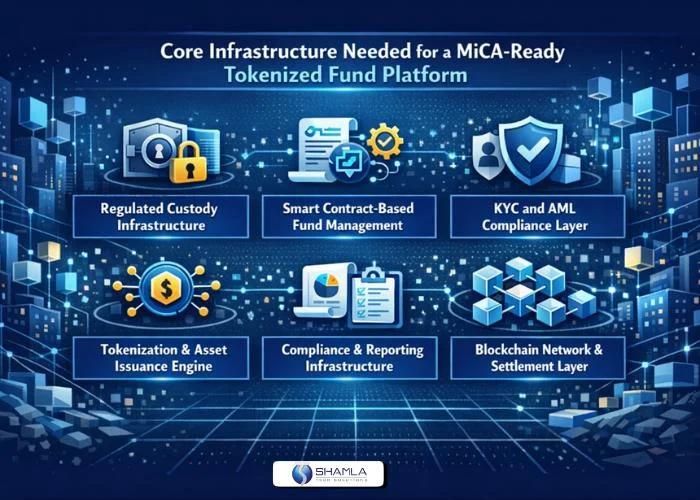
1. Regulated Custody Infrastructure
2. Smart Contract-Based Fund Management
3. KYC and AML Compliance Layer
4. Tokenization and Asset Issuance Engine
5. Compliance and Reporting Infrastructure
6. Blockchain Network and Settlement Layer
Compliance and Regulatory Requirements Asset Managers Must Meet Under MiCA
Requirement | What It Involves | Why It Matters |
RWA Token Classification | Classify tokenized fund units under MiCA or existing frameworks like UCITS/AIFMD. | Ensures the correct regulatory framework for issuance and distribution. |
CASP Authorization | Obtain Crypto-Asset Service Provider licensing if offering custody or trading services. | Provides legal approval to operate across EU markets. |
Legal Token–Asset Link | Establish legal ownership rights between tokens and underlying fund shares. | Protects investor rights and ensures enforceable ownership. |
MiCA Whitepaper | Publish a compliant disclosure document detailing token structure and risks. | Provides transparency and required investor information. |
Investor Controls | Implement KYC, AML screening, and transfer restrictions. | Ensures only eligible investors hold or trade tokens. |
Custody Structure | Separate custody for underlying assets and blockchain tokens. | Protects investor assets and maintains accountability. |
Smart Contract Governance | Audit and monitor smart contracts managing tokenized fund operations. | Reduces technical risks and strengthens platform security. |
1. Regulatory Classification of Tokenized RWAs
2. CASP Authorization and Platform Licensing
3. Legal Link Between Tokens and Underlying Assets
4. Disclosure Through Crypto-Asset Whitepapers
5. Investor Eligibility, Transfer Controls, and Compliance Monitoring
6. Custody of Underlying Assets vs Token Custody
7. Secondary Market Trading Restrictions
8. Operational Risk and Smart Contract Governance
Steps Asset Managers Should Take to Launch a MiCA-Ready Tokenized Fund Platform
1. Define the Regulatory and Fund Structure
2. Choose the Right EU Jurisdiction for Authorization
3. Design the Tokenization and Blockchain Architecture
4. Partner With Specialized RWA Tokenization and Compliance Providers
5. Prepare Regulatory Disclosures and Operational Infrastructure
Final Thoughts
Europe’s regulatory clarity is opening new opportunities for asset managers to rethink how funds are issued, managed, and distributed. With MiCA establishing clear rules, tokenized fund platforms can move from experimental initiatives to credible financial infrastructure.
For asset managers willing to prepare early, the opportunity extends beyond compliance. Building the right infrastructure, partnerships, and regulatory alignment today can position firms to lead the next phase of institutional tokenization across Europe’s digital asset ecosystem.
Build and Launch MiCA-Ready Tokenized Fund Platforms with Shamla Tech
As a leading RWA tokenization platform development company, Shamla Tech helps asset managers build secure tokenized fund platforms designed for the European market. We combine blockchain expertise, compliance-focused architecture, and scalable infrastructure to support the launch of MiCA-ready investment platforms.
We work closely with asset managers to design tokenization systems, implement smart contract frameworks, and integrate compliance layers aligned with EU regulatory requirements. Our RWA tokenization solutions help firms launch regulated tokenized fund platforms and distribute digital investment products across European markets with confidence.