
In nearly every jurisdiction, the regulatory environment surrounding digital assets and currencies has changed dramatically during the last five years. The recent GENIUS Act framework1 for stablecoins2 in the US, signaling a major goal for leadership in digital assets, has given financial institutions a clearer legal footing to investigate the potential of distributed ledger technology (DLT) further.
Major institutions and central banks are experimenting with tokenised assets — digital representations of traditional assets (such as deposits or bonds) on shared ledgers – to unleash new efficiency. Banks have developed strong systems to ensure they always have enough liquidity, including regulation measures like the Liquidity Coverage Ratio (LCR) and internal intraday liquidity buffers.
In theory, the value of their liquidity should not be affected by the tokenization of essential assets such as government bonds. A tokenised US Treasury is still a US Treasury. But banks and regulators need to be sure these tokens really are as liquid and resilient as their traditional counterpart.
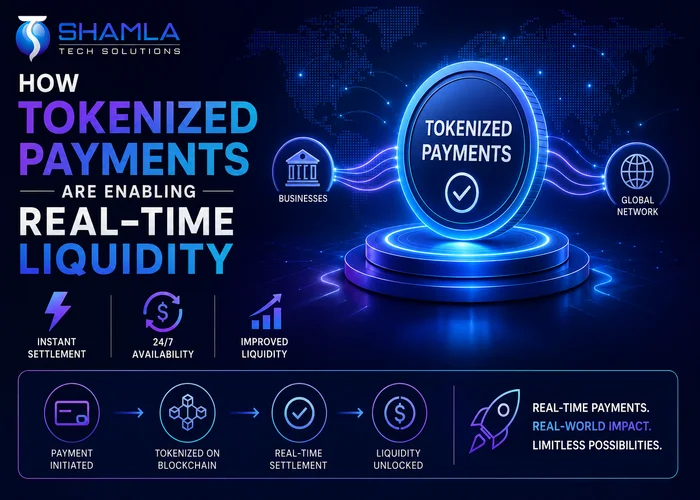
The benefits of innovation through digital assets for liquidity management include: more mobility and velocity of collateral through tokenised collateral; real-time settlement with less settlement and credit risk; and lower operational frictions through technology adoption and integration.
Power Faster, Smarter Global Transactions – Explore Tokenized Payments
Types of Tokenised Payments
Digital money isn’t created equal. At the moment the market is split into 3 main types:
Stablecoins are usually issued by private companies (like Circle or Tether) and are backed by high-quality liquid assets. They are treated as “bearer instruments”, which means if you hold the token you own the money – like digital cash. They run on public blockchains 24/7.
Tokenized Deposits They are a digital representation of money in a commercial bank account. They are generally “account-based” (not stablecoins) and require Identity Verification (KYC) to hold. Like a normal checking account, they are a responsibility of the issuing bank.
Central Bank Digital Currencies (CBDCs): These are digital currencies that are issued directly by a central bank. They are a direct claim on the central bank, not a commercial bank.
Advantages for Financial Institutions
The move to onchain payments has substantial operational benefits for global finance.
- 24/7 Liquidity – Blockchains are 24/7. Corporate treasurers can then Sunday-night move liquidity across subsidiaries in various countries, maximizing cash flow without waiting for banking hours.
- Programmability: Smart contracts enable the automation of workflows. A payment in a supply chain might be triggered automatically when a GPS tracker shows a shipment has arrived at port.
- Lower counterparty risk. Traditional markets typically have a delay between paying for an asset and really receiving it (settlement risk). Tokenized payments facilitate Delivery vs. Payment (DvP) where the asset and the money are exchanged simultaneously and in the same transaction.
Regulatory and Compliance Considerations
Tokenized assets are at the crossroads of finance and technology, and hence are subject to complicated and increasing regulatory scrutiny. Regulators in all jurisdictions are still attempting to provide clear guidelines for the classification of tokenized products, whether as securities, commodities or whole new asset classes. This ambiguity impacts the issuance, trading and taxation of tokenized assets, generating uncertainty for market players. Know Your Customer (KYC), Anti-Money Laundering (AML) and data privacy rules must be architecturally built into tokenization platforms, especially when servicing cross-border investors. Smart contracts and blockchain architecture offer automated compliance rule enforcement including on-chain identity verification, jurisdictional constraints, and real-time audit trails. However, the decentralized structure of many tokenized ecosystems complicates standard regulatory monitoring approaches. In order to address this gap, some countries are trialing regulated tokenization sandboxes, hybrid permissioned blockchains and verifiable credentials. For institutional adoption to scale, tokenized assets need to be compliant with existing legal requirements while being transparent and programmable, the characteristics that make them revolutionary. Continued cooperation between regulators, financial institutions and blockchain developers will be key to creating a secure and compliant tokenized economy.
Comparison of Tokenised Payment Types
Feature | Stablecoins | Tokenized Deposits | CBDCs (Central Bank Digital Currencies) |
Issuer | Private companies (e.g., Circle, Tether) | Commercial banks | Central banks |
Backing Asset | High-quality liquid assets | Bank-held fiat deposits | Central bank reserves |
Ownership Model | Bearer instrument (who holds owns it) | Account-based (linked to identity) | Direct claim on central bank |
Blockchain Type | Public blockchain | Typically permissioned/private blockchain | Government-controlled infrastructure |
KYC Requirement | Usually not required | Required (KYC mandatory) | Required |
Availability | 24/7 | Depends on bank systems | Depends on central bank implementation |
Example Use Case | Crypto trading, cross-border payments | Institutional payments, banking use | National digital currency systems |
Future Outlook of Tokenized Assets
Tokenized assets are expected to transform global finance, blending the openness, efficiency, and programmability of blockchain with the scale and comfort of traditional markets. As blockchain infrastructure matures and legal clarity increases, tokenization is projected to extend far beyond early adopters and into mainstream financial institutions, central banks and capital markets. Innovations such as the tokenization of Real-World Assets (RWAs), Central Bank Digital Currencies (CBDCs) and interoperable compliance frameworks are driving institutional interest in tokenized models. Expect regulated tokenized marketplaces to emerge, facilitating secure trading of digital bonds, equities and commodities with real-time settlement and fractional access.
Technically, advances in Layer 2 scalability, zero-knowledge proofs, and cross-chain interoperability will make tokenized assets more performant, private and transferable across networks. These developments will enable a wide range of financial applications, from automated lending and derivatives to tokenized ESG goods and on-chain investment funds. Tokenization provides NBFCs with a scalable infrastructure to issue loans, securitize assets and access capital across borders without the need for antiquated systems. Over time, tokenized finance is predicted to drive convergence between DeFi and traditional finance (TradFi) supported by uniform digital asset standards and composable financial logic. As infrastructure and policy come into alignment, tokenized assets will not just offer higher levels of liquidity and transparency, but democratize access to wealth creation. This is a fundamental transformation in the way value creation, management and exchange is done internationally.
The Latest Trends of Tokenization
Tokenization is quickly moving on from its early trials in real estate and art, and gaining popularity across a wide range of asset classes and financial sectors. One of the most significant trends is the tokenisation of real-world assets (RWAs) like as government bonds, private loans and commodities, which is receiving a growing amount of interest from both institutional investors and regulators. Large financial institutions are beginning pilot initiatives to digitize money market funds and conventional securities on blockchain systems, an indicator of a move to enterprise-grade adoption.
Another important development is the growth of regulatory-compliant tokenized securities. Some jurisdictions such as Singapore, Switzerland and the UAE are building legal frameworks to enable asset tokenization by permitting compliant digital securities to be issued and traded on a secondary basis on approved digital asset exchanges. In the meantime, tokenized asset platforms are becoming more efficient and accessible thanks to interoperability protocols and Layer 2 scaling solutions.
Programmable token standards (e.g., ERC-3643, ERC-1400) are growing in popularity for their ability to enable compliance features and modular financial logic. Tokenization is also being rolled out in central bank digital currency (CBDC) pilot programs and cross-border settlement systems, giving it greater legitimacy in global banking. These patterns are indicative of a developing tokenization ecosystem with real-world implications across capital markets, lending and payments infrastructure.
Why Choose Shamlatech for Real World Tokenization
Shamlatech stands out as a trusted partner for real-world asset tokenization due to its deep expertise and end-to-end solutions. The company offers tailored tokenization platforms that enable businesses to digitize assets efficiently while ensuring compliance with global regulatory standards.
With a strong focus on security and scalability, Shamlatech integrates advanced blockchain technologies to deliver seamless tokenized payment solutions. Their experience across industries such as finance, real estate, and fintech ensures that clients receive customized strategies aligned with their liquidity and operational goals.
Additionally, Shamlatech provides ongoing support, from consultation and development to deployment and optimization, making it a reliable partner for organizations looking to unlock real-time liquidity through tokenization.
Conclusion
Tokenized payments are reshaping the financial landscape by unlocking real-time liquidity, reducing inefficiencies, and enabling faster, borderless transactions. As businesses and institutions increasingly adopt blockchain-driven solutions, the ability to access and move capital instantly will become a critical competitive advantage.
By leveraging tokenization, organizations can enhance cash flow, improve operational efficiency, and create new investment opportunities. Partnering with experienced providers like Shamlatech ensures a smooth transition into this evolving ecosystem, helping businesses fully realize the transformative potential of real-time liquidity.