
Home » Real Estate Tokenization » How Tokenization of Real Estate Using Blockchain Technology Unlocks New Investment Opportunities in 2026

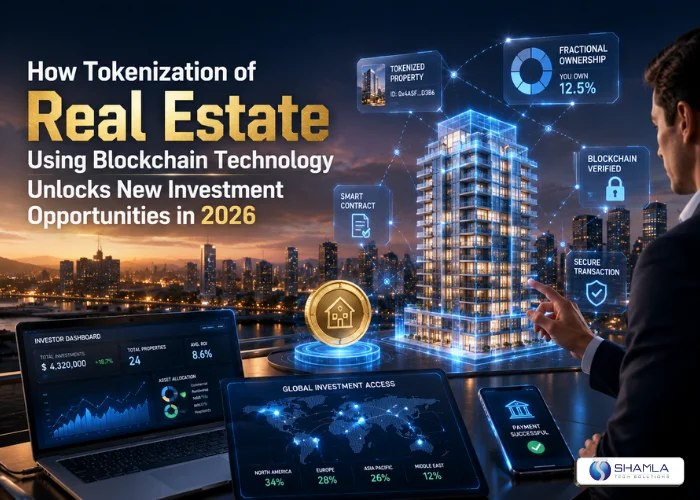
How Tokenization of Real Estate Using Blockchain Technology Unlocks New Investment Opportunities in 2026

Share this article:
tokenization of real estate using blockchain technology
Table of Contents
About the Author
Balaji
CEO of Shamla Tech, specializes in crypto exchange development, RWA tokenization, blockchain infrastructure, AI solutions, and compliance-ready platforms. He helps enterprises address regulatory, security, and scalability challenges while driving real-world adoption of emerging technologies across industries.
Connect On:

Real estate worth trillions remains locked behind high capital requirements, lengthy transactions, and fragmented ownership structures. In 2026, tokenization presents a commercially viable framework for converting physical property rights into digital assets with structured investor access.

The global real estate market represents over $380 trillion in asset value, yet access remains concentrated due to high capital requirements, complex ownership structures, and limited liquidity. In 2026, this creates clear demand for secure real estate tokenization platforms handling compliance, issuance, and investor management.

In this article, we examine why tokenization of real estate using blockchain technology matters in 2026, the key benefits for investors, emerging investment opportunities, practical real-world applications, and the business requirements for building enterprise-grade real estate tokenization platforms.

Transform Property Assets Into Scalable Digital Investment Platforms

Why Tokenization of Real Estate Using Blockchain Technology Matters in 2026

In 2026, real estate tokenization has moved from exploratory pilots to infrastructure planning. For businesses in property investment, fintech, and digital asset services, tokenization represents a capital formation model that improves asset accessibility, transaction design, and investor participation frameworks.

Add Your Heading Strategic Business DriversHere

  • Tokenization enables real estate businesses to structure fractional investment products, unlocking broader investor participation while creating more flexible fundraising mechanisms for commercial, residential, and alternative property asset classes.


  • The World Economic Forum projects 10% of global GDP could be stored on blockchain by 2027, reinforcing tokenization as a credible infrastructure model for enterprise-grade financial asset management.


  • Real estate tokenization platforms centralize compliance, investor onboarding, ownership records, and transaction execution, reducing operational friction across issuance workflows that traditionally depend on multiple disconnected intermediaries and manual verification.


  • Cross-border capital participation becomes commercially scalable when businesses standardize investor access, regulatory workflows, and digital ownership transfer mechanisms through secure blockchain-backed real estate tokenization infrastructure.


  • For B2B organizations, the stronger commercial opportunity lies in platform ownership, where revenue can be generated through asset issuance services, transaction fees, compliance orchestration, and digital asset lifecycle management.

Key Benefits of Tokenized Real Estate for Modern Investors

Improved Capital Accessibility

Traditional real estate investment demands substantial upfront capital, limiting access to a narrow investor segment. Tokenization removes this structural barrier through fractional ownership, enabling investors to allocate capital with greater precision across multiple assets instead of concentrating exposure in a single high-value acquisition.

Enhanced Portfolio Liquidity

Conventional real estate locks investor capital for extended holding periods, often with unpredictable exit timelines. Tokenized ownership introduces more flexible transfer mechanisms, creating pathways for secondary transactions that improve capital mobility and provide investors with greater control over portfolio reallocation decisions.

Greater Geographic Investment Reach

Cross-border real estate investment is often slowed by jurisdictional complexity, administrative overhead, and fragmented transaction processes. Tokenized infrastructure standardizes ownership representation and investor participation workflows, allowing access to institutional-grade property opportunities across markets without the operational burden of conventional acquisition structures.

Improved Transparency And Ownership Confidence

Opaque ownership structures, delayed reporting, and documentation inefficiencies create trust concerns in traditional real estate transactions. Blockchain-backed tokenization establishes verifiable ownership records, transaction histories, and programmable governance frameworks, giving investors stronger visibility into asset participation, rights management, and operational accountability.

Better Risk Diversification Opportunities

Real estate investors frequently face concentration risk due to high acquisition costs tied to individual assets. Tokenization enables capital distribution across commercial properties, residential developments, hospitality assets, and specialized real estate categories, supporting more disciplined portfolio construction aligned with long-term investment strategy.

New Investment Opportunities Created by Blockchain-Based Real Estate Tokenization

Blockchain-based real estate tokenization creates investment structures that conventional property markets have historically struggled to support efficiently. For investors and asset issuers, this opens commercially viable participation models with improved capital flexibility, broader market access, and more structured ownership mechanisms.

Investment Opportunity

Traditional Market Constraint

Tokenized Investment Opportunity

Institutional Commercial Assets

High minimum capital commitments excluding most investors

Fractional ownership in premium income-generating assets

Cross-Border Real Estate Investment

Regulatory friction, onboarding complexity, and slow execution

Digitized investor participation across jurisdictions

Private Real Estate Fund Access

Restricted fund entry and manual subscription processes

Tokenized fund participation with structured digital access

Alternative Real Estate Asset Classes

Limited access to specialized property sectors

Diversified exposure to niche income-generating assets

Secondary Market Participation

Illiquid ownership positions with delayed exit opportunities

Flexible ownership transfer and improved capital mobility

Fractional Access to Institutional Commercial Assets

Institutional-grade properties such as Grade A office towers, logistics warehouses, retail centers, and hospitality portfolios have traditionally required substantial capital participation. Tokenization enables investors to acquire fractional exposure to these income-generating assets, creating access to professionally managed real estate opportunities previously reserved for institutional capital allocators.

Cross-Border Real Estate Investment Participation

International property investment often involves jurisdictional restrictions, fragmented documentation requirements, banking friction, and operational complexity. Tokenized real estate platforms streamline investor verification, ownership allocation, and transaction execution, making cross-border participation more commercially practical for investors seeking geographic diversification across mature and emerging property markets.

Tokenized Private Real Estate Fund Participation

Private real estate funds frequently operate through restricted access structures with complex subscription processes and limited investor flexibility. Tokenization enables fund managers to digitize ownership interests, streamline investor onboarding, and structure more accessible participation models for commercial developments, mixed-use projects, and asset-backed investment vehicles.

Access to Alternative Real Estate Asset Classes

Beyond conventional residential and office investments, tokenization expands investor access to specialized real estate sectors including student housing, co-living developments, data centers, senior living communities, vacation rental portfolios, and healthcare infrastructure. This creates more diversified investment pathways aligned with sector-specific demand and income generation models.

Secondary Market Ownership Transfer Opportunities

Traditional real estate ownership restricts investor exits due to lengthy sales cycles, legal complexity, and transaction dependency on full asset transfers. Tokenized ownership structures introduce the potential for partial ownership transfers and secondary participation mechanisms, improving capital mobility for investors managing portfolio allocation and liquidity requirements.

Real-World Use Cases of Tokenized Real Estate in 2026
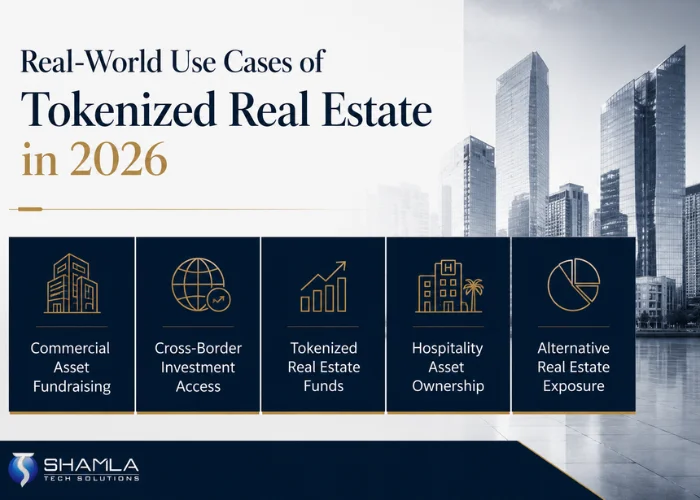
Real-World Use Cases of Tokenized Real Estate in 2026

1. Commercial Property Capital Raising

Commercial developers face prolonged fundraising cycles, dependency on concentrated investor groups, and limited capital flexibility. Tokenization enables structured capital raising through fractional ownership offerings tied to office buildings, retail assets, logistics parks, and mixed-use developments, creating broader investor participation while improving fundraising efficiency for asset issuers.

2. Cross-Border Real Estate Investment Platforms

International property investment remains burdened by fragmented compliance requirements, investor verification delays, and jurisdiction-specific transaction processes. Tokenized platforms address these operational barriers by creating standardized digital investment infrastructure, enabling qualified investors to participate in real estate opportunities across multiple markets through a unified ownership and transaction framework.

3. Tokenized Private Real Estate Funds

Private property funds often operate through administratively heavy subscription models that restrict investor accessibility and operational scalability. Tokenization modernizes fund participation by digitizing ownership interests, streamlining capital onboarding, and improving distribution management for fund managers overseeing commercial property portfolios, development projects, and structured real estate investment vehicles.

4. Hospitality And Income-Generating Asset Participation

Hotels, serviced apartments, vacation rental portfolios, and branded hospitality assets present attractive yield opportunities but require significant capital commitment. Tokenization enables structured access to income-generating hospitality assets, allowing investors to participate in revenue-linked ownership models while operators unlock alternative capital formation mechanisms for expansion and asset optimization.

5. Alternative Real Estate Asset Investment Models

Sectors such as student housing, senior living, healthcare real estate, and data center infrastructure are gaining investor interest, yet access remains limited by transaction complexity and capital barriers. Tokenization creates structured participation models for specialized real estate categories, enabling diversified exposure aligned with institutional investment themes and long-term demand drivers.

Final Thoughts

Real estate tokenization is becoming a strategic infrastructure decision for businesses seeking modern capital formation models, digital asset monetization, and broader investor participation. Organizations that establish platform capabilities early will be better positioned to define transaction standards, ownership frameworks, and market participation models.

The commercial opportunity extends beyond property investment into platform ownership, compliance orchestration, and digital asset administration. For enterprises evaluating blockchain-backed real estate models in 2026, execution quality, regulatory readiness, and technology architecture will determine whether tokenization becomes a competitive asset or a missed market opportunity.

Build Real Tokenization Platforms with Shamla Tech Solutions

Shamla Tech Solutions is a real estate tokenization platform development company with experience delivering enterprise-grade blockchain platforms for clients across global jurisdictions. We build secure infrastructure for asset tokenization, investor onboarding, compliance workflows, smart contract execution, digital ownership management, and end-to-end transaction lifecycle administration.

Our real estate tokenization platform development services cover fractional ownership architecture, token issuance systems, KYC/AML integration, investor dashboards, payment infrastructure, secondary marketplace functionality, and jurisdiction-aligned compliance frameworks. We help businesses launch institution-ready tokenization platforms designed for scalability, operational control, and long-term commercial performance

Launch Enterprise-Grade Real Estate Tokenization Platforms

FAQs

What is tokenization of real estate using blockchain technology?

Tokenization of real estate using blockchain technology is the process of converting property ownership rights into digital tokens on a blockchain, enabling fractional ownership, streamlined transactions, transparent ownership records, and structured investor participation through secure digital platforms.

How does real estate tokenization benefit investors?

Real estate tokenization improves investor access by lowering capital entry requirements, enabling portfolio diversification across multiple assets, increasing ownership flexibility, and creating more efficient participation in property markets that have traditionally required substantial financial commitment.

Can tokenized real estate support cross-border investment?

Yes, tokenized real estate platforms can support cross-border participation by standardizing investor onboarding, digital ownership allocation, compliance workflows, and transaction execution, making international property investment more operationally efficient for qualified investors and asset issuers.

What features are essential in a real estate tokenization platform?

A robust real estate tokenization platform should include token issuance infrastructure, investor onboarding, KYC/AML compliance integration, smart contract automation, ownership management, payment processing, reporting dashboards, and secondary transaction capabilities aligned with jurisdictional regulatory requirements.

Why should businesses partner with a real estate tokenization platform development company?

A specialized development partner helps businesses design secure, compliant, and scalable tokenization infrastructure tailored to business objectives, regulatory environments, and investor models, reducing implementation complexity while accelerating time-to-market for digital real estate investment platforms.

Talk to Our Experts

Recent Posts