


Home » Real Estate Tokenization » Real Estate Tokenization in the USA Explained for Investors & Enterprises

Real Estate Tokenization in the USA Explained for Investors & Enterprises

Share this article:
real estate tokenization in the USA
Table of Contents
About the Author
Balaji
CEO of Shamla Tech, specializes in crypto exchange development, RWA tokenization, blockchain infrastructure, AI solutions, and compliance-ready platforms. He helps enterprises address regulatory, security, and scalability challenges while driving real-world adoption of emerging technologies across industries.
Connect On:

Institutional real estate investment is entering a phase where capital access, ownership structuring, and investor participation can be redesigned with greater precision. Real estate tokenization in the USA creates commercially viable pathways for enterprises and investors seeking asset-backed digital ownership models.

In 2026, the United States commercial real estate market is projected to exceed $25 trillion in asset value, creating substantial opportunity for fractional ownership infrastructure and digital investment access. A real estate tokenization platform in the USA enables compliant issuance, investor onboarding, and transaction administration at scale.

In this article, we explain what real estate tokenization in the USA means, how the model operates, why investor and enterprise interest is increasing, the underlying technology infrastructure, regulatory considerations, and why partnering with an experienced development company carries strategic commercial value.

Turn Real Estate Assets Into Scalable Digital Offerings

What Is Real Estate Tokenization In The USA And How Does It Work?

Real estate tokenization in the USA refers to the issuance of blockchain-based digital securities representing ownership or economic rights in property assets under U.S. regulatory frameworks. For enterprises, this creates structured capital access. For investors, it enables compliant participation in professionally managed real estate offerings.

How Real Estate Tokenization In The USA Works:

  • A property asset is typically placed under a legally structured entity such as an LLC or SPV, where ownership interests are prepared for token issuance in alignment with U.S. securities laws and asset ownership governance requirements.

  • The token offering is structured under applicable SEC regulatory pathways, commonly including Regulation D, Regulation S, or Regulation A+, depending on investor eligibility, fundraising scope, distribution strategy, and the intended access model for capital participation.

  • Investor onboarding incorporates mandatory KYC, AML, accreditation verification, sanctions screening, and jurisdictional compliance checks, creating an institutional-grade admission framework required for lawful participation in tokenized real estate offerings within the United States.

  • Smart contracts automate core administrative functions including ownership allocation, dividend distributions, transfer restrictions, lock-up enforcement, and investor permissions, ensuring the digital asset remains operationally aligned with offering terms and securities compliance obligations.

  • Where permitted, secondary trading access may be enabled through SEC-compliant alternative trading systems or approved digital securities marketplaces, introducing structured liquidity mechanisms that strengthen investor participation economics without compromising regulatory oversight.

Why Real Estate Tokenization In USA Is Gaining Momentum In 2026

Real estate tokenization in the USA is gaining strategic momentum in 2026 as enterprises reassess capital formation efficiency and investors seek structured access to institutional-grade property opportunities. Tokenized ownership infrastructure supports programmable securities, transparent investment administration, and more commercially scalable fundraising models.

Key Factors Driving Market Momentum:

  • U.S. commercial real estate investment activity is projected to reach approximately $562 billion in 2026, creating stronger commercial conditions for tokenized ownership models designed to improve capital access and investor participation.

  • Enterprises are seeking fundraising structures that provide stronger control over investor access, ownership configuration, and administrative execution, making real estate tokenization in the USA an attractive infrastructure strategy for capital formation.

  • Greater familiarity with SEC-regulated digital securities frameworks has improved enterprise confidence, giving issuers clearer execution pathways for structuring compliant tokenized offerings under established U.S. securities exemptions and qualification requirements.

  • Investors increasingly expect transparent ownership reporting, distribution visibility, governance clarity, and auditable performance data, positioning tokenized real estate infrastructure as a stronger operational model for institutional-grade investment participation and trust.

  • The U.S. digital asset infrastructure ecosystem now offers mature compliance, custody, onboarding, and securities administration capabilities, making commercial deployment significantly more practical for enterprises entering the tokenized real estate market.

Key Benefits Of Real Estate Tokenization In USA For Investors And Enterprises

Real estate tokenization in the USA creates measurable commercial value for both investors and enterprises by improving capital accessibility, operational efficiency, and fundraising scalability within regulated digital securities frameworks. The strategic advantage lies in converting traditionally rigid real estate participation models into programmable, data-driven investment infrastructure.

Benefits Of Real Estate Tokenization In The USA For Investors

Benefit

Investor Value

Market Access

Entry points from $100–$10,000+ depending on offering structure

Capital Efficiency

Diversify across 4–10+ assets instead of single-property concentration

Transparency

24/7 digital access to ownership records, distributions, and reporting

Liquidity Potential

Secondary transfers in approved environments, reducing traditional 5–10 year lock-in dependency

Lower Entry Barriers To Institutional Real Estate

Traditional U.S. commercial real estate participation often requires significant capital commitments, restricting access to concentrated investor groups. Tokenized ownership structures reduce entry thresholds substantially, allowing qualified investors to access professionally managed opportunities through more commercially flexible capital participation models.

Greater Capital Allocation Flexibility

Fractional participation allows investors to distribute capital across multiple property sectors, geographic markets, and investment structures rather than concentrating substantial exposure into a single asset. This creates stronger diversification efficiency and more disciplined portfolio construction within real estate investment strategies.

Improved Transparency And Ownership Visibility

Tokenized infrastructure provides centralized digital visibility into ownership rights, performance reporting, distributions, and governance participation. Investors gain stronger access to auditable information, improving oversight confidence and aligning investment administration with institutional expectations for transparency and reporting accountability.

Structured Liquidity Opportunities

Private real estate ownership has historically required extended holding commitments with limited transfer flexibility. Tokenized structures in the USA may enable compliant secondary transaction mechanisms through approved environments, creating stronger liquidity optionality for eligible investors within defined regulatory and offering parameters.

Benefits Of Real Estate Tokenization In The USA For Enterprises

Benefit

Enterprise Value

Investor Reach

Access to multi-state and international qualified investor pools

Fundraising Efficiency

Capital raise timelines potentially reduced from months to weeks

Operational Efficiency

Administrative workload reductions of 40–70% through workflow automation

Business Scalability

Launch multiple digital offerings on repeatable infrastructure

Access To Broader Qualified Investor Markets

Traditional fundraising models often depend on geographically constrained investor networks and intermediary-led capital sourcing. Real estate tokenization in the USA enables enterprises to structure offerings for wider accredited investor participation, materially expanding capital access across domestic and eligible international markets.

Faster And More Efficient Capital Formation

Digitally structured issuance environments reduce execution friction across subscription management, onboarding, compliance verification, and ownership allocation. This improves capital formation efficiency, helping enterprises access investor commitments faster while maintaining stronger administrative control over offering execution and participation governance.

Reduced Administrative Burden Through Automation

Investor onboarding, ownership management, reporting, compliance checks, and distribution administration create recurring operational complexity. Tokenized infrastructure automates core workflows, reducing manual intervention, improving consistency, strengthening audit readiness, and lowering long-term operational overhead associated with investment lifecycle administration.

Scalable Digital Investment Product Development

Enterprises pursuing long-term digital securities strategies can use tokenization infrastructure as repeatable issuance architecture. This creates a scalable commercial foundation for launching multiple asset-backed investment products, improving monetization potential while strengthening broader participation in digitally administered capital markets.

Build SEC-Ready Digital Real Estate Investment Infrastructure

How Enterprises Can Capitalize On Real Estate Tokenization In The USA Through Tokenization Platforms
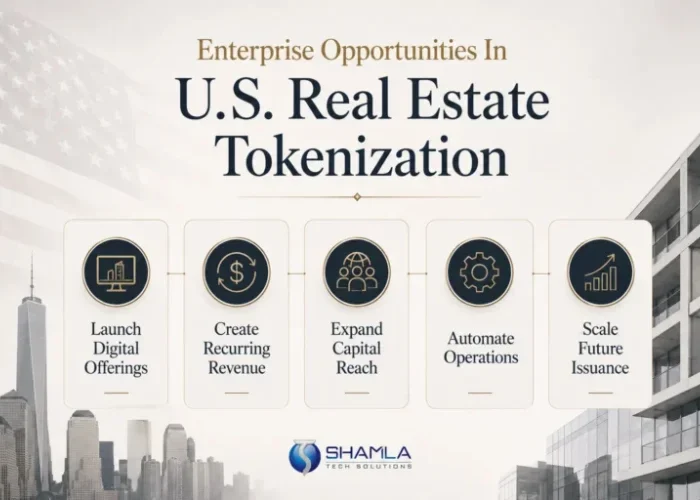
How Enterprises Can Capitalize On Real Estate Tokenization In The USA Through Tokenization Platforms

Launch Branded SEC-Compliant Real Estate Investment Offerings

Enterprises can use real estate tokenization platforms to launch branded investment offerings under applicable SEC exemptions such as Regulation D, Regulation A+, or Regulation S. This allows direct ownership of fundraising infrastructure, investor onboarding, offering administration, and distribution mechanics, eliminating dependence on fragmented intermediaries that dilute control, margins, and investor relationship ownership.

Create Multiple Revenue Streams Beyond Asset Appreciation

A tokenization platform enables enterprises to monetize the full investment lifecycle through issuer onboarding fees, subscription processing charges, compliance administration services, investor management fees, transaction commissions, and white-label licensing. Rather than generating revenue solely from property performance, enterprises establish recurring digital infrastructure income tied to platform usage and investment activity.

Access Wider Accredited And Cross-Border Capital Pools

Traditional real estate fundraising often relies on private broker relationships, institutional introductions, or geographically limited investor networks. Tokenization platforms allow enterprises to structure compliant digital access for accredited U.S. investors and eligible international participants, materially expanding fundraising reach while improving capital sourcing efficiency for higher-value real estate investment opportunities.

Automate High-Cost Operational Functions Across Investment Administration

Real estate investment administration involves repetitive high-cost workflows including KYC verification, accreditation checks, subscription approvals, cap table management, ownership reporting, dividend distributions, and investor communications. A tokenization platform automates these functions within a unified operational infrastructure, reducing internal execution overhead while strengthening compliance consistency and administrative governance.

Build Repeatable Infrastructure For Future Asset Issuance

Enterprises that build tokenization platforms are not creating one-off fundraising systems. They establish reusable issuance infrastructure capable of supporting multifamily offerings, commercial property syndications, REIT-like investment structures, private real estate funds, and broader asset-backed securities initiatives. This creates long-term digital capital markets capability instead of isolated transactional execution.

Legal And Regulatory Considerations For Real Estate Tokenization In USA

Real estate tokenization in the USA operates within established securities and financial compliance frameworks that directly shape platform architecture, fundraising models, investor access, and transaction permissions. For enterprises, regulatory planning is a commercial requirement that determines execution viability, scalability, and long-term operational credibility.

1. Securities Classification And SEC Oversight

In the United States, tokenized real estate offerings are generally treated as securities because they represent ownership interests, economic participation rights, or investment contracts subject to SEC oversight. Enterprises building tokenization platforms must account for securities compliance at the product design stage.

  • Tokenized ownership interests typically fall under U.S. securities regulations
  • SEC oversight influences offering design and investor participation models
  • Token classification impacts fundraising eligibility and transfer permissions
  • Smart contract rules must align with offering restrictions and compliance requirements

2. Choosing The Right Offering Exemption

Enterprises launching tokenized real estate investment products must select an appropriate fundraising exemption based on target investors, capital strategy, and market reach. The exemption chosen directly influences compliance obligations, onboarding workflows, and platform functionality.

Exemption

Commercial Application

Regulation D

Private fundraising for accredited U.S. investors

Regulation A+

Broader investor participation with higher compliance obligations

Regulation S

Capital access from eligible international investors

A poorly aligned exemption strategy can create fundraising limitations, investor eligibility conflicts, and avoidable regulatory exposure.

3. Investor Onboarding And Financial Crime Compliance

Investor onboarding in tokenized real estate platforms extends beyond account creation. Enterprises must implement financial crime compliance controls that satisfy identity verification, investor qualification, and transaction monitoring requirements expected within regulated investment environments.

  • KYC identity verification workflows
  • AML transaction screening controls
  • Sanctions and watchlist checks
  • Accredited investor validation where required
  • Jurisdictional eligibility enforcement
  • Audit-ready compliance record retention

These controls directly influence onboarding architecture, investor experience, and regulatory defensibility.

4. Secondary Trading And Transfer Restrictions

Secondary market access in U.S. real estate tokenization is governed by securities regulations, not platform preference. Transferability depends on offering exemptions, investor eligibility, mandatory holding periods, and compliant trading infrastructure. Enterprises must embed transfer restrictions into smart contract architecture to prevent unauthorized transactions and preserve regulatory compliance throughout asset ownership lifecycles.

5. Custody, Recordkeeping, And Governance Controls

Tokenized real estate platforms create ongoing operational obligations across custody, ownership records, investor reporting, governance administration, and compliance documentation. Enterprises must maintain institutional-grade controls to ensure ledger accuracy, secure asset oversight, transparent communications, and auditable operational governance, as execution failures in these areas directly impact investor confidence and platform credibility.

Why Enterprises Need A Real Estate Tokenization Development Partner

Compliance Expertise in USA

Real estate tokenization in the USA requires platforms built around SEC considerations, investor verification workflows, transfer restrictions, and compliance reporting requirements. A generic development team may build functional software, but regulated investment infrastructure demands execution that aligns with legal and operational obligations from the beginning.

End-To-End Platform Development

A real estate tokenization platform involves far more than token creation. Enterprises need investor onboarding, KYC and AML workflows, smart contract integration, ownership tracking, distribution management, admin dashboards, and reporting infrastructure. A specialized development partner delivers this as a unified commercial platform instead of disconnected technical components.

Faster Go-To-Market

Building internal expertise across blockchain infrastructure, digital securities workflows, compliance architecture, and investment platform development takes significant time. Development partners with proven tokenization experience shorten delivery timelines, reduce execution uncertainty, and help enterprises move from strategy to commercial launch without prolonged technical experimentation.

Scalable Platform Growth

Enterprises entering real estate tokenization rarely stop at one offering. Future expansion may include multiple property listings, broader investor participation, additional asset classes, and more complex governance requirements. A specialized development partner builds scalable infrastructure that supports long-term commercial growth instead of requiring repeated redevelopment.

Final Thoughts

Real estate tokenization in the USA represents a structural shift in how investment products are created, distributed, and managed. Enterprises that establish the right digital infrastructure today position themselves closer to future capital flows, stronger investor engagement, and more commercially efficient fundraising models.

For investors, access models are becoming more structured and transparent. For enterprises, the larger opportunity lies in platform ownership, product control, and digital capital market participation. Execution quality will determine which businesses capture this opportunity and which remain infrastructure consumers.

Develop & Launch Real Estate Tokenization Platform in USA with Shamla Tech Solutions

Shamla Tech Solutions is a real estate tokenization platform development company delivering institutional-grade digital asset infrastructure for enterprises across global jurisdictions. We have built tokenization platforms aligned with commercial, compliance, and operational requirements, enabling clients to launch secure and scalable real estate investment ecosystems.

Our execution includes the TORCH RWA Platform, developed to support the tokenization of a $3.8 billion Atlanta property portfolio, demonstrating large-scale real-world asset infrastructure capability. Enterprises seeking real estate tokenization in the USA can leverage our specialized expertise to accelerate compliant platform deployment.

Launch Your Real Estate Tokenization Platform

FAQs

What is real estate tokenization in the USA?
Real estate tokenization in the USA involves converting ownership or economic rights in property assets into blockchain-based digital securities. This enables compliant fractional investment participation, structured fundraising, and digitally managed ownership administration within U.S. regulatory frameworks.
Is real estate tokenization legal in the USA?
Yes, real estate tokenization is legal in the USA when structured in compliance with applicable securities regulations. Offerings typically operate under SEC exemptions such as Regulation D, Regulation A+, or Regulation S depending on investor access models.
Who can invest in tokenized real estate in the USA?
Investor eligibility depends on the offering structure and regulatory exemption used. Some tokenized real estate offerings are limited to accredited investors, while others may permit broader participation subject to compliance, jurisdictional, and platform-specific requirements.
Why do enterprises build real estate tokenization platforms?
Enterprises build real estate tokenization platforms to create digital investment products, expand investor reach, automate investment administration, reduce fundraising friction, and establish scalable infrastructure for long-term participation in tokenized capital markets and asset-backed investment ecosystems.
How long does it take to build a real estate tokenization platform?
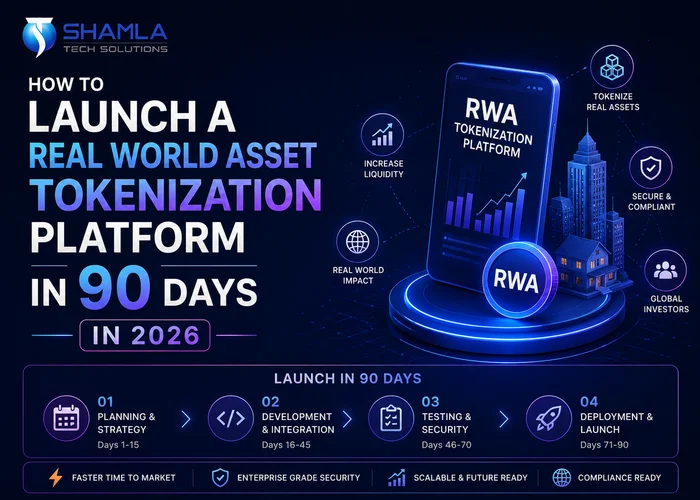
Development timelines depend on platform complexity, compliance architecture, feature requirements, and integration scope. With Shamla Tech Solutions, a commercial real estate tokenization platform with investor onboarding, compliance workflows, smart contracts, and administrative infrastructure can typically be launched within 4 to 12 weeks depending on implementation requirements.

Talk to Our Experts

Recent Posts