
Home » Real Estate Tokenization » What Makes a Real Estate Tokenization Platform Trustworthy in a Post-Hype Market?

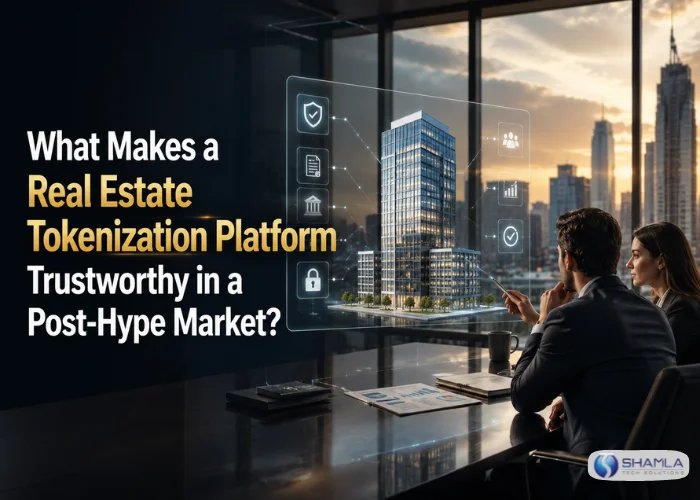
What Makes a Real Estate Tokenization Platform Trustworthy in a Post-Hype Market?

Share this article:
real estate tokenization platform
Table of Contents
About the Author
Balaji
CEO of Shamla Tech, specializes in crypto exchange development, RWA tokenization, blockchain infrastructure, AI solutions, and compliance-ready platforms. He helps enterprises address regulatory, security, and scalability challenges while driving real-world adoption of emerging technologies across industries.
Connect On:

For investors, trust is no longer built through ambitious promises or speculative market narratives. A real estate tokenization platform earns credibility through verifiable ownership structures, transparent operations, secure technology frameworks, and a clear commitment to investor protection at every stage of participation.

Industry projections estimate that tokenized real-world assets could reach trillions of dollars in value during the coming decade, while regulators across major jurisdictions continue introducing frameworks for digital securities and asset-backed tokens. This environment has increased the demand for a real estate tokenization platform that can support compliance, transparency, and long-term market confidence.

In this article, we will examine the factors that define a trustworthy real estate tokenization platform, including regulatory compliance, asset transparency, security standards, liquidity mechanisms, governance structures, and investor protection measures that contribute to sustainable growth and institutional credibility.

Build Trusted Real Estate Tokenization Platforms

Why Regulatory Compliance Defines a Trustworthy Real Estate Tokenization Platform

Regulatory compliance establishes the commercial foundation of a real estate tokenization platform. For asset owners, investment firms, and institutional participants, compliance frameworks determine market accessibility, capital formation opportunities, investor eligibility, and the long-term legal enforceability of tokenized ownership structures.

Key Compliance Elements That Drive Real Estate Tokenization Platform Credibility:

  • Regulatory alignment expands fundraising opportunities by enabling issuers to access qualified investors across multiple jurisdictions while maintaining adherence to securities laws, disclosure obligations, and investor protection requirements.

  • A recent survey found that 67% of institutional investors were already investing or planning to invest in tokenized assets, highlighting how regulatory readiness directly influences institutional participation and capital allocation decisions.

  • Legally structured token issuance frameworks create a direct and enforceable relationship between digital tokens and underlying real estate assets, strengthening ownership rights, reducing legal ambiguity, and supporting investor confidence throughout the asset lifecycle.

  • Integrated compliance infrastructure supports automated investor verification, transfer controls, audit trails, and reporting requirements, helping businesses reduce operational complexity while maintaining governance standards expected by institutional stakeholders.

  • Institutional investors prioritize platforms that demonstrate transparent legal documentation, jurisdiction-specific structuring, and independent oversight mechanisms, as these capabilities support due diligence requirements and improve the credibility of tokenized real estate offerings.

How Asset Transparency Builds Investor Confidence for Tokenized Real Estate

Asset transparency determines whether investors view tokenized real estate as a credible investment vehicle or a speculative digital product. A trustworthy real estate tokenization platform provides verifiable information, clear ownership structures, and continuous access to asset data, enabling informed investment decisions and stronger stakeholder confidence.

Transparency Element

Investor Challenge Addressed

Business Value Delivered

Property Ownership Verification

Uncertainty regarding asset legitimacy

Establishes legal ownership clarity and investment confidence

Real-Time Asset Information

Limited post-investment visibility

Improves monitoring and stakeholder engagement

Independent Valuation Reports

Concerns about asset pricing accuracy

Supports fair valuation and informed decision-making

Financial Performance Disclosure

Lack of visibility into returns and profitability

Strengthens trust through measurable performance reporting

Immutable Transaction Records

Risk of disputes and record inconsistencies

Creates an auditable and tamper-resistant transaction history

Property Ownership Verification

One of the biggest concerns in tokenized real estate is whether the underlying property is genuinely owned and legally tied to the issued tokens. Investors require more than marketing claims. They need access to title records, ownership documentation, and legal structures that establish a clear connection between the asset and the tokenized offering. This transparency reduces uncertainty and strengthens investment confidence from the outset.

Real-Time Asset Information

Traditional real estate investments often suffer from limited visibility after capital deployment. Investors may wait months for updates regarding occupancy, maintenance, leasing activity, or operational performance. A transparent tokenization platform addresses this challenge by providing continuous access to relevant property information. This level of visibility helps investors monitor asset health, evaluate performance, and make informed portfolio decisions with greater confidence.

Independent Valuation Reports

Asset valuation directly influences investor trust and investment decisions. When valuation methodologies remain unclear, concerns around asset pricing and return expectations increase. Independent valuation reports provide a standardized assessment of property value conducted by qualified third parties. This approach improves credibility, supports fair market pricing, and helps investors evaluate opportunities using reliable and objective financial information.

Financial Performance Disclosure

Investors expect transparency regarding rental income, operational expenses, distributions, and asset-level financial performance. Limited disclosure creates uncertainty around projected returns and long-term profitability. A trustworthy real estate tokenization platform provides structured financial reporting that allows stakeholders to assess income generation, cost efficiency, and overall asset performance. Clear financial visibility contributes significantly to investor retention and long-term platform credibility.

Immutable Transaction Records

Investment confidence increases when transaction histories cannot be altered or manipulated. Blockchain-based recordkeeping creates a verifiable audit trail for token issuance, ownership transfers, distributions, and other critical activities. This transparency reduces disputes, simplifies due diligence processes, and provides investors with confidence that every transaction can be independently verified whenever required, supporting stronger governance and operational integrity.

Turn Real Estate Assets Into Digital Opportunities

Why Security and Smart Contract Audits Matter in Real Estate Tokenization
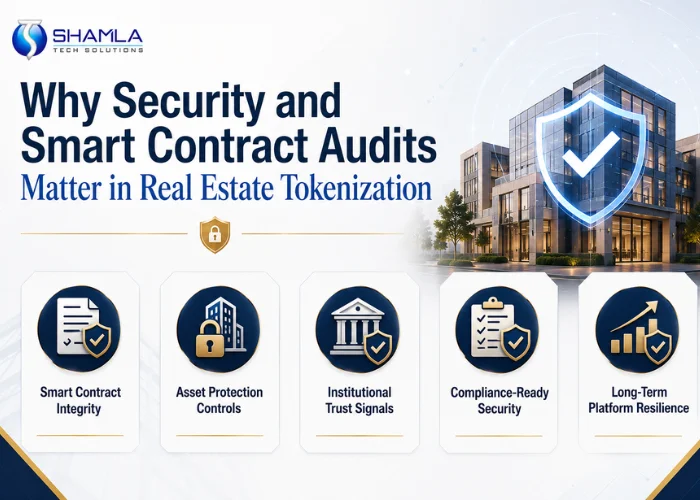
Why Security and Smart Contract Audits Matter in Real Estate Tokenization

1. Smart Contract Integrity and Transaction Reliability

Smart contracts govern ownership transfers, investor distributions, compliance controls, and transaction execution within a real estate tokenization platform. Any vulnerability can impact asset operations, investor trust, and platform reputation. Independent smart contract audits help identify security gaps before deployment, ensuring critical functions operate as intended and reducing the likelihood of costly disruptions after launch.

2. Protection Against Unauthorized Asset Activity

Tokenized real estate involves valuable assets, investor funds, and sensitive ownership records. Security vulnerabilities can expose platforms to unauthorized transfers, fraudulent transactions, or data manipulation. Strong security architecture combined with regular audits helps establish safeguards around asset ownership and transaction execution, protecting both issuers and investors from operational and financial risks.

3. Institutional Investor Confidence

Institutional investors evaluate risk before evaluating opportunity. Security assessments, audit reports, and documented controls provide tangible evidence that a platform can responsibly manage digital assets and investor capital. A real estate tokenization platform that demonstrates strong security governance is better positioned to attract professional investors, strategic partners, and long-term capital commitments.

4. Compliance and Risk Management Readiness

Security audits contribute directly to compliance objectives by validating access controls, transaction restrictions, recordkeeping mechanisms, and operational safeguards. This documentation supports regulatory reviews, due diligence processes, and internal governance requirements. For businesses entering regulated markets, audited infrastructure strengthens credibility and reduces concerns surrounding operational and compliance-related risk exposure.

5. Long-Term Platform Sustainability

Security is not a one-time implementation requirement. As platforms onboard new assets, investors, and jurisdictions, risk exposure expands alongside business growth. Continuous auditing, penetration testing, and security monitoring help maintain platform resilience over time. This proactive approach supports business continuity, protects stakeholder interests, and reinforces confidence in the long-term viability of tokenized real estate investments.

The Role of Liquidity, Governance, and Investor Protection in Real Estate Tokenization

Liquidity, governance, and investor protection influence how investors evaluate the long-term viability of tokenized real estate offerings. Beyond technology infrastructure, these mechanisms demonstrate operational maturity, regulatory alignment, and a platform’s ability to support sustainable participation across global investment markets.

Building Credible Liquidity Frameworks:

  • Secondary trading capabilities should operate within applicable securities and digital asset regulations, ensuring compliant investor participation and transaction execution.
  • Regulatory initiatives across markets supervised by bodies such as the SEC, VARA, and MAS have increased focus on controlled trading environments for tokenized assets.
  • Structured liquidity mechanisms improve capital efficiency while helping investors manage portfolio allocation strategies.
  • Transparent transfer restrictions and investor eligibility checks support market integrity without compromising accessibility.

Establishing Governance Standards Investors Can Trust:

  • Governance frameworks should clearly define voting rights, decision-making authority, and stakeholder responsibilities throughout the asset lifecycle.
  • Jurisdictions known for digital asset oversight, including Switzerland and Singapore, have elevated expectations around governance transparency and investor accountability.
  • Clearly documented governance policies reduce operational ambiguity during refinancing events, asset sales, and major property-related decisions.
  • Consistent governance reporting strengthens stakeholder alignment and institutional confidence.

Delivering Institutional-Grade Investor Protection:

  • Investor protection mechanisms should extend beyond disclosures to include ownership rights, distribution policies, and dispute resolution procedures.
  • Regulatory frameworks influenced by organizations such as FINMA and MAS increasingly emphasize transparency, suitability requirements, and investor safeguards.
  • Segregation of assets, transparent reporting structures, and auditable transaction records support stronger risk management practices.
  • Well-defined protection measures improve investor confidence and contribute to greater adoption among professional and institutional market participants.

Final Thoughts

As institutional capital enters tokenized asset markets, expectations around transparency, governance, compliance, and security continue to rise. Market participants are placing greater emphasis on platforms that demonstrate operational discipline, regulatory alignment, and the infrastructure necessary to support long-term investment confidence.The platforms that earn lasting trust will be those that treat credibility as a business function rather than a marketing message. Strong legal frameworks, investor-focused safeguards, and verifiable asset structures create the foundation for sustainable growth in tokenized real estate markets.

Launch Trustworthy Real Estate Tokenization Platforms with Shamla Tech Solutions

Shamla Tech Solutions has extensive experience developing real estate tokenization platforms that prioritize regulatory compliance, security, transparency, and investor confidence. We help businesses build robust digital asset ecosystems equipped with governance controls, smart contract infrastructure, and scalable tokenization capabilities tailored to global market requirements.

Our team works closely with real estate firms, asset managers, and investment platforms to deliver solutions that support compliant fundraising, asset digitization, investor onboarding, and secondary market readiness. We focus on creating trusted tokenization platforms that strengthen credibility, improve operational efficiency, and support long-term business growth.

Launch Compliant And Investor-Ready Tokenization Solutions

FAQs

What makes a real estate tokenization platform trustworthy?

A trustworthy real estate tokenization platform combines regulatory compliance, asset transparency, strong security controls, audited smart contracts, investor protection mechanisms, and clear governance structures. These elements help establish credibility and support long-term investor confidence.

Why is regulatory compliance important in real estate tokenization?

Regulatory compliance helps platforms operate within applicable securities and digital asset regulations. It supports investor protection, reduces legal risks, enables cross-border participation, and improves the platform’s ability to attract institutional and accredited investors.

How does asset transparency benefit investors?

Asset transparency provides investors with access to ownership records, valuation reports, financial disclosures, and transaction histories. This visibility supports informed decision-making, strengthens trust, and reduces uncertainty regarding the underlying real estate asset.

Why are smart contract audits necessary for tokenized real estate?

Smart contract audits help identify vulnerabilities before deployment and verify that contract functions operate correctly. Audited smart contracts reduce security risks, improve operational reliability, and increase confidence among investors and stakeholders.

How do liquidity and governance improve investor confidence?

Liquidity mechanisms provide greater flexibility for investors through compliant asset transfers and trading opportunities. Governance frameworks establish accountability, clarify decision-making processes, and ensure investors understand their rights and participation within the ecosystem.

Talk to Our Experts

Recent Posts