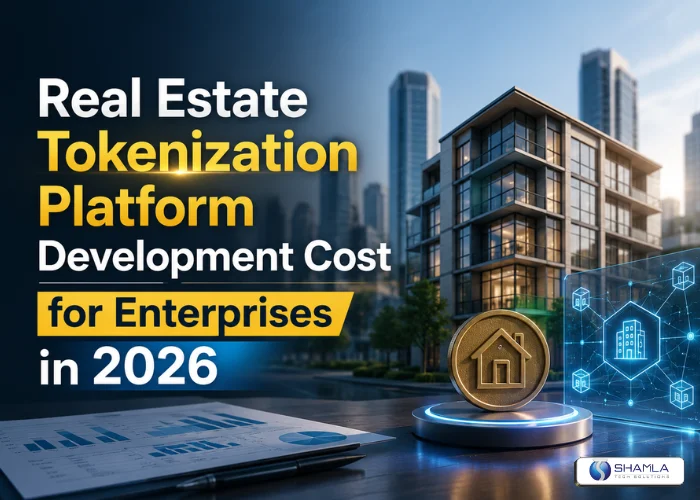

Real estate ownership is entering a structurally different distribution model. Enterprises are assessing tokenized asset infrastructure to improve capital accessibility, investor participation, and transaction efficiency while retaining operational control over issuance, governance, and compliance frameworks.
The global real estate tokenization market is projected to reach $19.4 billion by 2033, reflecting growing institutional interest in digital asset-backed property investment models. Enterprises evaluating platform ownership must assess real estate tokenization platform development cost, compliance infrastructure, and deployment economics.
This article examines real estate tokenization platform development cost for enterprises in 2026, including major cost drivers, expected return on investment, deployment considerations, and the strategic value of partnering with an experienced real estate tokenization development company.
Turn Real Estate Assets Into Digital Investment Infrastructure
Why Build a Real Estate Tokenization Platform in 2026
Enterprises evaluating tokenization in 2026 are making infrastructure decisions tied to capital formation, investor distribution, and transaction monetization. Building a proprietary real estate tokenization platform creates operational ownership over compliance execution, issuance workflows, and long-term commercial scalability.
Strategic Business Drivers Behind Enterprise Adoption:
- McKinsey estimates tokenized financial assets could reach approximately $2 trillion by 2030 in a base-case scenario. This signals growing institutional allocation toward tokenized infrastructure, making early platform ownership a commercially relevant strategic investment.
- Proprietary platforms allow enterprises to retain control over issuance economics, investor onboarding, transaction fee structures, and secondary participation models, transforming tokenization infrastructure into a revenue-generating business asset rather than a technology procurement expense.
- Institutional real estate tokenization requires infrastructure aligned with jurisdictional compliance obligations, investor accreditation controls, custody architecture, and governance policies. Third-party platform dependency can restrict customization, delay execution decisions, and create unnecessary operational constraints.
- Cross-border fundraising requires integrated KYC orchestration, permissioned investor segmentation, programmable ownership controls, and transparent audit trails. Platform ownership reduces operational fragmentation and improves execution consistency across regulated investment workflows and institutional capital participation.
- Enterprises entering tokenized markets early build execution maturity, compliance familiarity, and operational credibility ahead of competitors. Institutional buyers increasingly evaluate infrastructure capability as part of strategic partnership readiness, fundraising efficiency, and long-term digital asset positioning.
Real Estate Tokenization Platform Development Cost for Enterprises in 2026
Real estate tokenization platform development cost depends on infrastructure scope, regulatory requirements, transaction architecture, and deployment complexity. Enterprise buyers are not purchasing software alone. They are investing in regulated digital asset infrastructure designed for capital formation, investor operations, and long-term revenue ownership.
Cost Component | Estimated Cost Range (USD) |
Platform Architecture & Core Development | $6,000 – $8,500 |
Compliance Infrastructure Integration | $3,000 – $5,000 |
Smart Contract & Tokenization Engine Development | $5,000 – $6,500 |
Wallet, Custody & Payment Integrations | $3,500 – $5,500 |
Security Testing & Audit Implementation | $2,500 – $4,000 |
Secondary Marketplace Features | $5,000 – $7,500 |
Maintenance & Ongoing Support | $750 – $1,500/month |
Estimated Total Development Cost | $25,000 – $35,000+ |
1. Platform Architecture and Core Development
2. Compliance Infrastructure Integration
3. Smart Contract and Tokenization Engine Development
4. Wallet, Custody, and Payment Integrations
5. Security Testing and Audit Implementation
6. Secondary Marketplace Features
7. Maintenance and Ongoing Support
Build Secure Tokenization Infrastructure For Global Investors
How Enterprises Generate ROI from Real Estate Tokenization Platforms
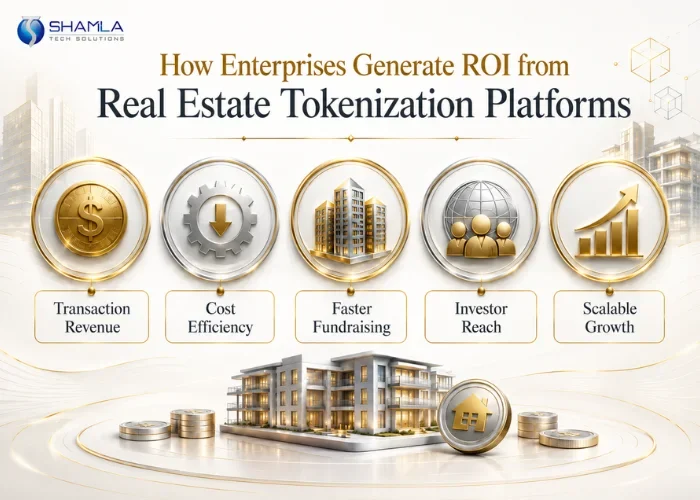
1. Revenue Monetization Across Transaction Layers
2. Lower Operational Costs Through Process Automation
3. Faster Capital Formation and Investor Conversion
4. Expanded Investor Market Access
5. Reusable Infrastructure for Multi-Asset Growth
Partnering with a Real Estate Tokenization Development Company for Enterprise Deployment
Key Factors to Evaluate Before Choosing a Development Partner:
Proven Tokenization Delivery Experience
Compliance and Security Readiness
Customization for Enterprise Business Models
Integration and Deployment Capability
Long-Term Product Support and Scalability
Wrapping Up
Enterprises entering tokenized real estate markets are making infrastructure decisions that shape capital access, investor participation, and long-term revenue ownership. The question is no longer whether tokenization has commercial relevance, but whether the underlying platform strategy aligns with business objectives.
Organizations that approach tokenization with execution discipline, regulatory clarity, and scalable infrastructure planning position themselves to build durable digital asset capabilities. In a market where platform ownership influences commercial control, implementation quality will determine which enterprises create measurable long-term enterprise value.
Build Real Estate Tokenization Platform with Shamla Tech Solutions
Shamla Tech Solutions is a real estate tokenization platform development company delivering enterprise-grade digital asset infrastructure for global clients. We have built tokenization platforms across multiple jurisdictions, supporting asset issuance, investor onboarding, compliance integration, smart contract deployment, wallet infrastructure, and scalable ownership management systems.
Our development expertise covers custom real estate tokenization platforms aligned with enterprise fundraising models, regulatory requirements, and long-term commercialization objectives. From architecture design and security implementation to compliance workflows and post-launch support, Shamla Tech Solutions enables organizations to launch with execution confidence.