


Wall Street’s rapid move into real-world asset tokenization marks a defining shift in global finance. What began with tokenized U.S. Treasuries and money-market funds are now expanding into equities, ETFs, and other regulated securities, driving strong demand for tokenized securities platforms. Led by the NYSE’s push toward 24/7 trading and instant settlement, this transition signals an $80B transformation in how capital markets operate.
On-chain RWAs including tokenized government bonds, commodities, and private credit are now exceeding $21 billion in total value, led by U.S. Treasuries and gold-backed tokens. More than 630,000 unique holders, up nearly 10% in 30 days, underscore the shift from experimentation to production-scale deployment.
While RWA tokenization spans a wide range of assets from Treasuries to commodities, tokenized securities platforms represent the regulated subset required for equities and ETFs. As institutions move from market awareness to execution, understanding the difference between tokenized securities platforms and broader RWA tokenization platforms becomes critical. In this blog, we explore how this shift is reshaping markets and what it means for enterprise-grade tokenized securities and RWA tokenization platforms.
Build Tokenized Markets the Institutional Way
Explore how compliant, enterprise-grade tokenized securities platforms are designed—covering architecture, custody integration, settlement flows, and regulatory controls.
Why Wall Street’s Move Accelerates Tokenized Securities Platforms
Wall Street’s transition from tokenized Treasuries to equities marks a structural validation of tokenized securities platforms at an institutional scale. The initiatives led by the NYSE and its parent company, ICE, signal that tokenization is no longer limited to individual products—it is evolving into regulated, production-grade market infrastructure. This shift has a direct and positive impact on how tokenized securities platforms are designed, adopted, and scaled globally, while also accelerating the broader real-world asset (RWA) tokenization ecosystem.
1. Institutional Market Infrastructure Sets the Blueprint
The NYSE’s plan to launch a tokenized securities platform for U.S. equities and ETFs introduces a clear institutional blueprint for RWA markets. By prioritizing 24/7 trading, instant settlement, and stablecoin-based funding, ICE is redefining how regulated assets can move on-chain.
Impact on tokenized securities platforms:
- Establishes institutional standards for tokenized equities and ETFs issuance and trading
- Reinforces the need for compliance-first tokenized securities platform architecture
- Accelerates adoption of on-chain settlement models over traditional T+1/T+2 systems
This confirms that future tokenized securities platforms must integrate regulatory controls, custody layers, and settlement orchestration from day one.
2. Expansion from Treasuries to Equities Multiplies Platform Demand
Tokenized U.S. Treasuries demonstrated that institutions are willing to move real capital on-chain when risk, liquidity, and regulation align. The expansion into equities and ETFs significantly raises both the complexity and importance of tokenized securities platforms.
Why this matters for tokenized securities platform development:
- Equities and ETFs require identity controls, transfer restrictions, and corporate action handling
- Platforms must support fractional ownership, secondary trading, and governance rights
- Compliance workflows become core platform components, not add-ons
According to market analysis, tokenized stocks, funds, and gold are expected to see a breakout year in 2026, driven by institutional distribution and regulatory alignment
3. Market Traction Confirms Production-Scale Readiness
Tokenized securities and broader real-world asset tokenization is no longer a future projection — it is already live at scale. On-chain RWAs have surpassed $21 billion in total value, led by tokenized Treasuries and gold-backed assets, validating sustained institutional and investor demand.
Key adoption signals:
- Over $21B in tokenized RWAs currently live on public blockchains
- More than 630,000 unique holders, with adoption growing ~10% in 30 days
- Strong capital concentration in regulated, yield-bearing assets
This growth reinforces the need for scalable tokenized securities platforms and RWA tokenization platforms capable of handling volume, compliance, and multi-asset expansion without sacrificing security.
4. Regulatory Clarity Unlocks Platform-Level Innovation
Wall Street’s entry into tokenized markets is closely tied to regulatory progress. Pilot programs and regulatory guidance have made it possible to tokenize equities, ETFs, and fixed-income instruments within compliant frameworks — something that was not feasible just a few years ago.
Positive effects on RWA tokenization platforms:
- Encourages regulated issuance and secondary trading
- Enables institutional custody and clearing integration
- Reduces legal uncertainty for platform operators and issuers
As highlighted in industry analysis, without regulatory alignment, NYSE’s tokenized platform would not be viable — underscoring regulation as a catalyst, not a constraint.
5. From Products to Platforms: The Long-Term Impact
Wall Street’s move confirms a fundamental shift: tokenization is evolving from individual tokenized products into shared financial infrastructure. As this transition accelerates, institutions must clearly distinguish between platforms designed for regulated securities and those built for broader RWA issuance. This transition directly elevates the strategic importance of tokenized securities platforms as the foundation of next-generation capital markets.
Long-term implications:
- Tokenized securities platforms and RWA tokenization platforms become core financial infrastructure, not experimental tools
- Competition shifts from “who can tokenize” to “who can operate at scale”
- Enterprise-grade platforms gain advantage through compliance, performance, and interoperability
As capital markets move on-chain, the success of tokenized equities, ETFs, and funds will depend less on the assets themselves and more on the platforms that issue, manage, and trade them.
The Inflection Point: NYSE and ICE Bring Tokenization into Equities
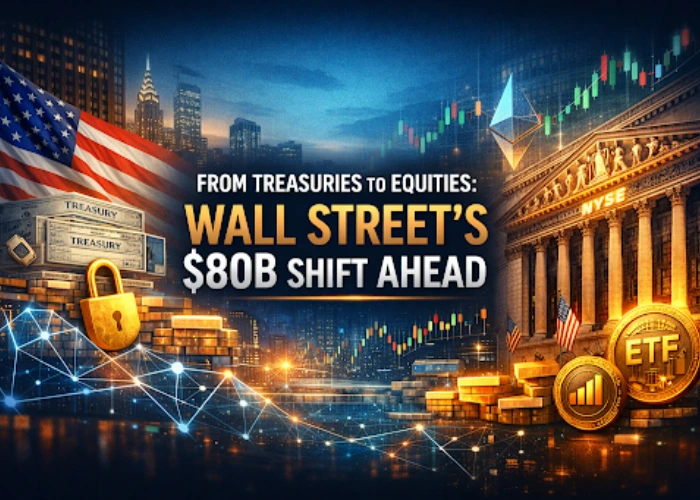
The shift from tokenized Treasuries to equities represents a decisive inflection point for global capital markets. Through its parent company, Intercontinental Exchange (ICE), the New York Stock Exchange (NYSE) is developing a tokenized securities platform purpose-built for U.S. equities and ETFs—a move that signals tokenization’s transition from experimental pilots to core financial market infrastructure.
Unlike earlier tokenization efforts focused on individual products, the NYSE initiative positions a tokenized securities platform as a foundational layer for regulated markets, embedding blockchain directly into how securities are issued, traded, and settled.
What the NYSE Tokenized Securities Platform Delivers
The NYSE tokenized securities platform is designed around institutional market requirements, prioritizing scale, compliance, and operational efficiency:
- 24/7 trading to eliminate traditional market-hour limitations
- Instant or near-instant settlement to reduce counterparty and settlement risk
- Stablecoin-based funding to enable programmable, on-chain cash settlement
These capabilities reflect the evolution of regulated markets toward always-on, capital-efficient systems and closely align with the architectural principles of modern RWA tokenization platforms, where transparency, speed, and liquidity are critical.
Institutional Partnerships That Anchor Market Trust
To ensure production-grade reliability, ICE is collaborating with BNY Mellon and Citigroup to support tokenized deposits, clearing, and settlement workflows. By integrating a tokenized securities platform with established custodial and clearing institutions, NYSE is anchoring on-chain trading to trusted financial rails.
This approach significantly lowers adoption barriers for institutional participants and reinforces confidence that tokenized securities platforms can operate at scale without compromising market integrity or investor protections.
Regulation-First, Fully On-Chain by Design
Crucially, NYSE has framed its tokenized securities platform as fully on-chain but regulation-first. Rather than adopting a permissionless, DeFi-style model, the platform is being built to operate within existing securities laws, market surveillance frameworks, and investor protection standards.
This regulatory-first positioning sets a clear precedent: future tokenized securities platforms—and by extension, enterprise-grade RWA tokenization platforms—must be compliant by design, interoperable with traditional financial systems, and scalable for institutional volumes.
From Pilot Programs to Regulated Market Infrastructure
Together, these elements demonstrate that tokenization has crossed a critical threshold. What began as limited pilots in Treasuries is now extending into regulated equity markets through a full-fledged tokenized securities platform, laying the groundwork for an $80B-scale shift in how capital markets operate on-chain.
This moment marks not just the tokenization of assets, but the tokenization of market infrastructure itself.
Tokenized Securities Platforms vs RWA Tokenization Platforms
Understand the architectural, regulatory, and operational differences institutions need to know before moving to production.
What Tokenized Securities Platforms Must Deliver: An Institutional Checklist
The NYSE and ICE initiative makes one thing clear: a tokenized securities platform is not simply a blockchain layer for assets—it is a full market infrastructure stack. For institutions building or evaluating tokenized securities platforms (and broader RWA tokenization platforms), the transition from Treasuries to equities sets a much higher technical and regulatory bar.
The NYSE/ICE model highlights four critical capability layers that must work together for tokenization to operate at scale in regulated markets.
A. Core Ledger & Settlement: From T+1 to On-Chain Finality
At the heart of any tokenized securities platform is the settlement layer. ICE’s focus on instant or near-instant settlement signals a shift away from legacy T+1 and T+2 cycles toward on-chain settlement as a primary market function, not a post-trade process.
A production-grade tokenized securities platform must support:
- On-chain settlement with atomic finality or regulator-approved settlement rails that ensure transactions are completed irreversibly and transparently
- Interoperable token standards that allow:
- Fungible fractionalization of equities and ETFs
- Embedded metadata defining ownership rights, transfer rules, and legal claims
- Real-time settlement visibility while preserving:
- Regulatory reporting obligations
- Complete, immutable audit trails for exchanges and supervisors
This balance—instant settlement without sacrificing oversight—is exactly what differentiates institutional tokenized securities platforms from crypto-native trading systems.
B. Custody, Treasury & Collateral: Anchoring Tokenization to Banks
One of the strongest signals from the NYSE/ICE announcement is that custody and treasury are non-negotiable pillars of tokenized securities platforms. ICE’s collaboration with major banks demonstrates that tokenized markets must remain tightly integrated with traditional financial custody and clearing systems.
A compliant tokenized securities platform must enable:
- Seamless integration with regulated custodians, including banks and qualified custodial providers
- Tokenized deposit and cash-management rails that allow institutions to fund trades on-chain without breaking regulatory boundaries
- Stablecoin-based and tokenized collateral mechanisms to support:
- Trade settlement
- Margin requirements
- Liquidity provisioning
This architecture ensures that tokenized securities platforms inherit institutional trust while still benefiting from blockchain efficiency—a core requirement shared by enterprise-grade RWA tokenization platforms.
C. Compliance & Market Structure: Regulation Built into the Platform
Unlike DeFi systems, NYSE’s tokenized securities platform is explicitly regulation-first. This means compliance is not a peripheral layer—it is embedded into the platform’s core market structure.
Institutional tokenized securities platforms must provide:
- Identity, KYC, and AML enforcement integrated directly into:
- Asset issuance
- Secondary market trading
- Fiat on- and off-ramps
- Securities-law workflows, including:
- Issuance permissions and investor eligibility rules
- Prospectus and disclosure enforcement
- Transfer restrictions and fractional ownership controls
- End-to-end auditability, with:
- Time-stamped, immutable transaction records
- Built-in regulatory surveillance and reporting access
This compliance-by-design approach is what makes tokenized securities platforms viable for equities, ETFs, and other regulated instruments—and why regulators can support their expansion.
D. Liquidity, Market-Making & Price Discovery in 24/7 Markets
Moving equities on-chain fundamentally changes market dynamics. With 24/7 trading, liquidity and price discovery can no longer rely on traditional trading sessions or centralized intermediaries.
A scalable tokenized securities platform must support:
- Continuous market microstructure, including:
- Around-the-clock market-making
- Highly resilient order books
- Pricing mechanisms outside standard market hours
- Liquidity bootstrapping frameworks, such as:
- Designated market-makers
- Balance-sheet and inventory management tools
- Regulated derivative or hedging primitives (where permitted)
ICE’s emphasis on always-on markets makes it clear: liquidity engineering is now a core platform responsibility, not an external function.
How Asset Classes Progress on Tokenized Securities Platforms
The NYSE/ICE roadmap and broader market data reveal a clear sequence in how assets migrate onto tokenized securities platforms.
- Tokenized Treasuries & Short-Duration Sovereign Debt
Why they move first:
- Minimal credit risk
- High liquidity
- Strong regulatory clarity
These assets dominate current tokenized TVL and serve as the foundation layer for institutional confidence.
Role: Near-term anchor for tokenized securities platforms
- Tokenized ETFs & Funds
Why they scale next:
- Naturally suited for fractional ownership
- Simplify access to diversified exposure
- Extend tokenization beyond cash management
ETFs act as distribution accelerators for tokenized securities platforms across both institutional and retail segments.
- Tokenized Equities
Why they matter most:
- Highest regulatory and governance complexity
- Require corporate action handling and shareholder rights
- Represent the largest addressable market
The NYSE’s focus on equities confirms that tokenized securities platforms are entering the core of capital markets, not peripheral asset classes.
- Commodities & Yield-Bearing RWAs
(Tokenized gold, private credit, structured yield products)
These assets complement tokenized securities platforms by:
- Enabling yield-focused products
- Supporting alternative asset allocation
- Improving liquidity across on-chain markets
They also serve as a bridge between traditional securities platforms and broader RWA tokenization platforms. Tokenized securities platforms mature from settlement-safe instruments to governance-intensive assets, with RWAs acting as yield bridges rather than core market rails.
Conclusion
Wall Street’s push from tokenized Treasuries into equities marks a fundamental shift in how capital markets are being rebuilt for the digital era. What the NYSE and ICE are developing is not just a new asset format, but a tokenized securities platform designed to operate regulated markets with 24/7 trading, instant settlement, and institution-grade compliance. As on-chain RWAs surpass $21 billion in value and adoption accelerates, it is clear that tokenization has moved beyond experimentation into production-scale deployment. The next phase of growth will be defined not by who can tokenize assets, but by who can operate compliant, scalable, and resilient platforms. For financial institutions, exchanges, and technology providers, investing in enterprise-grade tokenized securities and RWA tokenization platforms is no longer optional—it is central to competing in the future of capital markets.
How Shamla Tech Enables the Next Generation of Tokenized Securities Platforms
At Shamla Tech, we help enterprises move from tokenization strategy to production-ready execution. We specialize in building enterprise-grade tokenized securities platforms and RWA tokenization platforms designed to meet institutional requirements for compliance, custody, settlement, and scalability. Our approach is regulation-first—embedding KYC/AML, transfer controls, auditability, and reporting directly into platform architecture rather than treating them as add-ons.
We work closely with exchanges, asset managers, fintechs, and financial institutions to design platforms that support 24/7 trading, instant settlement, and secure integration with custodians, banks, and stablecoin rails. From tokenized treasuries and funds to equities and yield-bearing RWAs, we focus on building infrastructure that can scale with market demand and regulatory evolution. With Shamla Tech, tokenization moves beyond proof-of-concept to real, institution-ready market infrastructure.
Move Beyond Pilots to Production-Scale Tokenization
Learn how institutions are transitioning from tokenized Treasuries to equities using regulation-first, scalable tokenized securities platforms.