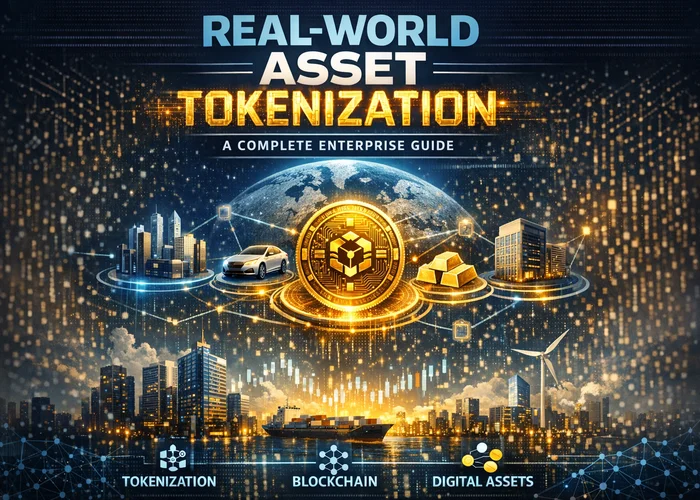

Real-world asset tokenization is changing how organizations and industries own, manage, and trade both physical and financial assets. These blockchain-based tokens are changing everything, from fine art and commodities to real estate, private equity, invoices, and carbon credits.
This opens up liquidity, transparency, and access to the whole world on a scale that has never been seen before. As we move into 2026, RWA tokenization for enterprises has moved past the testing stage. It has become a useful business tool for startups, big companies, and banks who want to update how assets are owned and find new ways to make money.
Our Real-World Asset Tokenization guide can help businesses that are looking into region-specific frameworks and rules understand how to follow the rules, what the market prospects are, and how to use them.
What Is Real-World Asset Tokenization?
Real-World Asset tokenization is the process of turning ownership rights to real-world asset tokenization or traditional financial assets into digital tokens that are stored on a blockchain.
Each token stands for a part or the whole of an asset that exists in the real world. In decentralized and business systems, entities can transfer, trade, or use these tokens while still being connected to the off-chain asset through legal and technical frameworks.
In simple terms, real world asset tokenization means turning things that are hard to sell and move quickly into digital tools that can be programmed and accessed from anywhere in the world.
Why Tokenization Is Becoming an Enterprise Priority
Enterprise Asset Tokenization face persistent challenges in capital markets and asset management:
- Illiquid assets tied up for years
- High transaction and intermediary costs
- Fragmented ownership records
- Slow settlement cycles
- Limited access to global investors
Tokenization addresses these issues by redesigning how assets are issued, managed, and transferred.
5 Key Factors Companies Must Consider Before Tokenization
1. Regulatory Compliance
For every firm that wants to start tokenizing its assets, the legal structure and regulatory climate in the places where the assets will be tokenized and traded are very important.
Regulations can differ greatly from one place to another, and they can make it hard for any RWA Tokenization Platform development product or service to work. However, more and more countries are moving toward a more favorable regulatory climate.
The US’s securities laws decide if a tokenized asset is a security and who can buy it. If it is a security, it must follow all the rules that apply to securities, such as registration, disclosure, and any requirements for investors to be accredited.
Lastly, both issuers and investors need to think about the tax effects, such as capital gains, income tax, VAT, and so on. Any of these factors could make tokenizing a real-world asset tokenization less profitable, which could make some tokenization initiatives impossible to do from a financial point of view.
It’s crucial to keep up with the rules in the areas that matter and talk to legal and compliance specialists because they are always changing, being talked about, or being revised.
2. Asset Selection
The next important thing to think about is what kind of assets to tokenize and its RWA Legal Consulting Services. There are a number of reasons why not all assets are good candidates for tokenization.
Some examples of assets are real estate, art, goods, intellectual property, and financial instruments. When deciding which asset to tokenize, there are many things to think about, such as the rules that must be followed, the size of the market, the liquidity, how easy it is to get, and whether the real-world asset tokenization needs to be stored in special ways (like wine). You need to think about things like projected revenue and costs.
3. Technology and Infrastructure
If the laws and rules are clear and an asset is a good candidate for tokenization, the next step is to choose a decentralized Blockchain Tokenization for Enterprises or platform to issue the assets on.
A tokenized asset is made and traded on a specific blockchain network. First, the Enterprise Blockchain Tokenization you choose should be able to handle smart contracts and token transactions without too much trouble (high transaction costs, a history of network breaches, network congestion, etc.).
A Institutional Asset Tokenization product or service that issues assets created on a blockchain network must also be able to make custom assets that can be easily traded on a wide scale. This means that the blockchain must be safe, fast, and reliable.
Some examples of assets are real estate, art, goods, intellectual property, and financial instruments. When deciding which asset to tokenize, there are many things to think about, such as the rules that must be followed, the size of the market, the liquidity, how easy it is to get, and whether the real-world asset tokenization needs to be stored in special ways (like wine). You need to think about things like projected revenue and costs.
4. Security and Custody
Some smart contract programming languages and decentralized blockchain networks can be hacked, exploited, and attacked. Bad people look for weaknesses in dApps and the blockchain networks that support them so they can steal money or find ways to change transactions.
So, before making a tokenization product or tokenizing an asset, you need to look at the security and history of the blockchain network and programming languages.
5. Market Demand
In the end, the company that makes a tokenization product, service, or asset should think about what the market wants. The size of the asset market right now, the demand for it in the future, and the cost of getting into that market are all very relevant.
Another crucial thing is liquidity. Classic sports vehicles, for example, are assets that are normally costly yet hard to sell. They usually have smaller secondary markets. This means that trading these assets happens less often and it can take longer for a sale to go through, which is not good for market demand.
Steps to Tokenize Real-World Assets
Step 1: Finding the Asset to Tokenize
Step 2: Legal & Regulatory Compliance
Step 3: Selecting a Blockchain Network
Pick a blockchain based on how safe it is, how big it can grow, and how much it costs to do transactions. Some common choices are:
- Ethereum is a popular platform for smart contracts and tokenizing assets.
- Polygon: Has reduced transaction fees and can handle more transactions.
- Solana: Transactions are fast and cheap. The chosen Blockchain makes asset tokenization quick and cheap.
Step 4: Smart Contract Development for Automated Transactions
Step 5: Fractionalization of Assets for Increasing Liquidity
Step 6: Token Generation and Investor Onboarding
Step 7: Secondary Market Trading and Liquidity Mechanism
Conclusion
FAQs
1. What exactly is asset tokenization?
2. Which assets can be tokenized?
3. Does owning a token mean I legally own the underlying asset?
4. How does the tokenization process work?
5. What role does a blockchain solution play in tokenization?
6. What benefits does tokenization offer enterprises?
- More liquidity from fractional ownership and token trading
- Less friction in transactions and fewer middlemen
- Clear ownership and the ability to check it
- Get in touch with fresh investors all over the world
- Programmable automation, such how money is shared and how rules are made
7. What are the key risks and challenges?
- Uncertainty in the rules on property rights and securities laws
- Clear pricing for assets that aren’t easy to sell
- Liquidity problems in secondary markets
- Feeding accurate real-world data (oracle or off-chain link)
- Risks of custody and key management