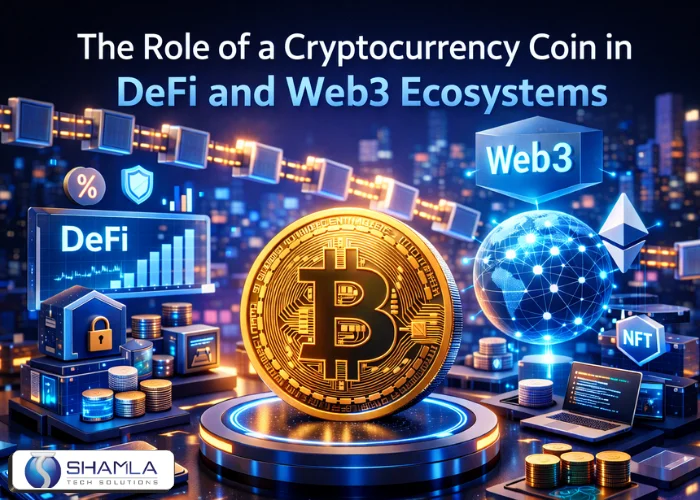

Many business operators are adapting to Web3 and decentralized finance (DeFi) because of the growing surveillance and third-party intervention in the centralized fintech architecture. So the decentralized finance and web3 landscapes are projected to exceed a combined $500 billion market capitalization by 2027, with institutional adoption and developer activity accelerating at a 25% CAGR.
For forward-thinking enterprises, this represents not just a technological shift but a profound opportunity to unlock new revenue streams, enhance operational efficiency, and redefine stakeholder engagement. This article outlines how a purpose-built cryptocurrency coin acts as the fundamental economic primitive, enabling faster value exchange, compliant participation, and scalable innovation within these burgeoning digital economies.
Navigating the Decentralized Frontier Without a Core Economic Driver
Companies looking at DeFi and Web3 have problems that traditional financial and internet models can’t solve:
- Operational Inefficiencies in Value Transfer: Transaction costs are still high, settlement times are still long, and cross-platform interoperability is still broken because there is no native medium of exchange. This slows down innovation and market response.
- Regulatory Bottlenecks & Compliance Complexity: One of the biggest problems is making sure that decentralized ecosystems have operational frameworks that follow the rules. Because blockchain is real-time and open, legacy systems have a hard time working with it. This makes audits more complicated and costs more in legal fees.
- Scaling Limits for Decentralized Applications: As the number of users grows, the economic incentives and resource allocation systems that support them must also rise. If a coin isn’t well-designed, networks can get crowded, which makes it hard for users to use and limits its adoption.
- Investor Acquisition & Retention Problems: To get people to join and stay in a decentralized network, it needs strong tokenomics that align incentives, reward participation, and make it obvious what the network is worth. This is something that many new projects don’t have.
- Fragmented Infrastructure & Interoperability: Without a universal, programmatic value layer, multiple DeFi protocols and Web3 apps can’t work together easily. This creates isolated ecosystems and missed chances to work together.
Currently, manual reconciliation and fragmented liquidity pools add 20-30% to operating costs and make it much harder to launch new decentralized products.
Benefits of Integrating DeFi Protocols in Web3 Development
The digital economy enters a new age with Decentralized Finance (DeFi) protocols in Web3 development, which promotes decentralization, transparency, and user empowerment. This integration advances the financial sector and changes user interaction with digital assets and financial services. Integrating DeFi protocols into Web3 programming has these benefits:
- Increased Transparency and Security: DeFi protocols use transparent ledgers, unlike traditional financial systems, which might be opaque and controlled by central institutions. The blockchain records every transaction, making fraud and corruption much less likely. DeFi protocols provide customers unprecedented control over their assets through non-custodial wallets. This means users own and govern their digital assets without banks or financial organizations. Smart contracts directly interact with financial services, improving security and democratizing access to financial systems so anybody with an internet connection can participate in the global economy. This move toward self-sovereignty contrasts with traditional finance, where third parties can manage and monitor user finances and data.
- Opportunities for Innovative Financial Products and Services: DeFi uses blockchain’s programmability to develop complex financial instruments for everyone, from automated yield farming and liquidity mining to tokenized assets and decentralized exchanges. Beyond transactional capabilities, this innovation creates a transparent and secure financial ecosystem for lending, borrowing, trading, and investing. DeFi protocols—known as “money Legos”—allow developers to build on existing services and create new, interconnected financial solutions, expanding the ecosystem.
DeFi protocols in Web3 development redefine the digital economy, not just improve it. DeFi protocols are revolutionizing digital money and asset interactions by enhancing transparency, security, and user autonomy and enabling innovative financial products. This integration promises a more equitable, efficient, and secure financial future.
Guide For Enterprises to Integrate DeFi Protocols
Step 1: Protocol Security and Architecture
Step 2: Development/Testing
Agile development helps you respond to input and adapt to changes. Build your application’s design to support modular development to do isolated unit testing for separate components, which can help you find and fix bugs faster.
To keep your app stable and secure, you need a full testing suite with functional, security, stress, and load testing. Ganache is good for local blockchain simulation and Ropsten for real-world testing. Follow these best practices to improve software quality and reduce faults and vulnerabilities.
Step 3: Ongoing Optimization and Monitoring
Monitoring your application’s performance lets you find ways to improve it. This will help you keep ahead in the fast-paced DeFi world.
Adaptability and evolution are also crucial. You must be ready to update your protocols to adapt to user feedback and market changes. This includes keeping up with industry trends and being willing to adjust protocols and smart contracts to market realities.
DeFi is high-risk, thus you must constantly monitor for vulnerabilities and prevent security threats. To maintain security and stability, you must keep up with security best practices, audit your code, and update your protocols and smart contracts as appropriate.
What are the Regulatory Challenges Faced by DeFi, and How Do They Impact its Growth and Adoption?
Decentralized Finance (DeFi) has revolutionized finance by delivering a decentralized and borderless alternative to established financial institutions. As the DeFi ecosystem grows, it faces a complicated web of regulatory issues that could affect its expansion and adoption.
Uncertainty in Regulatory Frameworks
- Uncertain regulatory regimes are one of DeFi’s biggest challenges. DeFi runs decentralized and cross-border, making it difficult for regulators to identify jurisdiction and set standard rules. Without clear guidelines, DeFi participants risk legal liability for their acts.
Conflict with Traditional Regulations
- DeFi’s decentralization contradicts intermediary-based regulation. Pseudonymous transactions and smart contract automation, DeFi’s core innovations, may conflict with AML and KYC laws. DeFi’s incompatibility with established standards can limit adoption, especially by institutions and risk-averse customers.
Consumer Protection and Investor Risks
- DeFi platforms are decentralized, making consumer protection and investment risk management difficult. Scams, hacks, and vulnerabilities can cost users a lot. Users without intermediaries may have limited redress for grievances or fraud.
Innovation and Development Impact
- Overly strict regulations could impede DeFi’s innovation and dissuade developers from trying new things. Regulatory hurdles may split the ecosystem as projects evade compliance or move to jurisdictions with better regulations. This could slow DeFi ecosystem growth and reduce its benefits.
Fragmented International Approach
- DeFi’s global existence complicates regulatory issues, as governments perceive blockchain and digital assets differently. Regulations that are not harmonized can confuse global users and hinder cross-border involvement.