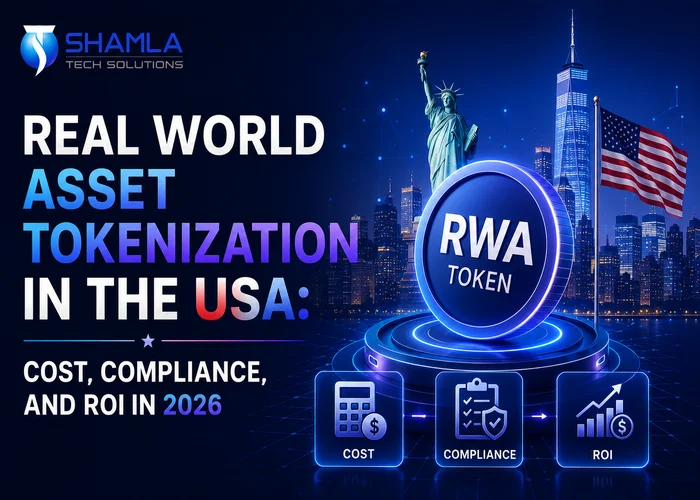


The conversation around crypto has shifted decisively in 2026. What was once dominated by speculative tokens and experimental DeFi is now moving toward institutional-grade, compliant on-chain finance. At the center of this shift is a simple reality: large-scale capital will not move into uncontrolled environments. It requires structure, regulation, and infrastructure that mirrors real-world financial systems.
This is where real estate crypto coin development companies and enterprise-focused blockchain design intersect and where cryptocurrency coin development for B2B businesses is finding its next major opportunity.
Why Traditional Finance Has Been Slow to Move On-Chain
Despite years of blockchain innovation, banks, asset managers, and large enterprises have largely remained cautious. The hesitation has never been about the technology itself. It has been about risk.
Institutions operate within strict regulatory frameworks covering:
- KYC and AML compliance
- Custody and asset segregation
- Auditing and reporting standards
- Jurisdictional oversight
Public, permissionless DeFi ecosystems often described as the “wild west” – do not naturally provide these guardrails. For regulated entities, participating in such environments introduces legal, operational, and reputational risks that outweigh the benefits.
For businesses exploring Real Estate Crypto Coin this lesson is critical: adoption is not blocked by innovation, but by the absence of compliance-first design.
Turn Physical Assets Into On-Chain Opportunities
Permissioned Blockchain Infrastructure: A Turning Point
Recent developments in enterprise blockchain architecture highlight a clear direction forward in which you need to adopt the cryptocurrency coin governance models. As explained by David Schwartz, CTO of Ripple, the next phase of on-chain finance will be unlocked not by removing regulation, but by embedding it directly into the network.
Updates to the XRP Ledger introduce the concept of permissioned domains – controlled environments where institutions can transact on-chain while meeting regulatory requirements. These domains allow:
- Verified participant access
- Enforced compliance rules
- Transparent yet controlled transaction flows
For enterprises, this changes everything. Blockchain no longer needs to replace existing financial systems; it can extend them safely.
Why Real Estate Is the Ideal Bridge Between TradFi and Crypto
Real estate Crypto coin development is uniquely positioned to lead institutional adoption of blockchain-based finance. Unlike purely digital assets, real estate already operates under:
- Clear ownership records
- Regulated cash flows
- Established valuation models
- Legal and compliance frameworks
Tokenization does not disrupt these fundamentals – it enhances them.
By moving real estate assets on-chain, businesses can unlock:
- Fractional ownership without diluting asset integrity
- Improved liquidity for traditionally illiquid assets
- Faster settlement and distribution cycles
- Broader access to global capital
When combined with permissioned blockchain environments, tokenized real estate crypto coin becomes a low-friction, high-trust entry point for institutions entering on-chain finance.
What This Means for Cryptocurrency Coin Development
For businesses offering cryptocurrency coin development services, the implications are significant. The demand is no longer for generic tokens or speculative launches. Instead, enterprises are seeking purpose-built digital assets that function as infrastructure.
In 2026, successful B2B coin development focuses on:
- Asset-backed or revenue-linked tokens
- Utility tokens tied directly to platform participation
- Governance-enabled tokens with accountability
- Compliance-ready token economics
Coins are no longer marketing tools. They are financial instruments, designed to move real capital under real rules.
How Businesses Should Approach Coin Development in 2026
1. Start With Regulation, Not Technology
Before writing smart contracts, enterprises must define the how they want to proceed with the Real Estate Tokenization in 2026
- Jurisdictional requirements
- Compliance obligations
- Reporting standards
Token logic should be designed around regulation, not retrofitted later. This approach reduces risk and accelerates institutional onboarding.
2. Choose the Right Ledger Architecture
Not every use case belongs on a fully permissionless network. Businesses must evaluate whether a:
- Public ledger
- Permissioned ledger
- Hybrid architecture
best supports their asset class, users, and compliance needs. Infrastructure decisions directly impact scalability and adoption.
3. Design Tokens for Institutional Behavior
Institutional participants behave differently from retail users. Coin development must account for:
- Custody integrations
- Auditability
- Role-based permissions
- Predictable economic incentives
Ignoring these requirements limits adoption before it begins.
4. Treat Tokens as Infrastructure, Not Products
From Proof-of-Concept to Institutional Scale
A responsible rollout matters as much as design. Businesses should approach deployment in phases:
- Pilot tokenization with limited participants
- Sandbox testing under real compliance conditions
- Gradual liquidity onboarding
- Integration with existing financial systems
This staged approach builds trust with regulators, partners, and institutional users—while reducing operational risk.
Why the Future of Coin Development Is Institutional-First
The next wave of blockchain growth will not be driven by hype cycles or speculative narratives. It will be driven by:
- Real-world assets
- Regulated capital
- Infrastructure-grade token design that helps to create a cryptocurrency coin
Real estate crypto coin tokenization, combined with permissioned blockchain environments, demonstrates how crypto can scale responsibly. For B2B businesses, this represents a long-term opportunity to build systems that institutions can trust, and adopt at scale.
In 2026, the question is no longer whether real assets will move on-chain. It is who will build the compliant, scalable infrastructure that enables it.